
The Elusive Dialogue: Navigating the Shadows of Venezuelan Politics
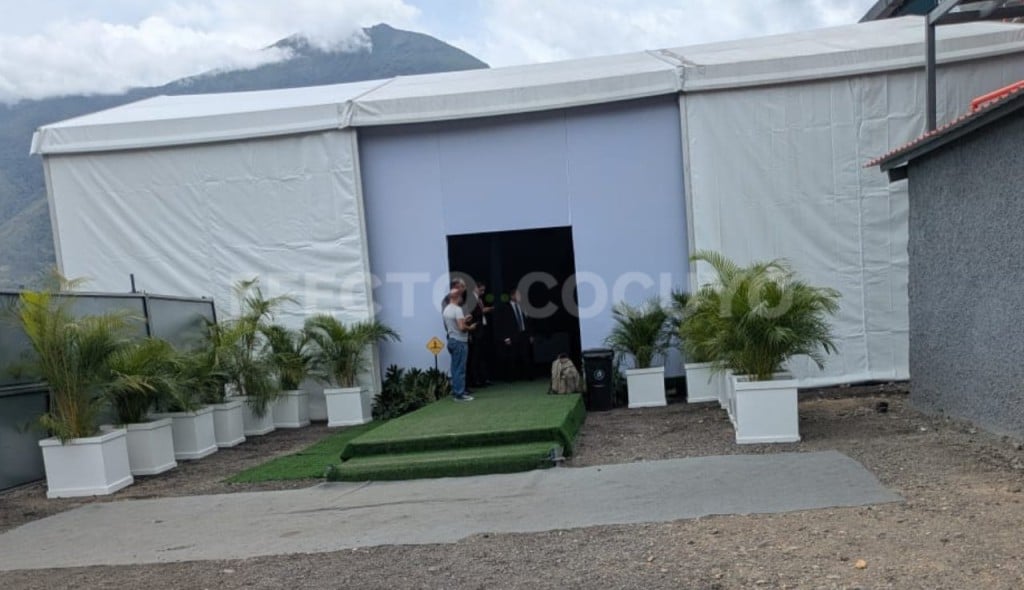
Behind Closed Doors
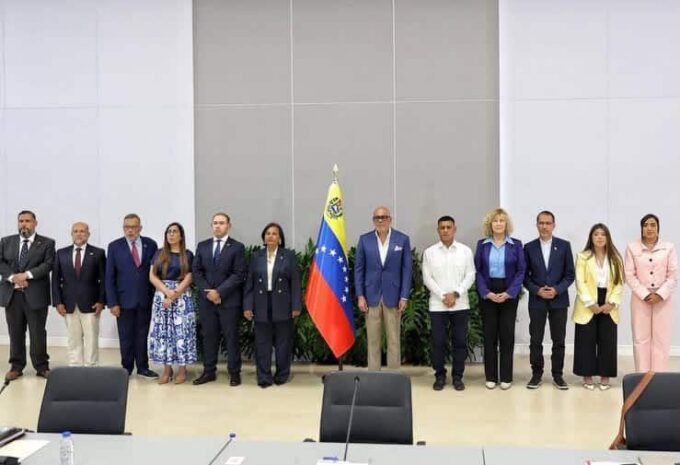
On an August afternoon marked by tension and uncertainty, the installation of a dialogue table between the Venezuelan government and opposition unfolded in a haze of secrecy and restricted access. The event, hosted at the Centro de Convenciones de La Carlota, was intended to signal a new chapter in the fraught political landscape of the nation, yet it fell short of expectations for transparency and public engagement.
Representatives from the 2025 Parliament and the 2015 National Assembly gathered, but journalists found themselves barred from covering the proceedings. The Ministry of Communication initially invited media participation but swiftly reversed its stance, permitting only photographers access while silencing reporters and television crews.
Silencing the Narrative
This restrictive approach to media coverage raises critical questions about the commitment to an open and democratic dialogue. The absence of official statements post-event, coupled with the limited information disseminated via social media by key political figures like Jorge Rodríguez and Dinorah Figuera, left many in the dark. The reliance on curated images and brief announcements further fueled concerns about the authenticity of the dialogue process.
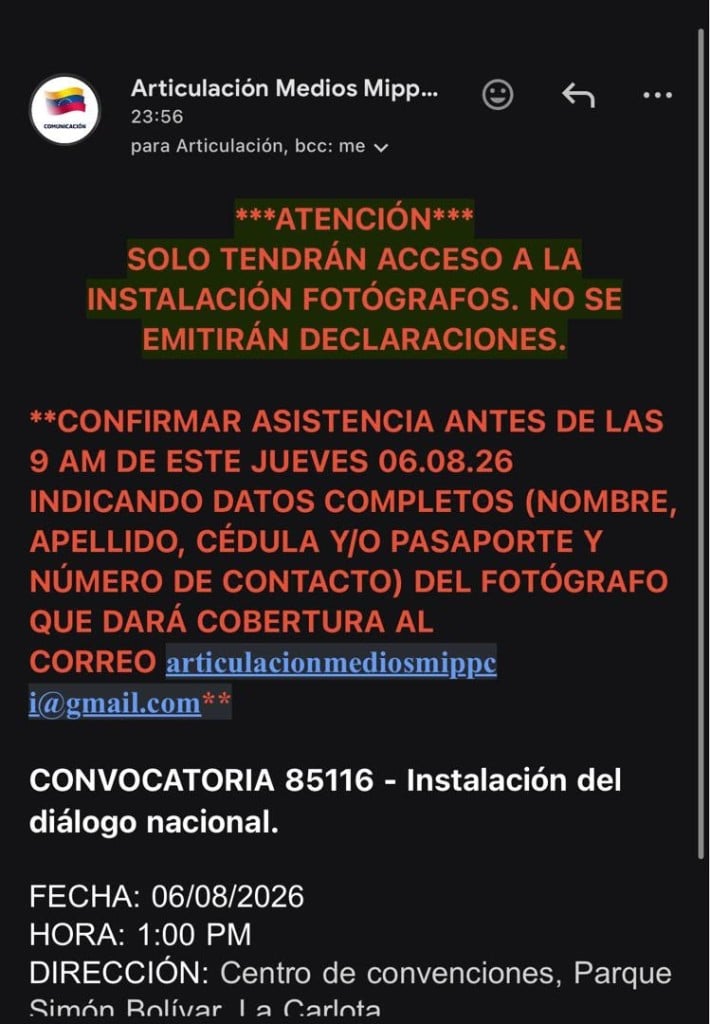
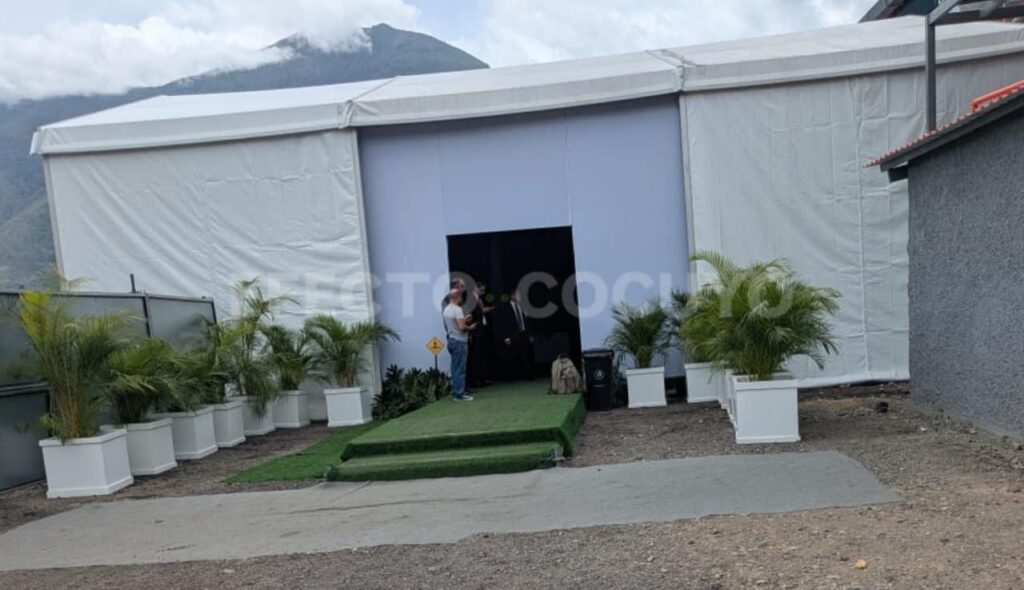
As the clock ticked towards the designated hour, journalists and media personnel gathered outside, hoping for a glimpse into the proceedings. However, their eagerness met with firm resistance. Security measures prevented entry, and even the presence of state-run media was not enough to circumvent the restrictions.
The Role of International Influence
What adds a layer of complexity to this dialogue is the direct involvement of the United States, marking a significant shift in the dynamics of Venezuelan politics. This intervention has introduced a level of oversight that previous political dialogues lacked, stirring both hope and skepticism among stakeholders. The intertwining of foreign interests with local politics underscores the delicate balance of power and the quest for legitimacy in a tumultuous environment.
Resistance from Within
The tension was palpable as the event unfolded. With the official commencement of the dialogue announced through social media a few hours after the scheduled start time, it became clear that the process was shrouded in a veil of uncertainty. The late arrival of delegations, accompanied by an entourage of security personnel, only heightened suspicions regarding the true nature of the discussions taking place within the confines of La Carlota.
Concerns about media freedom were exacerbated when members of the press outside the venue faced harassment and intimidation. Reports emerged of security personnel forcing a journalist to delete recorded material, a stark reminder of the ongoing struggles for press freedom in Venezuela. Such actions not only threaten the integrity of journalism but also undermine the public’s right to information.
Looking Ahead: A Path Forward?
As the dialogue progresses, the imperative for transparency remains paramount. For any meaningful political reconciliation to occur, it is essential that all voices—especially those of the media—be allowed to participate freely in the conversation. The road ahead is fraught with challenges, and the path to restoring trust between the government and opposition requires a commitment to openness and accountability.
In the context of Miami’s vibrant Venezuelan community, the implications of these political developments resonate deeply. Many expatriates remain invested in their homeland’s future, hoping for a resolution that honors democratic principles and ensures the well-being of its citizens.
A Call for Clarity
The unfolding narrative of the Venezuelan dialogue serves as a stark reminder of the complexities of governance in a polarized environment. As residents of Miami and beyond watch closely, the demand for clarity and transparency grows louder. The dialogue, while a necessary step, must evolve into a genuine exchange that prioritizes the voices of all stakeholders, including those willing to challenge the status quo.
Editorial note: This article was created by A Bit Lavish Miami’s Magazine as an original editorial reinterpretation based on publicly available reporting. Original source: efectococuyo.com. Read the original article here: https://efectococuyo.com/politica/fotografos-opacidad-instalacion-mesa-dialogo-chavismo-oposicion/.
Images are used for editorial reference with source credit. If an image requires correction or removal, please contact A Bit Lavish.








A New Dialogue: The Hopes and Challenges of Venezuelan Politics
Exploring the recent dialogue between Chavismo and opposition in Venezuela, its implications,...
 2 Mins read
Dinorah Figuera: A Vision for Venezuela’s Institutional Renaissance
Dinorah Figuera returns to Venezuela with a commitment to reinstitutionalization, aiming to...
2 Mins read
Vargas: Un Camino hacia la Reconstrucción Sostenible
Un análisis sobre el reciente acuerdo en Vargas para la reconstrucción post-sísmica,...
3 Mins read


Resilience Amidst Ruin: The Aftermath of Caraballeda’s Earthquake
Exploring the heart-wrenching impact of the recent earthquake on the educational community...
 ABL2 Mins read

Leave a comment