
Navigating Venezuela’s Complex Political Landscape: Who Truly Benefits?
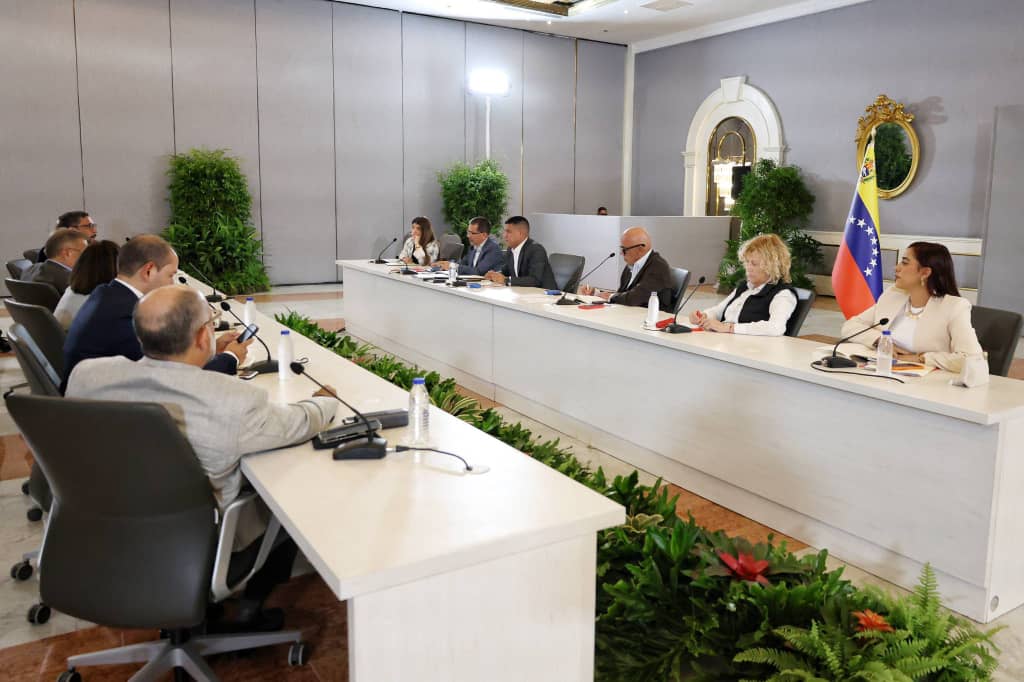
A Crucial Crossroad
In the heart of Venezuela’s political arena, a decisive moment unfolds where both formal and informal power structures intersect daily. Ordinary citizens witness this intricate game with a blend of skepticism, fatigue, and pressing urgency. The balance of power amongst national and international actors shapes not only the institutional future but also the immediate realities of countless families. High-stakes political negotiations reverberate directly to the wallets, dining tables, and collective spirits of the nation. In this context of latent tensions, understanding the strategic variables is crucial to grasping the true trajectory of the country.
The Geopolitical Landscape: Washington’s Strategic Cards
The United States’ foreign policy operates through selective incentives and punitive pressures, leveraging them as primary tools of strategic negotiation. Adjustments to energy licenses and financial sanctions serve as pivotal levers to influence the governing body’s behavior. Additionally, migration patterns and regional energy stability weigh significantly in American political calculations. The White House seeks pragmatic balances to ensure institutional guarantees while maintaining a degree of coercive power on the ground. These diplomatic choices have an immediate impact on trade flows and the economic expectations of everyday Venezuelans.
The Governance Equation: Officialdom’s Strategic Moves
The Venezuelan government functions from a foundation of territorial and institutional control, managing political timelines based on its preservation strategy. Its main bargaining chip lies in offering operational stability, access to vital resources, and easing continental migration pressures. Moreover, the manipulation of electoral calendars and regulatory frameworks provides maneuverability against persistent external pressures. The government’s objective is centered on diplomatic normalization, lifting economic restrictions, and achieving full legitimacy for its governance. For the populace, each governmental concession translates into varying degrees of suffocation in services and wages.
Legitimacy and Influence: María Corina Machado’s Role
Though not formally part of direct negotiations, María Corina Machado wields undeniable political weight. Her fundamental asset is the substantial popular support and social legitimacy accrued from her articulate and challenging leadership. This internal force influences the feasibility of any pact that attempts to sidestep the majority will expressed at the polls. Her ability to mobilize, moral ascendancy over vast sectors, and international dialogue afford her a symbolic veto power. Any elite agreement aiming for lasting stability must acknowledge the actors rallying citizen discontent.
The Silent Yet Defining Public Opinion
The social mood in Venezuela has evolved from militant enthusiasm to pragmatic realism, focused on daily survival. Surveys indicate a categorical rejection of prolonged sterile conflict and a pressing demand for tangible, verifiable solutions. The public penalizes empty rhetoric, evaluating political processes solely by their ability to foster family well-being and stability. This emotional detachment from traditional politics does not equate to resignation; rather, it reflects a silent accumulation of unmet expectations seeking expression. As long as agreements fail to address domestic realities, the gap in representation will dangerously widen.
The Fragility of Social Fabric: The Risk of Implosion
The nation’s socioeconomic framework reveals structural vulnerabilities that turn everyday life into a high-stakes race. The intermittent collapse of basic services, fluctuating exchange rates, and the precarious nature of real income create a highly volatile environment. When society senses institutional channels are obstructed, frustration can erupt into uncontrollable spontaneous conflict. Governance relies not solely on maintaining public order but also on meeting essential material coexistence, which is currently eroded. Ignoring this social thermometer in negotiation settings is akin to drafting theoretical maps over a highly flammable landscape.
Critical Variables and Future Scenarios
The outcomes of this complex web will hinge on the interaction of three pivotal variables: economic relaxation, mutual guarantees, and political legitimacy. The first potential scenario of incremental pragmatic agreement could revitalize the national economy in exchange for progressive, verifiable institutional relaxations. Conversely, a scenario of stagnation and retreat would exacerbate internal tensions, deepen the humanitarian crisis, and accelerate new migration cycles. Lastly, a scenario of breakdown characterized by social overheating would test the resilience of the state apparatus against widespread citizen demands. The viability of any pathway will depend on the genuine willingness to cede power for national viability.
Real-World Impacts: How Results Affect Daily Life
If negotiations yield tangible relief, the first visible symptom will be stabilization in family consumption and a reduction in currency uncertainty. On the flip side, a failure or superficial negotiation will deepen disillusionment and further atomize an already battered social fabric. Citizens do not evaluate negotiations based on diplomatic joint statements but rather on the reliability of electricity, water, and salaries. The legitimacy of any institutional arrangement will ultimately be decided in the streets, where endurance for deterioration has reached historic limits. Politics must synchronize with the agonizing pulse of everyday life.
Editorial note: This article was created by A Bit Lavish Miami’s Magazine as an original editorial reinterpretation based on publicly available reporting. Original source: efectococuyo.com. Read the original article here: https://efectococuyo.com/opinion/negociando-en-venezuela-quien-gana/.
Images are used for editorial reference with source credit. If an image requires correction or removal, please contact A Bit Lavish.



A Shift in the Winds: Flávio Bolsonaro’s Call for Change in Brazil
Explore Flávio Bolsonaro's vision for Brazil's future following his strong showing in...
 2 Mins read
A Surprising Turn in Brazilian Politics: Lula’s Unexpected First-Round Results
Brazil's President Luiz Inácio Lula da Silva reacts to unexpected election results,...
2 Mins read
Venezuela’s Inflation Rate Hits 8.4% in September 2026
The Central Bank of Venezuela has reported an inflation rate of 8.4%...
2 Mins read
Navigating the Divide: Brazil’s Polarized Election Landscape
As Brazil approaches a critical election, the nation is divided between Lula...
2 Mins read