
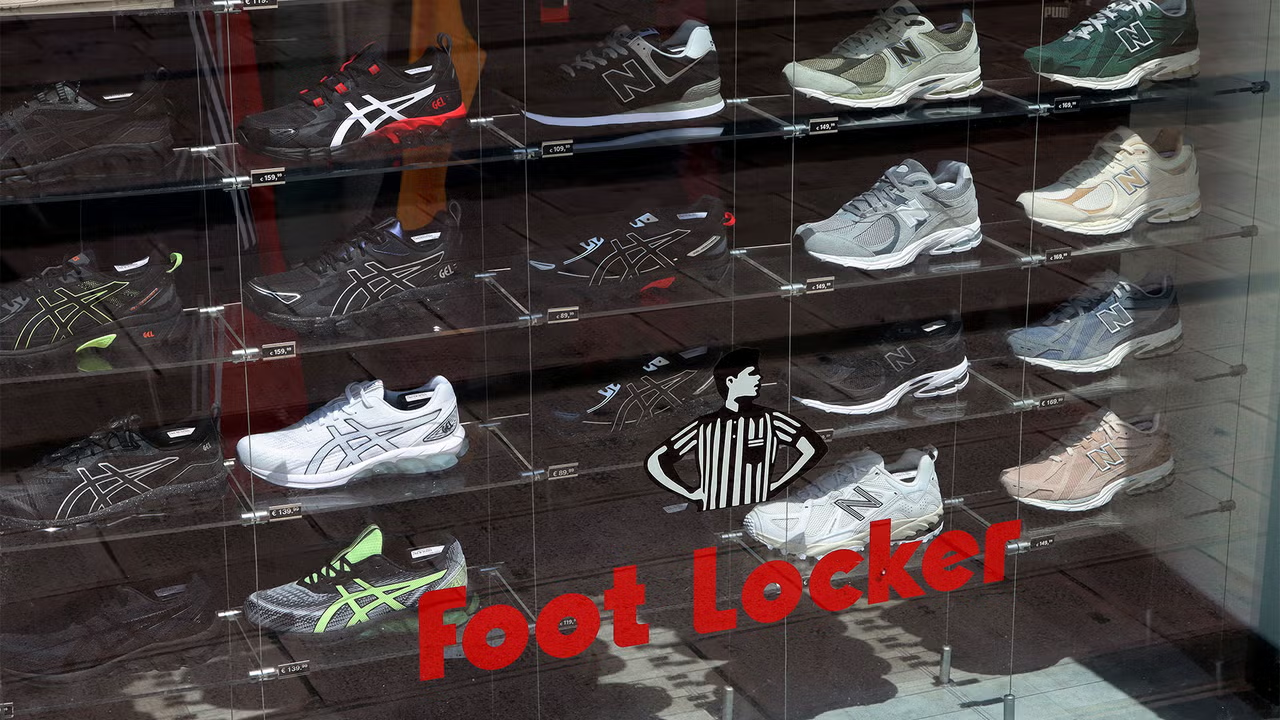
A Shift in Retail Dynamics
The retail landscape for athletic footwear is experiencing seismic shifts, with industry giants grappling to adapt to changing consumer behaviors and market conditions. Recently, Dick’s Sporting Goods faced an unexpected setback, evidenced by a significant decline in its stock price following a disappointing earnings report. As the company strives to integrate Foot Locker into its portfolio, challenges loom large, sparking discussions about the future of both brands.
Financial Footing and Market Realities
Despite reporting a notable 53% increase in consolidated net sales, Dick’s Sporting Goods fell short of Wall Street’s expectations with earnings per diluted share of $3.50, trailing behind last year’s $4.71 and the anticipated $3.76. The company’s struggles highlight the complexities faced in a competitive sportswear market, especially as it navigates the aftermath of its $2.4 billion acquisition of Foot Locker.
Unpacking the Foot Locker Acquisition
Acquired in September 2025, Foot Locker was expected to bolster Dick’s position in the footwear sector. However, pro forma comparable sales for Foot Locker dipped by 3.6% in the second quarter, revealing the brand’s persistent challenges. Dick’s executives, including Ed Stack, the executive chairman, have pinpointed a saturated market filled with aggressive promotions and a reliance on legacy products that no longer resonate with consumers. A lack of innovative product launches further complicates Foot Locker’s recovery.
Strategic Store Closures and a New Direction
As part of its strategy to optimize operations, Dick’s has initiated a review of Foot Locker’s assets, resulting in the closure of 110 stores worldwide by August. This move, while painful, aims to streamline operations and focus on more profitable locations. Areas impacted include Foot Locker North America, which saw 20 closures, alongside other branded outlets like Champs Sports and Kids Foot Locker. The intent is clear: to revitalize Foot Locker’s brand while reassessing its global footprint amidst evolving market demands.
The Competitive Landscape
Foot Locker’s predicament is not isolated. Other major players in the sneaker industry, such as Adidas and Under Armour, have also struggled, showcasing a broader trend of turbulence in the physical retail space. Nike recently closed multiple stores to recalibrate its retail strategy, indicating that the challenges faced by Dick’s and Foot Locker are reflective of larger industry dynamics. Analysts speculate whether a ‘hangover’ from previous footwear cycles is causing a slowdown in innovation across brands.
Looking Ahead: Optimism Amidst Adversity
Despite these hurdles, there remains cautious optimism within Dick’s leadership regarding the turnaround potential for Foot Locker. While acknowledging the competitive pressures that will likely persist, executives reaffirm their commitment to long-term strategies that aim to restore Foot Locker’s vitality. They believe that with a focused strategy and a return to innovation, Foot Locker can reclaim its position in the market.
As stakeholders and consumers alike watch this unfolding narrative, the evolution of Dick’s Sporting Goods and Foot Locker will serve as a case study in resilience and strategic recalibration within the retail sportswear sector. Miami, with its vibrant lifestyle and active community, will undoubtedly feel the ripple effects of these changes as brands seek to resonate with local consumers who value both performance and style.
Editorial note: This article was created by A Bit Lavish Miami’s Magazine as an original editorial reinterpretation based on publicly available reporting. Original source: fastcompany.com. Read the original article here: https://www.fastcompany.com/91596030/foot-locker-closing-stores-2026-see-locations-where-dicks-shuttering.
Images are used for editorial reference with source credit. If an image requires correction or removal, please contact A Bit Lavish.









Meta’s Transformative Settlement: A New Era in Youth Social Media Safety
Meta's $17 billion settlement marks a significant shift in the approach to...
 ABL2 Mins read

Innovative Warfare: Ukraine’s Strategic Drone Campaign Reshaping Conflict Dynamics
An analysis of Ukraine's drone warfare strategies targeting Russian infrastructure, examining implications...
ABL2 Mins read

The New Frontier: How Data Centers Are Reshaping Political Landscapes and Business Strategies
Explore how the growing opposition to data centers is influencing political landscapes...
ABL3 Mins read



The Gas Renaissance: U.S. Data Centers Drive a New Era of Energy Development
Explore how America's data center surge is reshaping the gas power landscape,...
ABL2 Mins read

Leave a comment