
The Empathy Factor: Elevating Leadership in a High-Tech World
Introduction: The New Leadership Paradigm
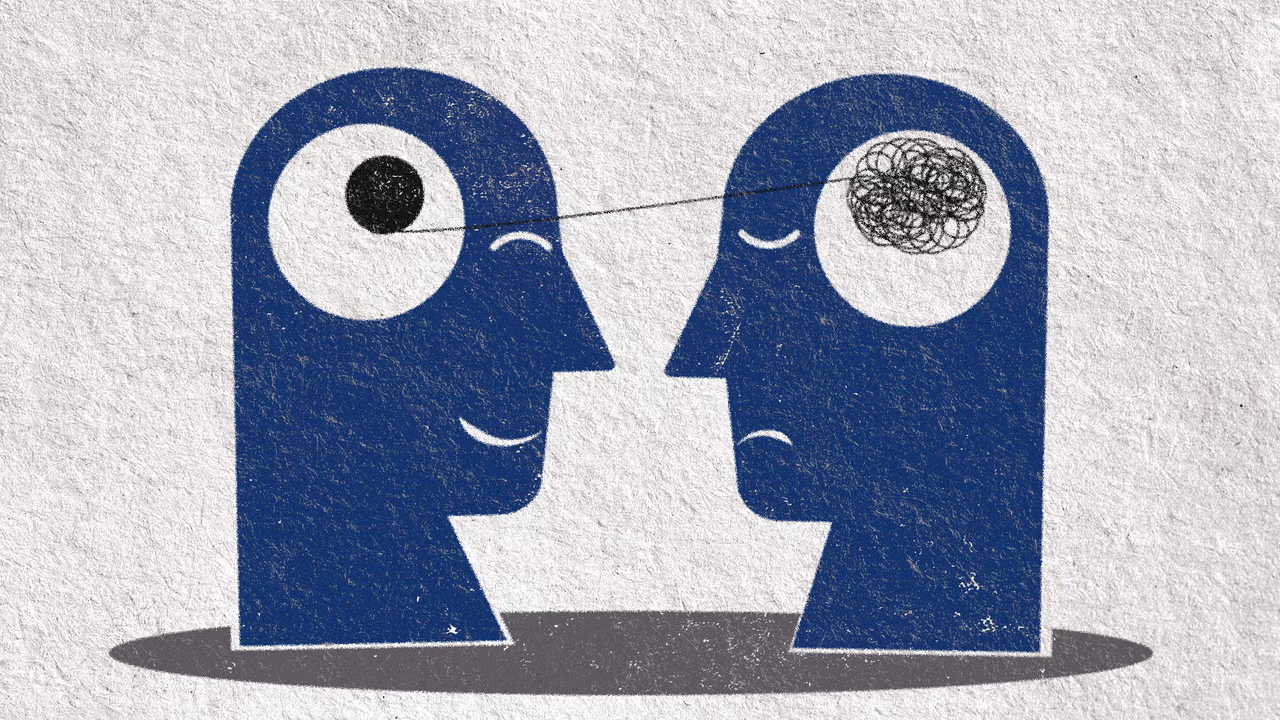
As we navigate through an era increasingly dominated by artificial intelligence, the landscape of leadership is shifting dramatically. With AI’s remarkable capabilities in data analysis and pattern recognition, organizations may wonder what unique skills humans can still offer. The answer lies in emotional intelligence, particularly in the form of empathy—a leadership quality that machines simply cannot replicate.
The Unique Human Touch
Doug Noll, a notable figure in the field of empathy and leadership, emphasizes that empathy is not merely an abstract concept but a precise skill that can be cultivated. Noll, with a background as a lawyer turned peacemaker, has dedicated his career to illustrating the power of emotional resonance. He asserts that empathy allows leaders to observe and articulate the emotional experiences of others from their perspective, a capacity that AI lacks.
Appreciation: Beyond Automated Recognition
In the corporate world, the importance of genuine appreciation cannot be overstated. Employees often leave organizations not solely due to salary or promotion issues, but because they feel undervalued. A recent anecdote highlights this issue vividly: a long-time employee received a generic email of appreciation generated by AI. The disappointment was palpable when she realized that her achievements went unacknowledged in a personal manner. This incident underscores how automated recognition can fall flat, failing to foster a culture of appreciation.
Building Lasting Relationships
Workplaces are more than just venues for task completion; they are ecosystems of human relationships. While AI can manage data, it cannot create the nuanced connections borne from shared experiences and emotional understanding. These interpersonal relationships often extend beyond the office, providing a sense of belonging and purpose. Leaders who prioritize empathy can nurture these bonds, ensuring that their teams feel valued not just as employees, but as integral parts of a larger community.
Trust: The Cornerstone of Effective Leadership
Trust is the bedrock of any healthy organizational culture. It enables employees to express their ideas freely and take calculated risks, confident that their leaders will support them. However, trust is not easily earned; it requires time and emotional investment. Leaders who leverage empathy in their interactions can foster an environment where trust flourishes. Unlike AI, which may simulate emotional responses, true empathy creates genuine connections that are fundamental to establishing trust.
A Deeper Understanding of Human Emotions
Empathy extends beyond interactions with others; it also fosters self-awareness. By understanding our own emotions, we become more attuned to how we impact those around us. This awareness enhances our ability to respond thoughtfully and compassionately, creating a workplace atmosphere where everyone feels safe and understood. Leaders who excel in empathy can unlock their team’s potential by recognizing individual strengths and fostering a culture of collaboration.
Memories that Matter: The Lasting Impact of Empathy
As technology continues to evolve, it is essential to remember that the most enduring memories from our professional lives will not be of the tools we used, but of the connections we forged. Leaders who practice empathy will be remembered for their ability to see potential in others and inspire them to reach new heights. These relationships create lasting impressions that transcend the fleeting nature of technological advancements, emphasizing the importance of human touch in an increasingly automated world.
Editorial note: This article was created by A Bit Lavish Miami’s Magazine as an original editorial reinterpretation based on publicly available reporting. Original source: fastcompany.com. Read the original article here: https://www.fastcompany.com/91604722/why-emotional-intelligence-is-a-crucial-leadership-skill.
Images are used for editorial reference with source credit. If an image requires correction or removal, please contact A Bit Lavish.




Ray Dalio Warns of Potential Pullbacks from US Treasuries by China and Japan
Ray Dalio's recent warning highlights significant risks for global financial markets as...
 2 Mins read
Oil Prices Rise Amid Gulf Tensions and Robust Mideast Exports
Recent developments in the Middle East have led to a notable increase...
2 Mins read
Navigating the New Landscape: How AI is Reshaping Entry-Level Careers
As AI transforms the job market, new graduates face challenges that redefine...
2 Mins read
Germany and France Forge New Trade Defense Tool Targeting Chinese Goods
The recent agreement between Germany and France to establish a last-resort tool...
2 Mins read