
OpenAI’s Math Breakthrough: A New Frontier in Technology and Mathematics
MIAMI — October 8, 2026
OpenAI has made a significant announcement today regarding a breakthrough in mathematical capabilities that could reshape various fields, from technology to academia. This development, revealed in a press release published at 09:24 UTC, underscores OpenAI’s commitment to pushing the boundaries of artificial intelligence and its applications in complex problem-solving.
The breakthrough involves advanced algorithms that enhance the ability of AI systems to perform mathematical reasoning and problem-solving tasks. This advancement is not merely an incremental improvement; it represents a paradigm shift in how AI can assist in mathematical research and applications. The implications of this development are vast, potentially impacting sectors such as finance, engineering, and scientific research.
OpenAI, founded in December 2015, has been at the forefront of AI research, consistently delivering innovations that challenge traditional boundaries. This latest announcement follows a series of advancements in AI capabilities, including natural language processing and image recognition, but this marks a distinct focus on mathematical reasoning.
The trigger for this breakthrough appears to be a combination of enhanced computational power and novel algorithmic approaches that allow AI to tackle mathematical problems previously deemed too complex for machines. This development could lead to more efficient solutions in optimization problems, cryptography, and even theoretical mathematics.
As the technology landscape evolves, the financial implications are significant. Companies leveraging this new capability could see improved efficiencies and reduced costs in operations that rely heavily on mathematical modeling. Furthermore, academic institutions may find new avenues for research and collaboration, potentially leading to groundbreaking discoveries.
This announcement is receiving heightened attention due to its potential to influence not only technological advancements but also educational methodologies. As AI becomes more integrated into academic curricula, the way mathematics is taught and understood could undergo a transformation, making complex concepts more accessible to students.
On a global scale, the implications of OpenAI’s breakthrough could foster international collaboration in scientific research, as countries may seek to harness this technology for various applications. The ability to solve complex mathematical problems more efficiently could lead to advancements in climate modeling, healthcare analytics, and even space exploration.
Looking ahead, the next steps for OpenAI will likely involve further refinement of these algorithms and partnerships with academic institutions and industries to explore practical applications. As organizations begin to adopt this technology, we can expect to see a surge in research initiatives aimed at understanding the full potential of AI in mathematics.
In conclusion, OpenAI’s latest announcement marks a pivotal moment in the intersection of artificial intelligence and mathematics, with the potential to redefine how we approach complex problem-solving across various sectors.
Source: Axios


AI Breakthrough: Mathematicians Solve Decades-Old Problem Using Artificial Intelligence
The application of AI in mathematics has led to the resolution of...
 2 Mins read
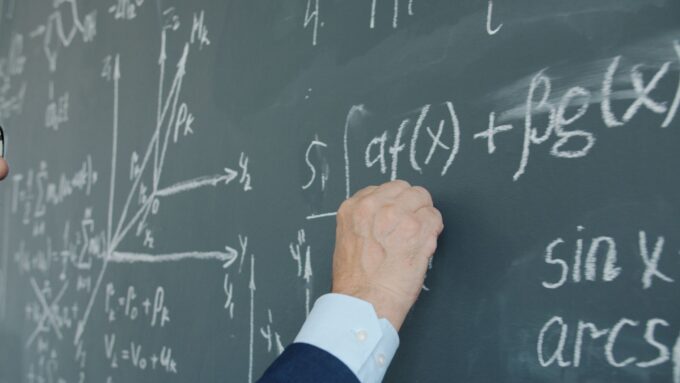
OpenAI’s Model Achieves Breakthrough in Solving Long-Standing Math Problems
OpenAI announces its internal model has solved over 100 complex mathematical problems,...
1 Mins read

OpenAI Claims Solution to Navier-Stokes Millennium Prize Problem Amid Authorship Controversy
OpenAI's recent announcement regarding the Navier-Stokes Millennium Prize Problem marks a significant...
2 Mins read


AI Achieves Breakthrough by Solving One of Mathematics’ Most Challenging Problems
The recent achievement of AI in solving a complex mathematical problem marks...
2 Mins read

Leave a comment