
WELLAND SEEKS $40M FROM NIAGARA TAXPAYERS TO BOOST LUXURY HOME DEVELOPMENT
 ABLUpdated 8 months Ago3 Mins read184
Controversial $80 Million Proposal for Welland Canal Development Sparks Debate
A controversial proposal to allocate up to $80 million in public funds toward a private development along the Welland Canal is drawing sharp criticism from Regional staff and elected officials concerned about fiscal responsibility. The debate centers around a new $40 million grant request from the City of Welland, which has reignited scrutiny over taxpayer-funded incentive programs in the Niagara Region.
The Proposal: Lock & Quay Development
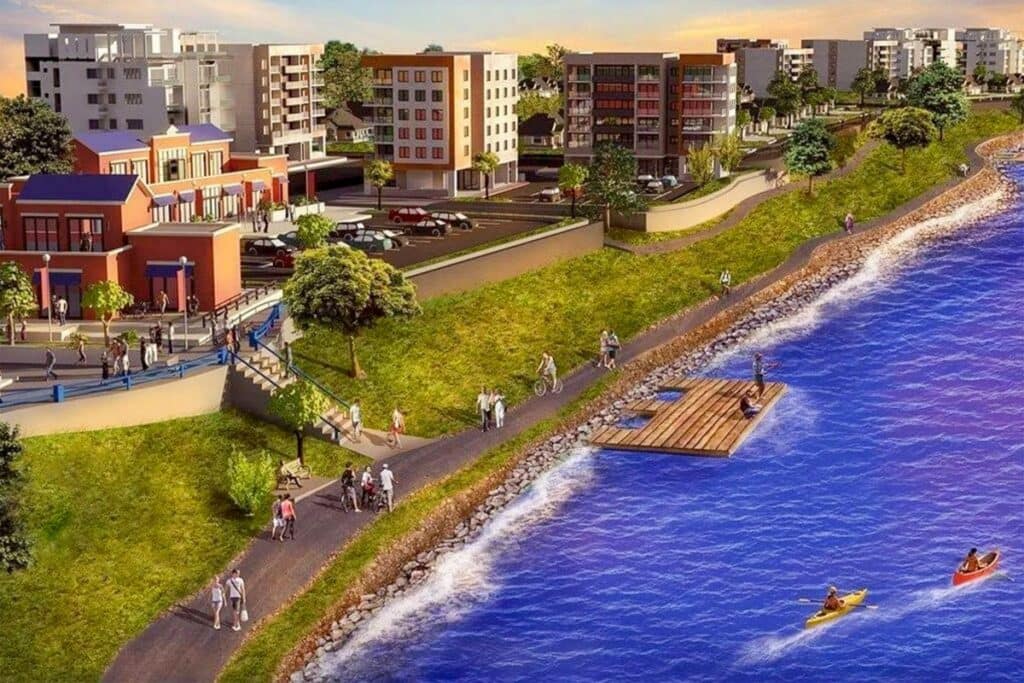
Welland Mayor Frank Campion is championing a significant proposal that would see the Region contribute $40 million for a 52-hectare residential development known as Lock & Quay at 1 Quaker Road. Planned by L!V Developments, this ambitious project aims to deliver 4,500 housing units over 18 phases, marking the largest development plan in the city’s history. The developer describes Lock & Quay as “Welland’s Largest Ever Master-Planned Community,” set against the picturesque backdrop of the Welland Recreational Canal.
L!V Developments touts the project as a visionary development featuring urban townhomes in a vibrant, amenity-rich community. However, the sheer size of the funding request has raised eyebrows and triggered special considerations at the Regional level, reigniting debates about the responsible use of taxpayer money.
Financial Implications and Concerns
Welland has already committed $40,235,000 of its own funding and is asking the Region to match it, effectively doubling the public subsidy available to developers and investors. This totals more than $80 million in costs that would be borne by taxpayers, rather than the builder seeking to maximize its profit margin through a public handout.
The application falls under the Brownfield Tax Incentive Grant (BTIG) program, which is intended to help offset the costs of cleaning up contaminated properties. However, critics argue that the site does not meet the traditional definition of a brownfield. A Phase 2 Environmental Site Assessment determined that actual remediation costs would be just $181,062, a fraction of what might justify a grant of this size under the program’s original intent.
Lack of Affordable Housing
One of the most contentious aspects of the proposal is the absence of any affordable or attainable housing component. L!V Developments has made it clear to the council that they do not have a specific guarantee on the affordability of the homes. At a recent Regional Council meeting, representatives stated, “We do not have a specific guarantee on the affordability of the homes right now.” While the project will offer various housing types, the lack of a dedicated affordable housing component raises questions about its alignment with the Region’s stated priorities.
Historical Context and Previous Controversies
This latest controversy comes on the heels of a $50 million legacy that still looms over the Region. A 2019 audit by consulting firm KPMG found no statistical correlation between financial incentives granted to developers and growth in the tax base. The consultant concluded that taxpayers received little to no benefit from the tens of millions handed over to developers, leading to skepticism about the efficacy of such programs.
Despite these findings, Niagara Regional Council voted to extend key incentive programs for an additional 18 months, largely due to the efforts of St. Catharines Mayor Mat Siscoe, a vocal advocate for these controversial incentives. Critics argue that such programs often serve as handouts to increase private-sector profits without delivering tangible benefits to the community.
Diverging Opinions on Fiscal Responsibility
The proposal has sharply divided Regional Council. On one side are the mayors of larger cities—St. Catharines, Welland, and Niagara Falls—along with many of their staff and several councillors, who support seemingly unlimited grants to private developers. On the other side stand mayors and councillors from smaller towns, questioning the wisdom of spending taxpayer money to create profits for developers.
Councillor Brian Heit expressed his concerns, stating, “No responsible level of government should offer automatic matching grants based solely on the spending decisions of lower-tier municipalities.” He emphasized the need for independent review and rigorous scrutiny of any request for taxpayer dollars.
Niagara-on-the-Lake Mayor Gary Zalepa echoed these sentiments, highlighting the “fundamental flaw” in the Region’s grant programs, where local municipalities set their own rules for awarding incentives. He argued that the Region should not support a motion that opens up a $40 million grant to a private developer without clear benefits to the community.
The Path Forward
As the debate continues, the financial implications of the proposal remain a significant concern. If approved, the first repayment on the Region’s $40 million grant would begin in 2030, with the final installment not due until 2056. This creates a long-term financial liability for future ratepayers, binding them to a debt obligation for a project that may deliver little public benefit.
Regional staff have expressed their opposition to the full $40 million request, recommending a cap of $5 million to align with the BTIG’s original purpose of supporting genuine remediation. They have highlighted that approving Welland’s application would restrict funds for future infrastructure and housing priorities.
The final vote on this contentious proposal is scheduled for the Regional Council meeting on August 28, and it remains to be seen how the council will navigate the complex interplay of fiscal responsibility, community needs, and private development interests. As the discussion unfolds, the already burdened taxpayer stands at the center of a debate that could shape the future of development in the Niagara Region.










Television is in Steep Decline Compared to Social Network Marketing
I understand how that could positively effect your body, but alchemizing means...
ABL2 Mins read

Treo Group Secures $132M Refinancing for University of Michigan Student Housing Developments
Treo Group Secures $132 Million Refinancing for Student Housing Near University of...
ABL2 Mins read

Mocca Group Lists $20M Ponce-Davis Luxury Home in Miami
Miami’s Luxury Real Estate Market: A Surge in Sales Activity Miami’s luxury...
ABL2 Mins read


How to Purchase Real Estate with Cryptocurrency Without Paying Taxes
Revolutionizing Real Estate Financing: The Rise of Crypto-Backed Mortgages In the ever-evolving...
ABL2 Mins read
