
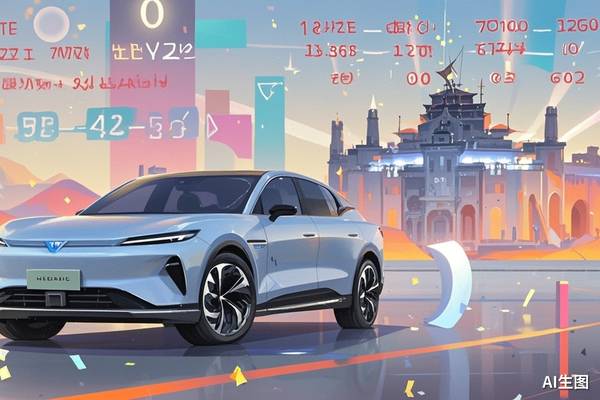
The Rise of Independent Luxury Brands: A Shift in the Automotive Landscape
On July 1st, Hongmeng Zhixing announced a remarkable sales milestone for June, reporting 52,700 vehicles sold, with the Wenjie model alone contributing 44,600 units. This achievement marked a significant moment in the automotive industry, as it highlighted the growing dominance of independent luxury brands in China. Notably, Hongmeng Zhixing reached a cumulative delivery of 800,000 vehicles within just 39 months, setting a new speed record that underscores the rapid evolution of the market.
The Decline of Imported Luxury Cars
In stark contrast, the Passenger Car Association released data on August 7th revealing a concerning trend for imported vehicles. In the first half of the year, only 220,000 imported cars were sold, with June alone accounting for 43,000 units. This decline represents a significant drop from previous years, with the first half of 2025 witnessing a year-on-year decrease of 32%. The once-thriving market for imported luxury cars, which peaked at 1.43 million units in 2014, has been steadily shrinking since 2018, with no signs of recovery.
The struggles of traditional luxury brands are evident in their plummeting sales figures. Brands like Jaguar and Cadillac have seen their prices drop dramatically, with Jaguar’s XEL being offered at a staggering discount of nearly 175,000 yuan. Despite these price cuts, many traditional luxury brands continue to experience declining sales, with net profits stagnating or even falling.
The Impact of Price Cuts
The strategy of slashing prices has become a common response among traditional luxury brands. For instance, Cadillac’s XT4 entry-level model is now priced below 160,000 yuan, while Maserati’s Grecale SUV has seen its price slashed to 388,800 yuan. However, these measures have not translated into significant sales growth. The overall performance of these brands remains lackluster, with many reporting reduced revenues and profits.
In contrast, independent luxury brands have been thriving. Hongmeng Zhixing alone sold 204,600 vehicles in the first half of the year, with Wenjie contributing 154,000 units. NIO also reported a year-on-year increase of 30.6%, delivering 114,100 new cars. This growth reflects a broader trend where independent brands are capturing market share, particularly in the new energy sector.
The Rise of Independent Luxury Brands
The decline of traditional luxury brands is not indicative of a shrinking market; rather, it highlights the rise of independent luxury brands that have adeptly navigated the new energy landscape. From 2016 to 2024, the domestic luxury car market has shown robust growth, with sales increasing from 1.45 million to over 5 million. Independent brands have capitalized on this expansion, capturing over 60% of the new energy market share.
Despite a slight decline in overall luxury car sales in the first half of 2025, independent brands have proven resilient. The market remains competitive, with brands like Zeekr, Li Auto, and Xiaomi emerging as formidable players. Their ability to innovate and adapt has allowed them to thrive even in challenging economic conditions.
The Urgency for Transformation
Traditional luxury brands face an urgent need for transformation. The decline in their market share is a reflection of their slow adaptation to the changing landscape. While independent brands have made significant strides in new energy and intelligent technologies, many traditional brands have struggled to keep pace. Their reliance on outdated fuel-to-electric conversion methods has resulted in a lag in product development and user experience.
Leading traditional brands are beginning to recognize the need for change. Collaborations with Chinese tech companies, such as BMW’s partnership with Momenta and Audi’s cooperation with Huawei, signal a shift towards embracing new technologies. However, the road to recovery will not be easy, and the gap between traditional and independent brands remains significant.
The Future of Luxury in China
As the automotive landscape continues to evolve, the definition of luxury is being redefined. The rise of independent brands has forced traditional luxury manufacturers to reconsider their strategies and offerings. The success of independent brands in the new energy sector is a testament to their ability to innovate and respond to consumer demands.
In conclusion, the automotive industry in China is undergoing a seismic shift. The impressive sales figures of independent luxury brands like Hongmeng Zhixing and NIO highlight a growing preference for innovation and sustainability among consumers. Traditional luxury brands must adapt quickly to this changing environment or risk being left behind in a market that no longer favors their outdated models. The future of luxury in China will be shaped by those who embrace change and prioritize the needs of the modern consumer.






Alena Ostapenko’s Current WTA Ranking Ahead of Toronto Tournament on August 4, 2026
Ostapenko's ranking impacts global tennis dynamics as she prepares for a key...
 1 Mins read

Alexander Rossi Conducts IndyCar IR-28 Test Ahead of Upcoming Season
Rossi's test underscores the evolving competitive landscape of IndyCar racing, crucial for...
1 Mins read
Tolkien Conference Switzerland 2027 Announces Keynote Speakers John Garth and Martin Simonson
The upcoming Tolkien Conference highlights the enduring global fascination with Middle-earth and...
1 Mins read


New Technology Will Help Keep Your Smart Home from Becoming Obsolete
I understand how that could positively effect your body, but alchemizing means...
 ABL2 Mins read
