
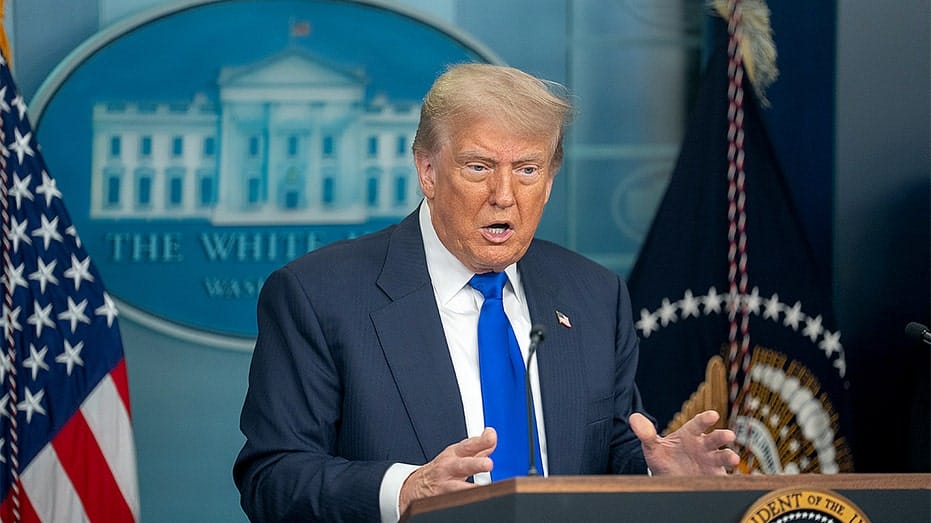
Lawyers for President Donald Trump asked the Supreme Court last week to review the legality of his executive order ending birthright citizenship — a high-profile and controversial order that, if enacted, would have profound impacts on the lives of millions of Americans and lawful U.S. residents.
It would also mark the second time in less than a year that the Supreme Court would review the order, at least technically.
Trump administration officials view the order as a key component of his hard-line immigration agenda, which has become a defining feature of Trump’s second White House term. Opponents have argued that the effort is unconstitutional and “unprecedented,” and would impact some 150,000 children in the U.S. who are born annually to parents of non-citizens.
As the court prepares to kick off its fall term, here’s what to know about the order — and possible next steps — in the high-profile case.
FEDERAL JUDGE BLOCKS TRUMP’S BIRTHRIGHT CITIZENSHIP BAN FOR ALL INFANTS, TESTING LOWER COURT POWERS
U.S. Solicitor General D. John Sauer asked the Supreme Court last week to review the merits of Trump’s birthright citizenship executive order. His request focused largely on two court orders handed down in July by a federal judge in New Hampshire, and by the U.S. Court of Appeals for the Ninth Circuit.
In his petition to the high court, Sauer argued that the lower court’s decisions were overly broad, and “invalidated a policy of prime importance to the president and his administration in a manner that undermines our border security.”
The New Hampshire case, Barbara v. Trump, centers on a preliminary injunction handed down by U.S. District Judge Joseph Laplante in July.
Laplante ruled that Trump’s executive order ending birthright citizenship likely contradicts the 14th Amendment and the “century-old untouched precedent that interprets it.”
He also certified as a class all infants born in the U.S. after Feb. 20, 2025, who would have been denied citizenship under Trump’s executive order.
Sauer also honed in on the U.S. Court of Appeals for the Ninth Circuit, which ruled 2-1 to invalidate Trump’s order.
TRUMP TO BEGIN ENFORCING BIRTHRIGHT CITIZENSHIP ORDER AS EARLY AS THIS MONTH, DOJ SAYS
The 2-1 majority for the Ninth Circuit ruled that the order is “invalid” because it “contradicts the plain language of the Fourteenth Amendment” and its citizenship clause.
Sauer argued last week that the Supreme Court has a “compelling interest in ensuring that American citizenship — the privilege that allows us to choose our political leaders—is granted only to those who are lawfully entitled to it.”
Sauer also reiterated the administration’s argument that the Citizenship Clause of the 14th Amendment was intended “to grant citizenship to newly freed slaves and their children.”
The rulings in question, he said, rely on the “mistaken view” that “birth on U.S. territory confers citizenship on anyone subject to the regulatory reach of U.S. law became pervasive, with destructive consequences.”
Notably, he opted not to ask the justices to fast-track the case, meaning that oral arguments would not likely be scheduled before the end of the year. More details from the high court could come as early as this month, after challengers file their responses to the high court.
In short, not much. Though the Supreme Court technically reviewed the case in May, both the Trump administration’s appeal to the court, and the justices themselves, steered clear of addressing the merits of the order in their first review.
Instead, the appeal, and the May oral arguments, focused narrowly on the ability of lower courts to issue so-called “universal,” or nationwide injunctions that block a president’s executive order from taking force across the country.
In June, justices ruled 6-3 that plaintiffs seeking nationwide relief must bring the cases as class action lawsuits, narrowing the instances in which lower district courts can issue universal injunctions.
And while justices for the Supreme Court majority appeared to view the birthright citizenship case as a valid pretext for the administration to challenge lower court authorities, it did not impact the fate of the order itself, which was blocked by multiple federal courts in the weeks after the Supreme Court’s decision.
The executive order at issue was signed by Trump on Jan. 20, the first day of his second White House term. It directs all U.S. government agencies to refuse to issue citizenship documents to children born to illegal immigrants, or children who do not have at least one parent who is an American or a lawful permanent resident.
The order seeks to clarify the 14th Amendment, which states, “All persons born or naturalized in the United States, and subject to the jurisdiction thereof, are citizens of the United States and of the State wherein they reside.”
Instead, the language proposed by Trump officials — and subsequently blocked in court — would be changed to note that individuals born to illegal immigrant parents, or those who were here legally but on temporary non-immigrant visas, are not citizens by birthright.
Trump’s order on birthright citizenship has provoked intense criticism from Democrats and some Republicans, who note that the U.S. is one of some 30 countries around the world where birthright citizenship has long been afforded.
It was almost immediately challenged in court by more than 22 U.S. states and immigrant advocacy groups, which warned that possible fallout from the order could prove “catastrophic.”
Its legal bona fides remain unclear, and to date, no court has sided with the Trump administration in enforcing the order.
Still, critics have noted the deep uncertainty the order, and the lack of clear court consensus, has caused for many Americans, and residents living here without permanent citizenship.
CLICK HERE TO GET THE FOX NEWS APP
“I think one thing we have documented in the record is the incredible stress, anxiety and fear that our plaintiffs are experiencing because they’re not lawyers,” CASA attorney William Powell told reporters of the uncertainty surrounding the executive order and the ongoing litigation.
“It is confusing to them, and we can’t really assure them the order is fully blocked, because it’s not.”








State Department urges Americans to avoid Mexican city just across Texas border
The State Department warned Americans to avoid a city in Mexico just...
 ABL1 Mins read
Mike Johnson faces revolt from GOP privacy hawks threatening to kill FISA renewal as deadline looms
House GOP leadership is struggling to win over GOP privacy hawks as...
ABL3 Mins read
Ex-Fauci top advisor indicted over alleged COVID cover-up, hidden emails
The Justice Department is accusing a longtime senior advisor to Dr. Anthony...
ABL1 Mins read



Safe sex is about to get more expensive, world’s largest condom maker warns
The Iran war could hit consumers where they least expect it: condom...
ABL2 Mins read
