
Navigating the Evolving Landscape of the Housing Market: A Miami Perspective
The Transformation of Buyer Power
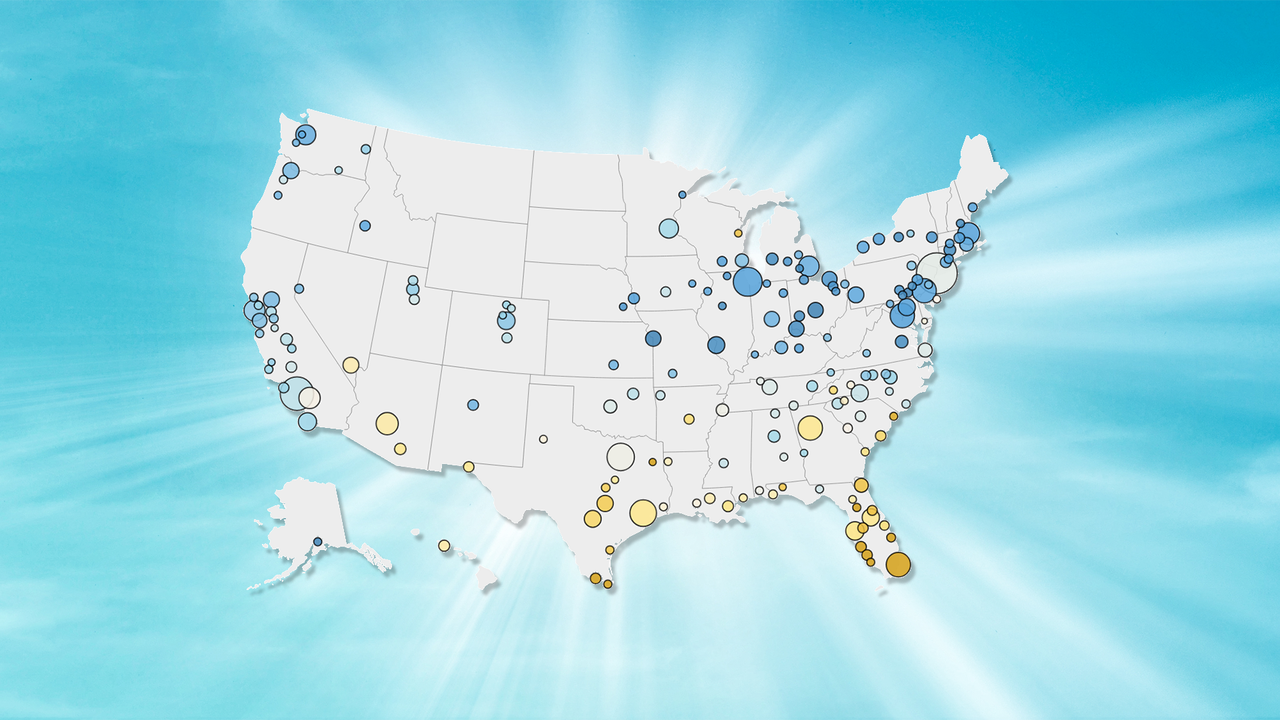
The housing market has undergone a seismic shift in recent years, particularly in the aftermath of the pandemic. As we delve into the dynamics of the current landscape, it becomes evident that the balance of power has tilted in favor of buyers, especially in regions like the Sun Belt. This shift is marked by a significant increase in the time it takes for homes to go pending, reflecting broader trends that are reshaping the real estate narrative.
Days to Pending: A Key Indicator
The metric known as ‘days to pending’ serves as an insightful gauge of the supply-demand equilibrium within local housing markets. This figure captures the time it takes for a listed property to receive an offer, providing a timely snapshot of market conditions. In May 2022, homes were flying off the market at a staggering rate, with a national median of just six days. Fast forward to May 2026, and this figure has tripled to around 18 days, revealing a more deliberative and buyer-friendly market.
Regional Disparities in Market Dynamics
The shift in buyer power is particularly pronounced in the Sun Belt, where states like Florida and Texas have witnessed substantial increases in the median days to pending. Miami, once a hotbed of rapid sales with homes pending in just 10 days, now sees that timeframe stretching to 52 days. This dramatic change underscores the growing inventory and the newfound leverage buyers possess in negotiations.
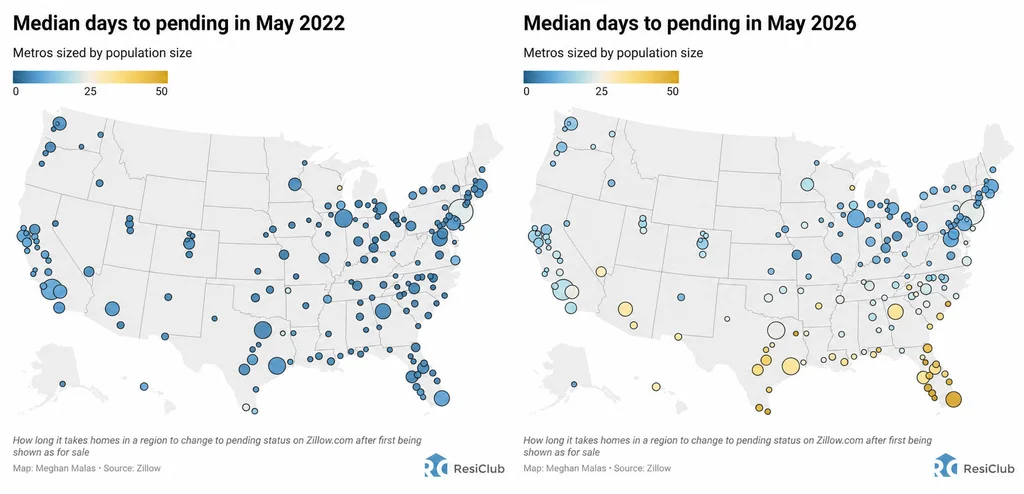
- Miami: 10 days in 2022 to 52 days in 2026
- Tampa: 5 days to 34 days
- Jacksonville: 5 days to 43 days
- Austin: 11 days to 41 days
This trend is mirrored in other parts of the Southeast, where the pandemic-era frenzy has given way to a more reflective buying process.
Contrasting the Northeast and Midwest
Interestingly, while much of the Sun Belt has seen an increase in selling times, markets in the Northeast and Midwest remain relatively tight. Cities like Chicago, Philadelphia, and Boston have only experienced slight increases in days to pending, indicating a continued seller’s market where inventory remains constrained. This stark contrast highlights the regional nuances that define the current housing landscape.
Implications for Buyers and Sellers
The extended timeframes for homes to go pending in many markets offer a dual advantage for buyers: more time to evaluate options and greater opportunities for negotiation. As buyers leverage this newfound power, sellers may need to adjust their strategies to remain competitive, including pricing adjustments and being open to concessions.
In contrast, those in the Northeast and Midwest may continue to enjoy a more favorable selling environment due to limited inventory. Sellers in these regions can still command quick sales, reinforcing the importance of understanding local market dynamics.
The Future of the Housing Market
As we look ahead, it is clear that the housing market is not monolithic; it is a tapestry of regional differences shaped by local economic conditions, inventory levels, and buyer sentiment. The current cooling trend from the hyper-competitive climate of 2022 does not signal a universal downturn but rather a recalibration of expectations and strategies.
In Miami, where the allure of coastal living continues to attract new residents, this evolving landscape presents unique opportunities for both buyers and sellers. As the market stabilizes, it will be essential for stakeholders to remain informed and adaptable to navigate the complexities of this changing environment.
Editorial note: This article was created by A Bit Lavish Miami’s Magazine as an original editorial reinterpretation based on publicly available reporting. Original source: fastcompany.com. Read the original article here: https://www.fastcompany.com/91563084/housing-market-where-homebuyers-have-gained-the-most-power-as-told-by-days-to-pending.
Images are used for editorial reference with source credit. If an image requires correction or removal, please contact A Bit Lavish.










Navigating Decision Fatigue: Strategies for Mental Clarity and Leadership
Explore innovative strategies to combat decision fatigue, preserving mental energy for crucial...
 2 Mins read
The Unexpected Ascendancy of The Cheesecake Factory: A Culinary and Financial Marvel
Explore how The Cheesecake Factory's innovative strategies and robust performance have positioned...
2 Mins read

Navigating the Intersection of Leadership and Motherhood in the Modern Workplace
Karoline Leavitt’s resignation highlights the challenges faced by working mothers amid increasing...
2 Mins read


Revolutionizing School Safety: The Emergence of Smart Evacuation Systems
Explore how innovative evacuation systems like Go To Green are transforming school...
3 Mins read
