
Navigating the New Landscape of Scientific Imagery in the Age of AI
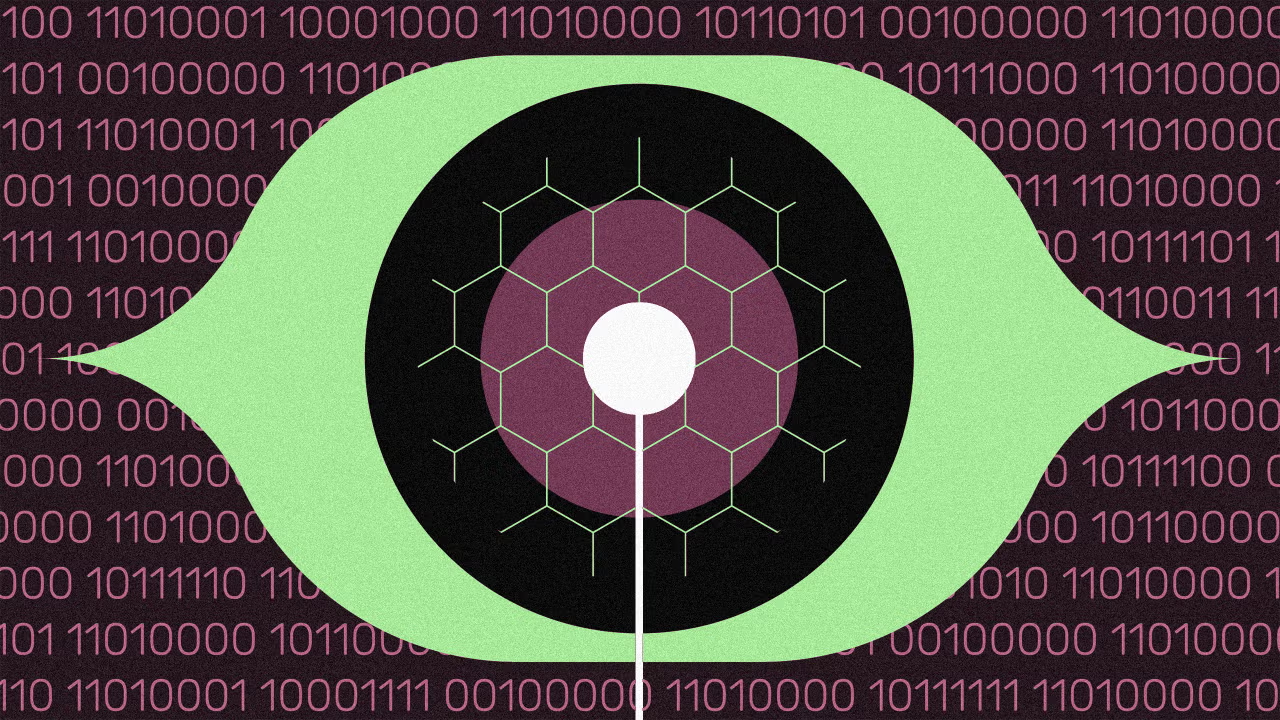
Shifting Paradigms in Visual Science
In an age where captivating images of Earth and celestial bodies are captured and shared with unprecedented ease, the integrity of scientific visuals hangs in the balance. The allure of an awe-inspiring photograph, such as the one taken during NASA’s Artemis II mission, highlights the dual-edged sword of technological advancement. While these images inspire wonder and curiosity, the rise of artificial intelligence has blurred the lines between reality and fabrication, raising critical questions about trust in the scientific community.
The Rise of AI-Generated Imagery
AI technologies are revolutionizing how scientific imagery is generated, used, and disseminated. From creating lifelike illustrations to editing existing images, these tools offer researchers innovative methods to communicate complex ideas effectively. However, this ease of creation comes with a caveat—an increased vulnerability to misinformation.
Notably, instances of AI-generated imagery leading to the retraction of scholarly articles underscore the potential pitfalls. In one case, figures with biologically impossible structures were published, while another instance involved a manipulated clinical image. Such events may only be the tip of the iceberg, suggesting that reliance on AI could jeopardize the integrity of visual evidence in critical scientific fields.
Redefining Trust in Visual Evidence
The authority of scientific images has long rested on their complexity and the specialized skills required to produce them. Traditionally, sophisticated visuals were seen as markers of credibility, providing a foundation for public trust. However, the democratization of image creation through AI is challenging these mental shortcuts. Today, a polished image can emerge from simple text prompts, weakening the association between visual quality and veracity.
As images circulate online without clear attribution, the public increasingly resorts to personal biases when evaluating visual evidence. This trend poses a significant risk, as authentic scientific images that contradict preexisting beliefs may be dismissed as artificially generated, while misleading images that align with those beliefs are readily accepted.
Ensuring Transparency in the Digital Era
To navigate this complex landscape, transparency emerges as a vital component of trustworthy scientific imagery. Just as researchers disclose their methodologies and funding sources, a similar commitment to image provenance is essential. Questions about the origin of images—whether they are direct observations, simulations, or AI-assisted modifications—must be clearly addressed.
Interestingly, research indicates that familiarity with AI tools can positively influence perceptions of credibility. Audiences that are well-versed in AI’s capabilities may view explicit disclosures about AI-generated content as a sign of transparency. This insight suggests that enhancing public comprehension of AI in scientific contexts might foster greater trust.
The Enduring Power of Authenticity
While AI introduces challenges, the emotional resonance of authentic imagery remains unmatched. Iconic photographs, such as the Apollo 8 “Earthrise” or the recent Artemis II captures, resonate deeply not merely for their aesthetic beauty, but for their connection to verified scientific exploration. These images evoke a sense of reality grounded in human experience and tangible evidence.
In a world increasingly skeptical of visual representations, scientific institutions must acknowledge that trust is no longer an automatic assumption. Instead, it hinges on transparent communication and meticulous documentation of how images are crafted and validated. Without this framework, the risk looms that every scientific image could be subject to scrutiny, leading to a pervasive culture of doubt.
Charting a Course Forward
As the landscape of scientific communication evolves, the responsible use of AI-generated imagery must prioritize honesty and adherence to established professional standards. This collaborative effort across various fields will cultivate a robust framework that enhances the credibility of visual evidence.
Ultimately, the future of scientific imagery in the age of AI rests not solely on technological advancements but also on the commitment to maintain the authenticity and integrity that have historically defined scientific discourse. As we navigate this transformative period, establishing guidelines for image creation and dissemination will be crucial in preserving the public’s trust in science.
Editorial note: This article was created by A Bit Lavish Miami’s Magazine as an original editorial reinterpretation based on publicly available reporting. Original source: fastcompany.com. Read the original article here: https://www.fastcompany.com/91563036/can-we-trust-scientific-images-ai-era.
Images are used for editorial reference with source credit. If an image requires correction or removal, please contact A Bit Lavish.



Beyond the Brand: Embracing Human Complexity in a Simplified World
Exploring the pitfalls of personal branding and advocating for an authentic human...
 2 Mins read
Bridging the AI Trust Divide: Why Women’s Perspectives Matter
Exploring the critical role women play in shaping AI strategies and fostering...
2 Mins read

Reimagining Leadership: A Vision for Women in Business and Society
Gloria Steinem and influential leaders discuss women's roles in leadership, parental leave,...
3 Mins read


Artificial Intelligence and the Gas Price Surge: A Legal Battle Unfolds
Exploring the implications of a lawsuit against major retailers for alleged AI-driven...
2 Mins read

Leave a comment