
Navigating Tragedy: The Lessons from Camp Mystic’s Catastrophe
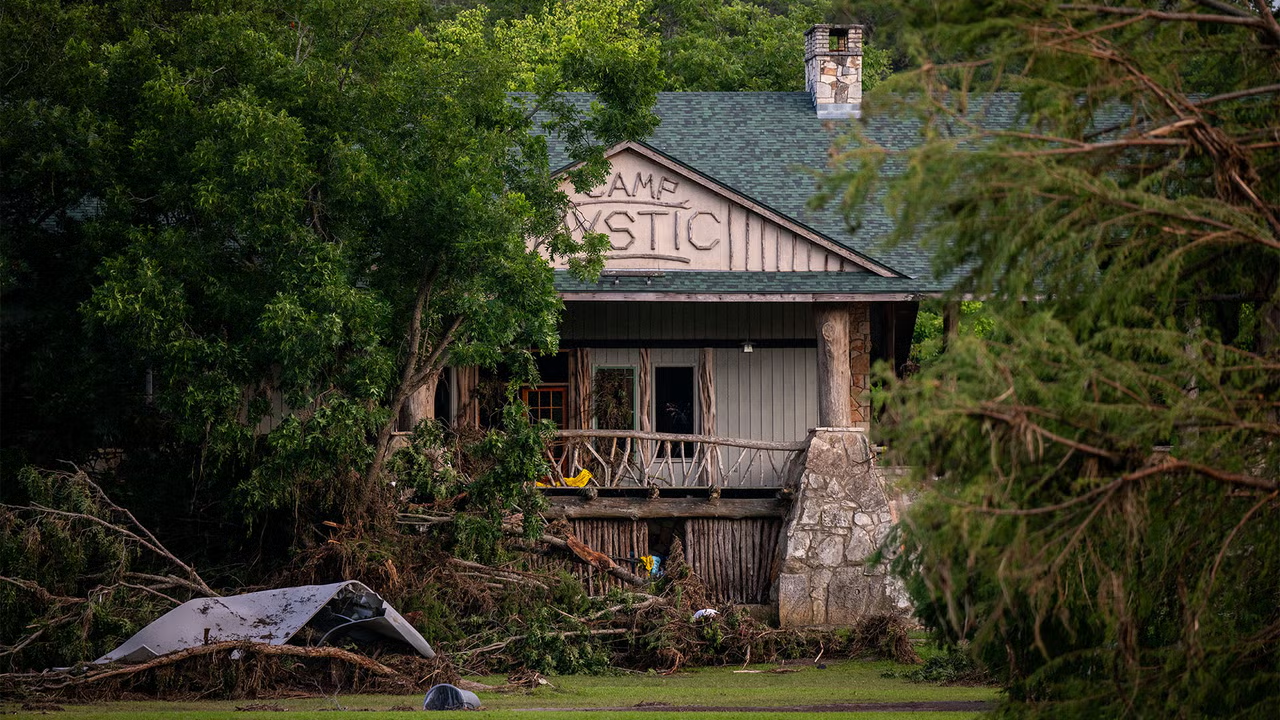
A Somber Reflection on Camp Mystic
In the summer of 2025, the serenity of Camp Mystic, a revered all-girls Christian summer camp in Texas, was irrevocably shattered. On July 4, a catastrophic flood claimed the lives of 28 individuals, including two teenage counselors, 25 campers, and the camp’s co-executive director. The Guadalupe River, which swelled to a staggering 37 feet within the span of an hour, brought forth a tragedy that would resonate far beyond the campgrounds.
As the community grieved, the aftermath revealed a harrowing reality: the camp’s operators are now facing bankruptcy, with reported debts ranging from $10 million to $50 million, juxtaposed against a mere $1 million to $10 million in assets. This financial turmoil, compounded by the emotional anguish of the families affected, underscores a critical need for a reassessment of safety protocols in recreational settings.
Bankruptcy and the Cost of Safety
Nearly a year after the disaster, the camp’s owners made the difficult decision to file for bankruptcy, an action prompted by the weight of legal repercussions and a failed attempt to reopen its doors. In the wake of the flood, families of the victims have initiated lawsuits claiming over $1 million in damages, asserting that the camp neglected its responsibility to ensure the safety of its campers and staff amidst impending danger.
In light of these events, the camp’s statement following its decision to withdraw its reopening application for the 2026 season spoke volumes: “Twenty-eight precious lives were lost. We recognize that no statement and no decision can undo that loss or ease the burden carried each day by parents, siblings, loved ones, survivors, first responders, and our beautiful Kerr County community.” This poignant acknowledgment of loss speaks to the depths of grief that linger within the community.
Lessons Unveiled: A Call for Reform
A recent investigation has shed light on the failures of Camp Mystic’s emergency preparedness and response. The report, spanning 115 pages, highlights a series of alarming lapses: inadequacies in storm preparation, ineffective evacuation procedures, insufficient staff training for emergencies, and a lack of timely communication with families.
During the evacuation, the report noted that only three adult staff members were actively involved in helping campers, with the evacuation process taking place one cabin at a time. Disturbingly, the camp’s public address system was not utilized to alert all campers and staff, and there were no instructions for campers to evacuate on foot, even when it was safe to do so.
This investigation serves as a stark reminder that the lessons learned from Camp Mystic’s tragedy are crucial for shaping future safety standards in recreational environments. “The lessons to be learned from the camp’s inadequate emergency planning and response are worthy of careful study for opportunities to avoid similar future tragedies,” the report emphasizes.
Reimagining Safety Standards in Recreational Spaces
The implications of the Camp Mystic tragedy extend beyond its immediate community. In a world where families seek safe and enriching environments for their children, the need for robust safety protocols in summer camps and other recreational facilities is paramount. As communities reflect on the lessons from this incident, there is a pressing need for comprehensive reforms that prioritize safety, communication, and preparedness.
Legislators are now tasked with using this investigation as a catalyst for change. The report’s preface states, “This report does not mark the end of legislative inquiry; it is, instead, a starting point for the next stage of reform as we strive continuously to make camps safer, emergency response more effective, and disaster relief more compassionate for our fellow citizens in their moments of crisis.” This sentiment resonates deeply, as it encapsulates the urgent need to reevaluate existing standards and practices.
The Miami Connection: A Broader Context
As Miami continues to grow as a hub for families seeking enriching summer experiences, the lessons from Camp Mystic serve as a vital reminder. Camps and recreational facilities in Miami must take heed of these events, ensuring that safety protocols are not merely an afterthought but rather a foundational aspect of their operations.
With the city’s vibrant summer camp landscape, there lies an opportunity for leaders in this space to innovate and implement comprehensive safety plans, staff training programs, and effective communication strategies that can prevent future tragedies. The necessity for transparency and accountability cannot be overstated; families deserve to feel secure in the environments they choose for their children.
Conclusion: A Path Forward
The tragedy at Camp Mystic may have unfolded in Texas, but its impact reverberates far beyond state lines. As families navigate their grief and the community grapples with the aftermath, there exists a collective responsibility to honor those lost by advocating for change. By fostering a culture of safety and preparedness, we can work towards a future where such tragedies become a relic of the past, rather than a haunting reminder of what can go wrong.
Editorial note: This article was created by A Bit Lavish Miami’s Magazine as an original editorial reinterpretation based on publicly available reporting. Original source: fastcompany.com. Read the original article here: https://www.fastcompany.com/91564381/camp-mystic-texas-bankruptcy-filing.
Images are used for editorial reference with source credit. If an image requires correction or removal, please contact A Bit Lavish.







A Surge in Silicon: Micron Technology’s Earnings Set to Illuminate the Memory Chip Market
Anticipating a remarkable surge in revenue and earnings, Micron Technology's upcoming earnings...
 2 Mins read

Revolutionizing Women’s Health: The Rise of Xella Health
Discover how Xella Health is transforming women's healthcare through AI-driven solutions, bridging...
3 Mins read

Beyond the Brand: Embracing Human Complexity in a Simplified World
Exploring the pitfalls of personal branding and advocating for an authentic human...
2 Mins read



Navigating the New Landscape of Scientific Imagery in the Age of AI
Exploring the impact of AI on scientific imagery, trust, and communication within...
3 Mins read

Leave a comment