
The Quest for Tranquility: Navigating the New Office Landscape
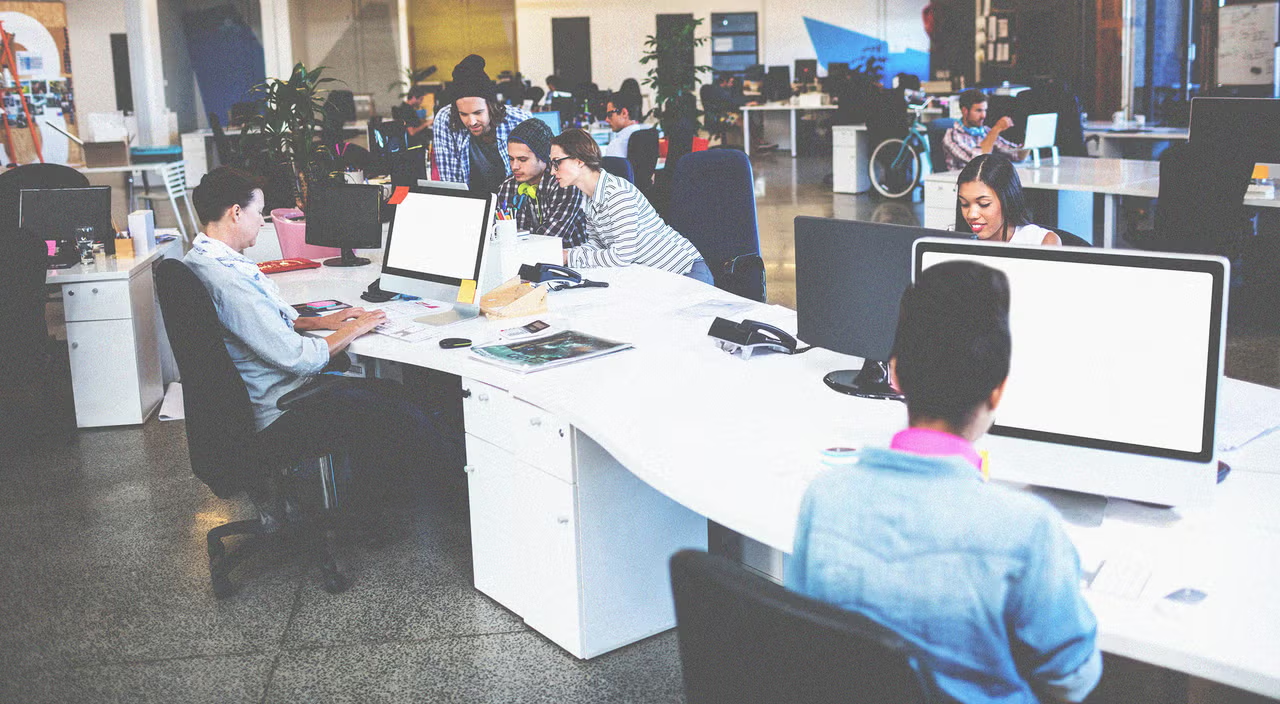
Reimagining Workspaces in a Post-Pandemic Era
The transition back to the office has sparked a significant reevaluation of workplace dynamics, revealing a stark contrast between pre- and post-pandemic employee expectations. With the emergence of remote working, many professionals have experienced a newfound appreciation for peace and quiet, which has become increasingly scarce in traditional office settings.
Take, for instance, Alex, a healthcare communications professional who has found the return to the office less than ideal. Her experiences underscore a growing sentiment among workers who feel that modern offices no longer support the demands of their daily responsibilities. Instead of fostering productivity, these spaces often create distractions that hinder focused work.
The Dichotomy of Open Spaces
The allure of open-plan offices is being called into question as employees rediscover the joys of working in quieter environments. The data speaks volumes: a recent report indicates that the importance of video calls has surged, with those considering them essential rising from 38% to 57% in just a few years. Meanwhile, the focus on collaborative work has waned, as fewer employees now prioritize group brainstorming sessions in favor of deep concentration tasks.
As Chase Garbarino, CEO of workplace experience platform HqO, notes, the narrative surrounding office collaboration is often pushed from the top down without considering the realities employees face. The stark truth is that while social interaction remains important, many returnees are yearning for spaces that allow them to concentrate effectively. The pandemic has changed the way we work, and it is time for office designs to reflect that.
Privacy as a Commodity
The lack of privacy in bustling office environments can be a source of significant stress, as revealed in the experiences of Taylor Glissman, an account executive in PR. Positioned near a high-traffic area, her ability to focus was constantly hampered by interruptions and the awareness of those around her. Many employees are discovering that the open office concept, once celebrated for its collaborative spirit, may inadvertently foster anxiety and distraction.
Natalie Pickering, an organizational psychologist, highlights a growing divide in workplace satisfaction. While extroverts may thrive in energetic environments, introverts often struggle to maintain focus amidst the chaos. The constant noise can drain cognitive resources, making it challenging to concentrate—a reality that many are grappling with as they adjust back to office life.
Reclaiming Autonomy in Work
The pandemic has also shifted employees’ expectations regarding autonomy in their workspaces. Many workers enjoyed the ability to control their environments while working from home, a luxury that is often lost in traditional office settings. As Pickering points out, reducing autonomy can lead to increased burnout, creating a pressing need for companies to address these concerns.
For Glissman, finding solace in her work often meant embracing unconventional hours. Arriving early or staying late allowed her to escape the noise and regain her focus, revealing that the office should be more than just a place to clock in hours; it must offer an environment conducive to productivity.
Rethinking Office Design
As we navigate this new landscape, the challenge for employers lies in adapting office designs to reflect the evolving needs of their workforce. The age of hot-desking and open spaces may be drawing to a close as organizations recognize that collective presence requires more than just attendance. The goal should be to create environments that facilitate meaningful interactions while also respecting the need for quiet and focused work.
According to Amanda Jones, a reader in Organizational Behavior, the recent shift highlights the necessity of reassessing workplace policies post-pandemic. Employers must be attentive to the changing nature of work and the importance of equipping offices with the right resources to foster both collaboration and concentration.
The Future of Workspaces in Miami
In Miami, a city known for its vibrant lifestyle and innovative businesses, the future of workspaces will need to reflect these changes. Companies that embrace flexible designs and prioritize employee well-being are more likely to attract top talent and foster a more engaged workforce. The key to success lies in creating spaces that not only promote collaboration but also recognize the value of quiet, focused work.
As we continue to adapt to the realities of post-pandemic work, the quest for tranquility in our offices may very well redefine what it means to be productive. Employers who are willing to listen to their employees and innovate will be the ones to thrive in this new era.
Editorial note: This article was created by A Bit Lavish Miami’s Magazine as an original editorial reinterpretation based on publicly available reporting. Original source: fastcompany.com. Read the original article here: https://www.fastcompany.com/91567439/in-an-rto-world-workers-long-for-peace-and-quiet.
Images are used for editorial reference with source credit. If an image requires correction or removal, please contact A Bit Lavish.









Guardians of Innovation: The Rising Tide of Security Workers in Silicon Valley
Explore the critical role of security workers in Silicon Valley's AI landscape...
 2 Mins read

The New Chapter in AI: How Book Acquisitions are Reshaping Language Models
Explore how AI companies are acquiring physical books to enhance training for...
2 Mins read
Reassessing the Impact of Cell Phone Bans in Schools: A Miami Perspective
Explore the nuanced effects of cell phone bans in schools, with insights...
2 Mins read



Navigating the AI-Infused Entertainment Landscape: The Rise of ‘Bad Cat’
Explore the intriguing intersection of AI and nostalgia in entertainment with the...
2 Mins read
