
Navigating the Skies: The Art and Challenge of Airline Fare Naming
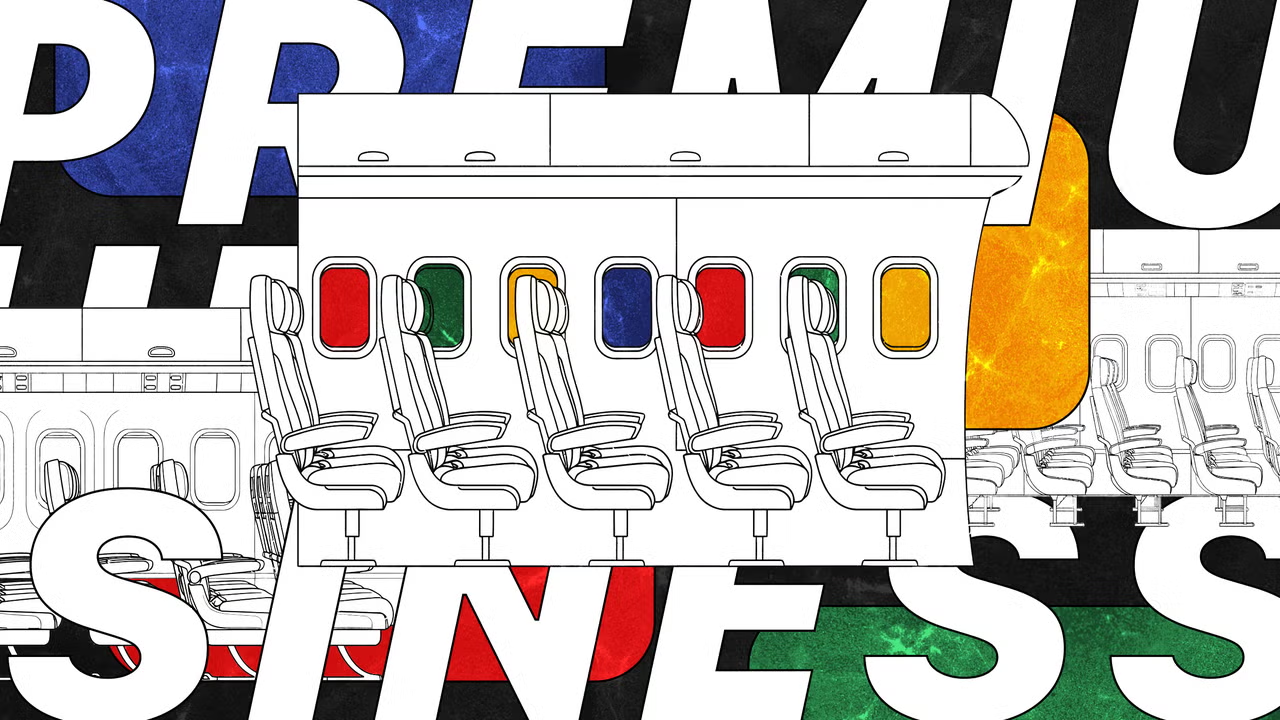
Reimagining Airline Experiences
In the evolving landscape of air travel, the latest fare naming conventions are igniting discussions among frequent flyers and industry experts alike. Delta Airlines recently introduced a new fare category that has sparked confusion and debate: the intriguingly named ‘Basic Business.’ This term, which suggests a blend of premium and budget, raises questions about what airlines aim to communicate regarding their services and how these names resonate with their customers.
The Dilemma of Naming Conventions
As airlines increasingly segment their offerings, the terminology used to describe fare classes has become more convoluted. Delta’s attempt to create an entry-level tier within its premium offerings reflects a trend seen across the industry. United Airlines, for instance, has also introduced a ‘Base’ fare for its premium Polaris class, stripping away several perks that were once standard. With such tactics, airlines are adapting to a market that increasingly prioritizes premium experiences but simultaneously complicates the customer journey.
The Customer Perspective
Social media reactions to the ‘Basic Business’ announcement have been swift and largely negative, with travelers expressing frustration over what they perceive as a dilution of the premium experience. Comments on platforms like Reddit highlight a growing skepticism: “Nothing Delta changes actually improves the experience for its patrons.” Such sentiments underscore a broader concern that the airline industry is prioritizing profit over customer satisfaction.
Decoding the Language of Air Travel
The challenge of naming fare classes is not merely semantic; it reflects deeper issues within the airline industry itself. According to brand naming experts, airlines often gravitate towards familiar terminology—Basic, Economy, Premium—trapped in a cycle of risk aversion that leads to a lack of innovation. Philip Davies of Siegel+Gale notes that while these terms may be easily understood globally, they lack distinctiveness, leaving customers more confused than informed.
Creative Solutions for Brand Identity
To break free from the common nomenclature that dominates the industry, experts advocate for a fresh approach to naming. Instead of simply describing the service, airlines should aim to convey the experience associated with each fare. For example, Alaska Airlines has chosen to label its lowest fare tier as ‘Saver’, which evokes a sense of financial prudence. British Airways opts for ‘Euro Traveller’ and ‘World Traveller’, effectively communicating the nature of the flight while enhancing brand identity.
Learning from the Best
Brands like Virgin Atlantic and Qatar Airways provide compelling case studies in effective naming. Virgin Atlantic’s ‘Upper Class’ exudes confidence and playfulness, while Qatar Airways’ ‘Qsuite’ evokes a sense of privacy and exclusivity. These names do more than merely categorize; they create a narrative that aligns with the airlines’ identities and enhances customer experience.
Looking Ahead: The Future of Air Travel Nomenclature
As the airline industry continues to navigate its evolving landscape, the importance of thoughtful fare naming cannot be overstated. With customers increasingly seeking clarity and value, there is an opportunity for airlines to innovate in this area. By embracing creativity in their naming conventions, airlines can not only improve customer understanding but also strengthen their brand identity in a competitive market. The challenge lies in balancing the need for clarity with the desire for differentiation, a task that will require a departure from the status quo.
Editorial note: This article was created by A Bit Lavish Miami’s Magazine as an original editorial reinterpretation based on publicly available reporting. Original source: fastcompany.com. Read the original article here: https://www.fastcompany.com/91575681/basic-business-platinum-pro-premium-plus-airlines-have-a-naming-problem-heres-how-to-fix-it.
Images are used for editorial reference with source credit. If an image requires correction or removal, please contact A Bit Lavish.








USA Fencing: A Bold Strategy to Revitalize a Timeless Sport Ahead of the 2028 Olympics
USA Fencing's innovative approach to revamping the sport and capturing audience interest...
 3 Mins read
Revving Up the Capital: The Freedom 250 Grand Prix in Washington, D.C.
Experience the thrilling Freedom 250 Grand Prix in Washington, D.C., an event...
2 Mins read

Navigating the New Frontier: Young Writers in the Age of AI
Explore the challenges faced by young writers in Miami as they grapple...
2 Mins read



The Unseen Burden: Navigating Invisible Labor in Leadership
Exploring the hidden challenges faced by women in leadership roles, this article...
2 Mins read
