

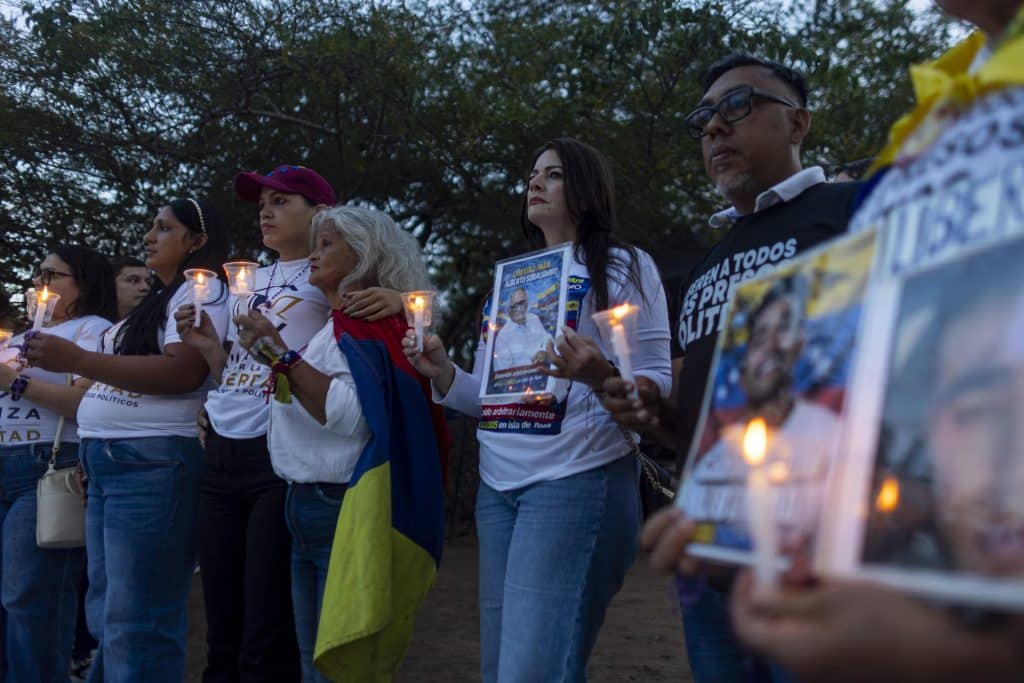
Vigil of Hope and Desperation
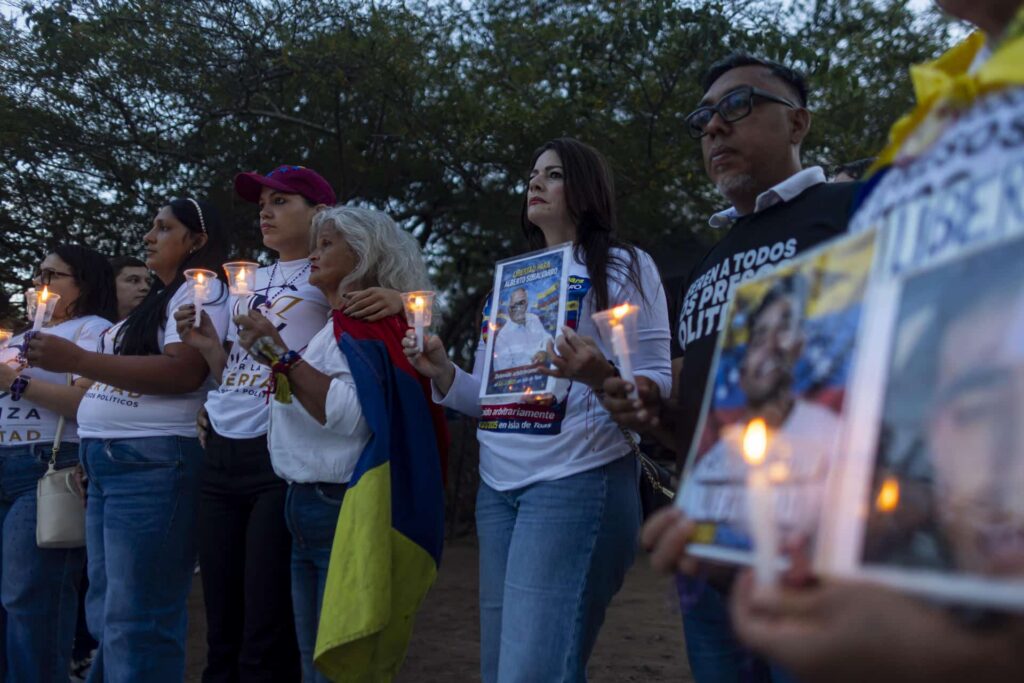
In a poignant display of resilience and determination, families of political prisoners in Venezuela have gathered near the U.S. Embassy in Caracas, demanding that their loved ones’ freedom be prioritized in the ongoing diplomatic dialogue. This vigil, which has persisted for nearly two months, reflects the deep yearning for justice amid a backdrop of political strife.
The Call for Inclusion
At the forefront of this movement is Mayra Morales, sister of Ricardo Fonseca, who believes that the liberation of political prisoners should be the centerpiece of negotiations. “If they truly wish to do things right and envision a clean, free, and democratic Venezuela, this must be the first item on the agenda,” she asserts. Morales’s plea embodies the hope of many Venezuelans who envision a future unshackled from oppression.
Voices from the Frontlines
Jessica Castro, niece of Gustavo Hernández, shares her optimism about the dialogue process, which includes figures from the opposition-controlled National Assembly elected in 2015. Despite the release of a significant number of political prisoners since January, Castro emphasizes that many still remain incarcerated. According to the NGO Foro Penal, the number of political prisoners currently stands at 379, underscoring the critical need for action.
A Multifaceted Dialogue
The negotiations, which will feature representatives from both the government and the opposition, are set against a complex backdrop of recent natural disasters and ongoing humanitarian crises. The official delegation, led by Jorge Rodríguez, the President of the National Assembly and brother of the interim president, will address pressing issues, including the aftermath of recent earthquakes and the enhancement of democratic processes.
On the opposition side, Dinorah Figuera, who champions the legitimacy of the 2015 National Assembly, will lead discussions alongside former assembly members. Their focus, however, remains broad, as the specifics of their commitment to human rights and the plight of political prisoners remain ambiguous.
A Hopeful Future?
As the dialogue commences, the families remain steadfast in their resolve, illustrating a poignant blend of hope and apprehension. Yamileth Vidal, sister of former mayor Carlos Vidal, echoes the sentiments of many, urging the dialogue participants to consider the freedom of political prisoners seriously. The interplay of personal narratives and political aspirations shines a light on the human cost of Venezuela’s political turmoil.
The Road Ahead
As this new round of negotiations unfolds, the absence of prominent figures like the Nobel Peace Prize laureate who recently distanced herself from the discussions raises questions about the integrity and inclusivity of the process. Advocates stress that recovering human rights is essential for any genuine restoration of democracy in Venezuela.
With the eyes of the world on Caracas, the families of political prisoners continue their vigil, embodying the hope that their voices will not be drowned out in the cacophony of political maneuvering. Their unwavering commitment to justice serves as a stark reminder that the path to freedom is often fraught with challenges, yet still worth fighting for.
Editorial note: This article was created by A Bit Lavish Miami’s Magazine as an original editorial reinterpretation based on publicly available reporting. Original source: efectococuyo.com. Read the original article here: https://efectococuyo.com/la-humanidad/familiares-piden-incluir-libertad-de-presos-politicos-en-mesa-de-dialogo/.
Images are used for editorial reference with source credit. If an image requires correction or removal, please contact A Bit Lavish.



Venezuela Denies Seeking Immunity for Nicolás Maduro Amid U.S. Legal Concerns
Venezuela's government has officially confirmed that it did not seek Nicolás Maduro's...
 1 Mins read
The Return of María Corina Machado: A New Chapter for Venezuela?
Exploring the implications of María Corina Machado's anticipated return to Venezuela amidst...
2 Mins read
Navigating Pragmatism: Brazil’s Political Shift and Its Implications for Venezuela
Explore the evolving political landscape in Brazil and its potential effects on...
2 Mins read
Venezuela’s National Assembly Launches Special Commission to Reform Law Against Hate
The Venezuelan National Assembly has initiated a special commission aimed at reforming...
2 Mins read