
A Sweet Legacy: Edvard Munch and His Vision for Public Art
Revisiting Munch’s Aspirations
As one of the most revered figures in modern art, Edvard Munch is often celebrated for his emotional depth and exploration of the human condition. Yet, a lesser-known chapter in his storied career reveals an artist with aspirations that extended beyond the canvas. The recent exhibition in Oslo sheds light on Munch’s ambitious vision for public art, particularly through his work associated with the Freia chocolate factory. This series not only highlights his artistic prowess but also his desire to engage with society at large.
The Chocolate Factory Frieze: A Symbol of Community
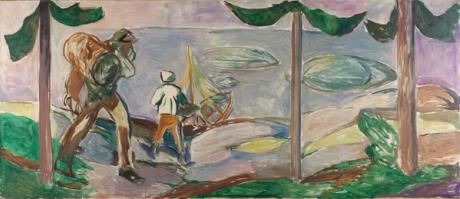
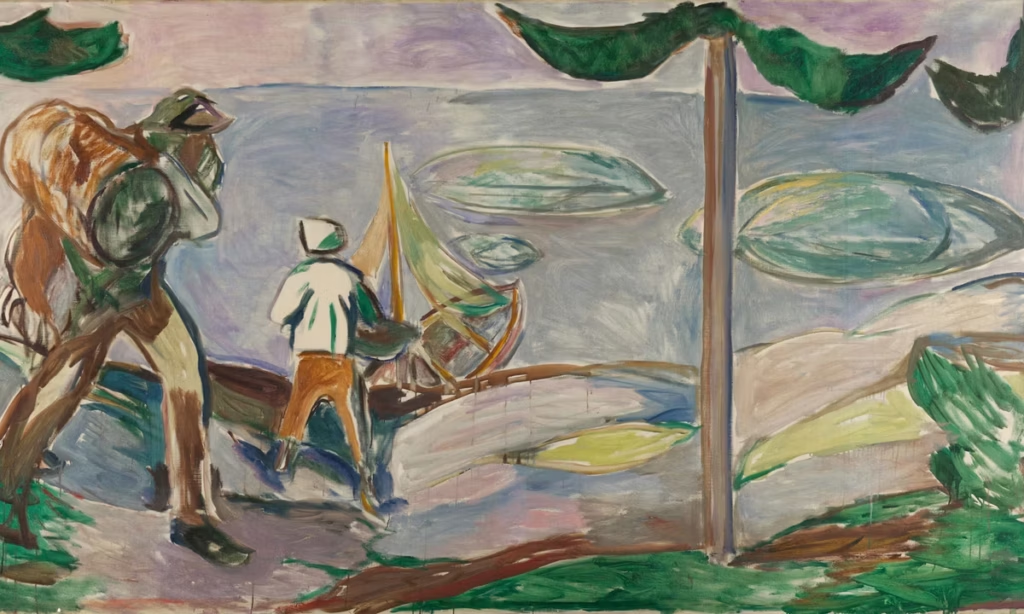
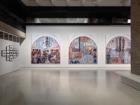
The Freia chocolate factory, a beloved institution in Norway, served as a significant backdrop for Munch’s creative endeavors. His initial commission for a frieze at the factory was a pivotal moment, allowing him to blend his artistic vision with an accessible public space. Munch viewed this project as an opportunity to connect with the everyday experiences of the masses, a theme that resonated deeply with his artistic philosophy.
Ambition Beyond the Frieze
While the frieze became a remarkable achievement, it was merely the beginning of Munch’s ambitions in public art. The Oslo exhibition reveals sketches and early concepts that exhibit Munch’s desire to expand this project into a comprehensive series, showcasing his vision for a more profound communal engagement. These works reflect his understanding of art as a vehicle for social commentary and collective experience, emphasizing the potential of art to transcend individual interpretation.
Provenance and Market Significance
As Munch’s Chocolate Factory series garners renewed interest, collectors and investors alike are drawn to the provenance of these works. The artist’s legacy is not only defined by his psychological insights but also by the cultural narratives embedded in his pieces. Understanding the historical context of Munch’s public art aspirations adds layers of value, making it a compelling area for investment in today’s market.
Collector Psychology: The Allure of Munch
For art collectors, owning a piece connected to Munch’s vision of public art is akin to holding a fragment of cultural history. The rarity of these works, combined with the artist’s ability to evoke strong emotional reactions, creates a powerful allure. Collectors are not merely acquiring art; they are investing in a narrative that speaks to a broader human experience, one that Munch sought to articulate through his work.
Munch’s Legacy in Miami’s Art Scene
In Miami, where the art scene thrives with vibrancy and diversity, Munch’s influence can be seen in the way contemporary artists engage with public spaces. His vision for art as a communal experience resonates with local initiatives that aim to transform public areas into platforms for artistic expression. By reflecting on Munch’s aspirations, Miami’s collectors and curators can gain insight into how to foster a deeper connection between art and community.
Conclusion: The Enduring Impact of Munch’s Vision
Edvard Munch’s Chocolate Factory series serves as a poignant reminder of the artist’s desire to bridge the gap between high art and the public. Through this exploration, it becomes evident that Munch was not just a painter; he was a visionary intent on creating art that spoke to the collective spirit of society. As we reflect on his work within the context of our own communities, we are encouraged to consider the role of art in shaping cultural identities and fostering connections among people.
Editorial note: This article was created by A Bit Lavish Miami’s Magazine as an original editorial reinterpretation based on publicly available reporting. Original source: theartnewspaper.com. Read the original article here: https://www.theartnewspaper.com/2026/06/12/edvard-munchs-chocolate-factory-series-shines-a-light-on-the-public-artist-he-wanted-to-be.
Images are used for editorial reference with source credit. If an image requires correction or removal, please contact A Bit Lavish.






Navigating Fantasy: The Allure of Rare Literary Cartography
Explore the captivating intersection of literature and cartography in an upcoming Zurich...
 3 Mins read

Cuauhtémoc Medina: Curatorial Visionary Set to Elevate Guatemala’s Bienal de Arte Paiz
Explore the profound impact of Cuauhtémoc Medina's curatorial approach as he prepares...
2 Mins read

Unveiling Deception: The Forgery Scandal Shaking the Art World
An in-depth exploration of the Giuliano Ruffini forgery scandal, its implications for...
2 Mins read



Transition at the Top: A New Era for the Art Gallery of Ontario
As Stephan Jost steps down from his role at the Art Gallery...
2 Mins read
