
Amtrak’s Bid for Remote Work: Bridging the Digital Divide on the Rails
Reimagining the Commute
In an era where remote work has become the norm, the flexibility of work-from-home (WFH) policies has transformed how and where professionals conduct business. From beachside meetings to working alongside laundry cycles, the possibilities are endless. Yet, one significant mode of transportation is struggling to keep pace with this digital evolution—Amtrak.
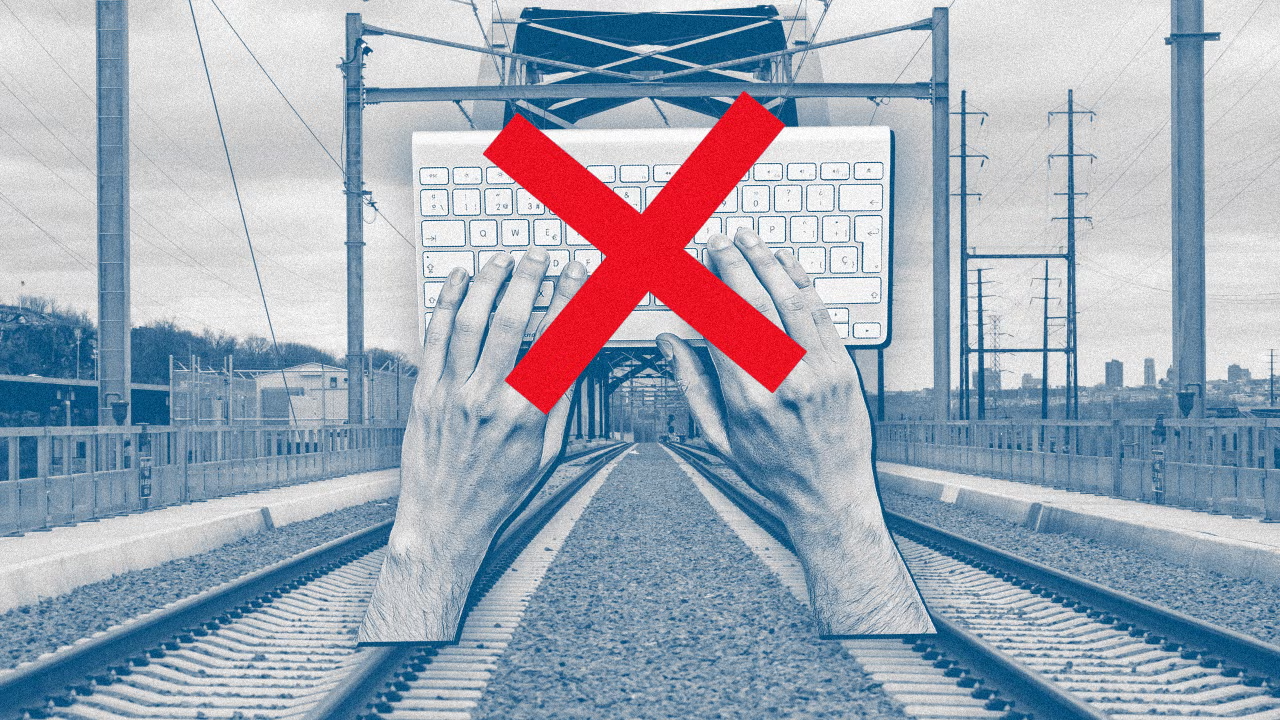
Amtrak’s recent campaign, which coined the phrase “WFTHETRAIN,” aimed to position train travel as a viable alternative for remote work. However, a wave of critical social media responses exposed the inadequacies of the railroad’s current infrastructure, particularly regarding Wi-Fi connectivity.
A Disconnect in Connectivity
Amtrak’s bold initiative quickly drew attention, but not the kind it had hoped for. Social media erupted with users sharing their frustrations about the train service’s unreliable internet access, particularly along the Northeast corridor. The irony was not lost on many who noted that they had experienced better internet speeds in remote hostels abroad than on Amtrak trains.
With over 200 replies to the initial post, it became clear that travelers were less than impressed. Comments ranged from light-hearted humor to more serious critiques about the company’s inability to deliver a seamless working experience for passengers. The sentiment was clear: effective remote work requires reliable connectivity, something Amtrak has struggled to provide.
The Price of Travel
Beyond connectivity challenges, ticket pricing also emerged as a significant concern among potential riders. Users pointed out the steep costs of train travel, likening them unfavorably to flights that traverse oceans at comparable prices. With tickets from New York to Washington, D.C. reaching upwards of $200, many questioned whether Amtrak could justify such fees alongside its service shortcomings.
This pricing dilemma raises essential questions about Amtrak’s positioning within the broader transportation landscape. As travelers weigh their options, the allure of budget airlines and even car rentals may overshadow train travel, particularly when convenience and cost are on the line.
The Role of Social Media in Brand Perception
Amtrak’s approach to social media has attempted to resonate with a younger audience through playful language and relatable humor, but the recent backlash indicates a potential disconnect between the brand’s messaging and customer experiences. As one social media user aptly noted, the company’s tone reflects a troubling lack of awareness of its customers’ realities.
This situation underscores a vital lesson for brands: authenticity matters. Engaging with customers on platforms where they express grievances requires not only humor but also a genuine understanding of their experiences and pain points.
Public Transportation’s Vital Role
Despite the criticisms, Amtrak remains a crucial player in the U.S. transportation network. With a record ridership of 34.5 million trips last year, it serves as one of the few viable alternatives to car travel, particularly in densely populated regions. Supporters of the rail service advocate for greater investments in infrastructure, emphasizing that improvements in railway systems would benefit both the company and its customers.
As the conversation continues, it is essential to recognize that the future of Amtrak, and rail travel in general, hinges on addressing these critical challenges. From enhancing Wi-Fi connectivity to reevaluating pricing strategies, the company’s leadership will need to adopt a design-thinking approach that prioritizes customer experience.
The Path Ahead
For Amtrak to effectively position itself in a competitive market, it must not only acknowledge the current frustrations of its customers but also take proactive measures to improve service quality. By investing in technology and infrastructure, the company can create an environment that supports remote work and attracts a new generation of travelers.
As Miami embraces a culture of innovation and connectivity, it becomes evident that Amtrak’s journey toward modernization is not just about trains and tracks; it’s about redefining expectations and experiences for modern commuters. The lessons learned from this social media episode may serve as a catalyst for change, prompting Amtrak to reimagine its role in the future of transportation.
Editorial note: This article was created by A Bit Lavish Miami’s Magazine as an original editorial reinterpretation based on publicly available reporting. Original source: fastcompany.com. Read the original article here: https://www.fastcompany.com/91557259/amtrak-calls-attention-poor-wi-fi-with-work-from-train-x-post.
Images are used for editorial reference with source credit. If an image requires correction or removal, please contact A Bit Lavish.









Guardians of Innovation: The Rising Tide of Security Workers in Silicon Valley
Explore the critical role of security workers in Silicon Valley's AI landscape...
 2 Mins read

The New Chapter in AI: How Book Acquisitions are Reshaping Language Models
Explore how AI companies are acquiring physical books to enhance training for...
2 Mins read

Reassessing the Impact of Cell Phone Bans in Schools: A Miami Perspective
Explore the nuanced effects of cell phone bans in schools, with insights...
2 Mins read



Navigating the AI-Infused Entertainment Landscape: The Rise of ‘Bad Cat’
Explore the intriguing intersection of AI and nostalgia in entertainment with the...
2 Mins read
