

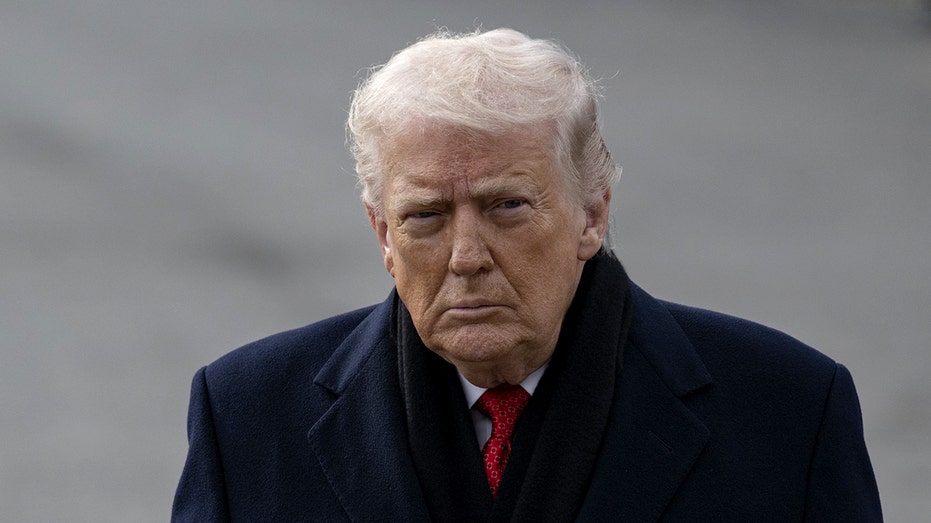
On Jan. 13, President Donald Trump warned Iran and told protesters that “help is on its way,” setting expectations of U.S. action. Days later, with no strikes carried out, the pause has become the central question in Washington.
U.S. and regional security experts say the decision was driven by caution, not retreat. A strike risked retaliation against U.S. forces and Israel.
It also raised questions about who would follow Iran’s leadership and whether intervention would undercut the protest movement Trump appeared to encourage.
Fox News Digital has learned from background conversations with U.S. officials that internal debates over Iran’s post-regime leadership and the lack of a clear successor factored into deliberations over a potential strike. Officials grappled not only with how to hit Iran, but with who would come next.
IRAN STRIKES COULD SIGNAL LIMITS OF BEIJING, MOSCOW’S POWER AS US FLEXES STRENGTH
Trump raised that uncertainty Jan. 15 when he publicly questioned whether Reza Pahlavi, the Western-backed son of Iran’s ousted shah, could realistically govern after more than four decades in exile. Pahlavi has not been to Iran since his family was forced out during the 1979 revolution.
“He seems very nice, but I don’t know how he’d play within his own country,” Trump told Reuters.
But Trump had insisted to protesters Jan. 13: “KEEP PROTESTING – TAKE OVER YOUR INSTITUTIONS!!!… HELP IS ON ITS WAY.”
Later, he said Iran had agreed to halt its executions, dialing back U.S. tensions with the Islamic Republic.
To be sure, intervention could still come once U.S. assets reach the Middle East. A U.S. aircraft carrier is currently steaming toward the Gulf, having departed the Indo-Pacific Jan. 15 as the threat of conflict reached a fever pitch.
The pause has nonetheless drawn backlash, as critics argue Trump’s promise that “help is on the way” may have raised expectations or emboldened protesters.
One Iranian citizen who witnessed violence during demonstrations said protesters are “still waiting on United States special forces to act in Iran.”
“They can come to help us. We can finish the job on the ground,” the Iranian, who requested anonymity for fear of retribution, said.
“‘Go forward, help is coming,’ Trump said. The people went forward. They were killed. No help came,” one user wrote on X.
“Iranian patriots have now waited more than 160 hours for Trump’s promise that ‘HELP IS ON ITS WAY,’” wrote another.
Iran state TV said more than 3,117 people have been killed in recent demonstrations. Other human rights groups place the estimate much higher.
Protests have since subsided from their peak earlier in January due to a brutal crackdown, but anti-regime advocates are “waiting at home for that special moment,” the Iranian said.
But the leadership question remains unresolved.
“The big question then becomes what’s the objective — not just militarily, but what’s the political objective in Iran,” said Seth Jones, a senior vice president at the Center for Strategic and International Studies.
Without a clear endgame, he warned, military pressure can create instability without producing a viable outcome.
Others warned that U.S. intervention could have backfired against the protest movement itself.
“Anything that associates the U.S. with the protesters hurts the protesters,” said Rosemary Kelanic of Defense Priorities, arguing that overt American involvement would make it easier for Tehran to portray demonstrations as foreign-backed and justify a harsher crackdown.
Concerns that the pause damaged U.S. credibility, she added, are overstated.
“Trump has shown several times quite recently his willingness to use U.S. military force in quite spectacular ways.”
Even limited strikes carried trade-offs.
“If kinetic, the administration must be wary to not dampen protester morale,” said Behnam Ben Taleblu of the Foundation for Defense of Democracies.
Civilian casualties or poorly selected targets, he said, could push Iranians “into survival mode” rather than keep them in the streets. Subtler forms of pressure may also fall short.
“Something too covert, such as in the cyber domain alone, might not be ‘seen’ by protesters,” he said.
IRAN POSES A FAR MORE DANGEROUS MILITARY TEST FOR THE US THAN VENEZUELA, EXPERTS WARN
Danny Citrinowicz, a former Israeli military intelligence official who led the Iran desk, said Tehran already has used the pause to its advantage, but only tactically.
“The regime had two major achievements: cracking down (on) the demonstrations with great use of violence, and postponing the American attack,” he said. “These wins are tactical, but they are very limited.”
Citrinowicz also pushed back on the idea that airstrikes would have reignited protests.
“Even if you bomb today, it’s not going to push people into the streets,” he said, warning that fear would likely dominate if the regime felt its survival was at stake.
Iranian–American human rights advocates echoed concerns about intervention while stressing that restraint does not have to mean silence.
“U.S. policy should not require a military intervention in Iran,” said Majid Sadeghpour, political director of the Organization of Iranian American Communities. “Our demand from policymakers in the West is provisional moral and political support — recognition of the Iranian people’s fight to change the regime.”
Decades of foreign interference in the Middle East have left many Iranians wary of U.S. military action, even among those who oppose the government.
“Nothing would replace people walking in the streets of Iran and confronting the IRGC.”
Inside Iran, authorities have responded with a sweeping crackdown, according to human rights groups and media reports. In addition to killings, security forces have carried out mass arrests, used live ammunition in some areas, and imposed severe internet and connectivity restrictions to prevent protesters from organizing or broadcasting abuses.
Iranian officials have blamed foreign influence for the unrest, a narrative experts say becomes easier to advance when U.S. leaders publicly hint at involvement.







Accused Shooter from White House Correspondents’ Dinner Returns to Court
The return of the accused shooter underscores ongoing concerns about security at...
 1 Mins read
Biden Critiques Trump Amid Reflecting Pool Controversy
Biden's remarks on Trump spotlight ongoing political divisions in the U.S., impacting...
1 Mins read
Bill Maher Receives Honor at Kennedy Center Amidst Political Satire
Bill Maher's recognition highlights the enduring influence of political satire in shaping...
1 Mins read


Trump Engages with Supporters at Golf Club Amid Natalie Harp Book Revelations
Trump's recent golf club visit highlights ongoing political dynamics and the influence...
1 Mins read
