

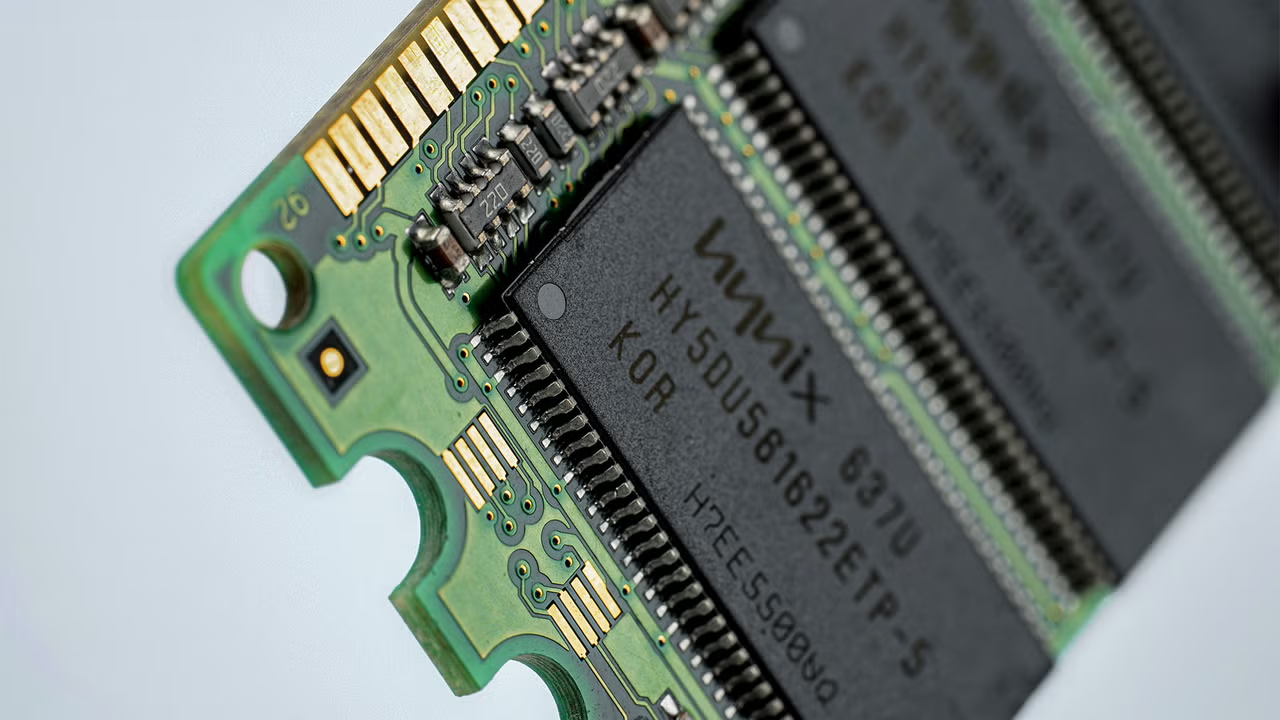
The Current Landscape of South Korea’s Chip Industry
As the spotlight on artificial intelligence (AI) continues to shine, the implications for the semiconductor industry are proving to be double-edged. South Korea’s Kospi stock index has recently experienced a steep decline, with a striking drop of over 32% in the past month alone. The tremors felt across this market are largely attributed to the performance of two of its leading firms in the semiconductor space: SK Hynix and Samsung Electronics.
Market Turmoil and Investor Sentiment
This week, the Kospi index witnessed another significant plunge, falling 6% in a single day. The fears surrounding over-investment in AI technologies have left investors jittery, particularly regarding the capacity of chipmakers to meet burgeoning demand without overextending their resources. The recent performance of SK Hynix and Samsung has exacerbated these concerns, leading to a shake-up in investor confidence.
SK Hynix: A Case Study in Expectations vs. Reality
SK Hynix’s recent financial disclosures have sparked particular alarm. Despite reporting a remarkable 51% increase in revenue from the previous quarter, the company’s figures fell significantly short of analyst predictions. With reported revenues of 79.32 trillion won (approximately $54.64 billion), expectations had been set much higher, at 84 trillion won ($57.86 billion). This discrepancy has resulted in a staggering 45% decline in its stock over the last month, with shares plummeting 9.6% just on Wednesday alone.
Samsung’s Struggles Amidst Broader Market Pressures
Samsung Electronics, another titan in the chip manufacturing realm, is also feeling the heat. Its shares dipped over 5.2% at market close on Wednesday, contributing to a steep 35% decline over the past month. As both companies grapple with disappointing financial outcomes, the broader implications for the tech industry, particularly in the context of AI, are starting to unfold.
The Ripple Effect Beyond South Korea
While the focus is primarily on South Korean firms, the turbulence in the semiconductor market is not confined to one region. Companies like Nvidia and Micron Technology have also seen their stock values take a hit, with Nvidia experiencing a 7.1% drop and Micron facing a staggering 14.48% decline over just five days. This reflects a pervasive anxiety amongst investors regarding the sustainability of growth in the AI sector and the potential for a market correction.
Strategic Reflections for Future Growth
The current market conditions underscore the critical need for chip manufacturers to re-evaluate their strategies. As AI technology evolves, so too must the approaches of these companies to ensure they are not only meeting current demand but are also positioned for future advancements. A balanced strategy that mitigates the risk of over-investment while fostering innovation will be essential.
Looking Ahead: Miami’s Role in the Tech Ecosystem
As these market dynamics unfold, Miami’s burgeoning tech ecosystem provides a fascinating backdrop for the broader narrative. The city has emerged as a key player in the national tech landscape, attracting startups and established companies alike. With its vibrant culture and strategic location, Miami is poised to become a significant hub for innovation, particularly in the fields of technology and finance.
For investors and industry leaders looking to navigate the complexities of this evolving market, Miami offers a unique vantage point. The confluence of creativity and enterprise in the city may well inspire new solutions to the challenges currently faced by chipmakers worldwide.
Editorial note: This article was created by A Bit Lavish Miami’s Magazine as an original editorial reinterpretation based on publicly available reporting. Original source: fastcompany.com. Read the original article here: https://www.fastcompany.com/91581598/kospi-stock-crash-why-sk-hynix-samsung-down-ai-fears.
Images are used for editorial reference with source credit. If an image requires correction or removal, please contact A Bit Lavish.






The Art of the Pitch: Why Personalized Decks Outshine AI Creations
Explore the significance of authentic pitch decks over AI-generated alternatives and discover...
 2 Mins read

Navigating the Job Market: Crafting Requests That Resonate
Discover effective strategies for reaching out to your network during a job...
2 Mins read

The Great Divide: Rethinking the Path for Working Mothers in Miami’s Corporate Landscape
Explore the persistent challenges facing working mothers in Miami's business scene, the...
2 Mins read



Taco Bell’s Nostalgic Revival: A Culinary Journey Back to 2016
Taco Bell taps into nostalgia with the return of beloved menu items...
3 Mins read
