

Understanding Market Dynamics
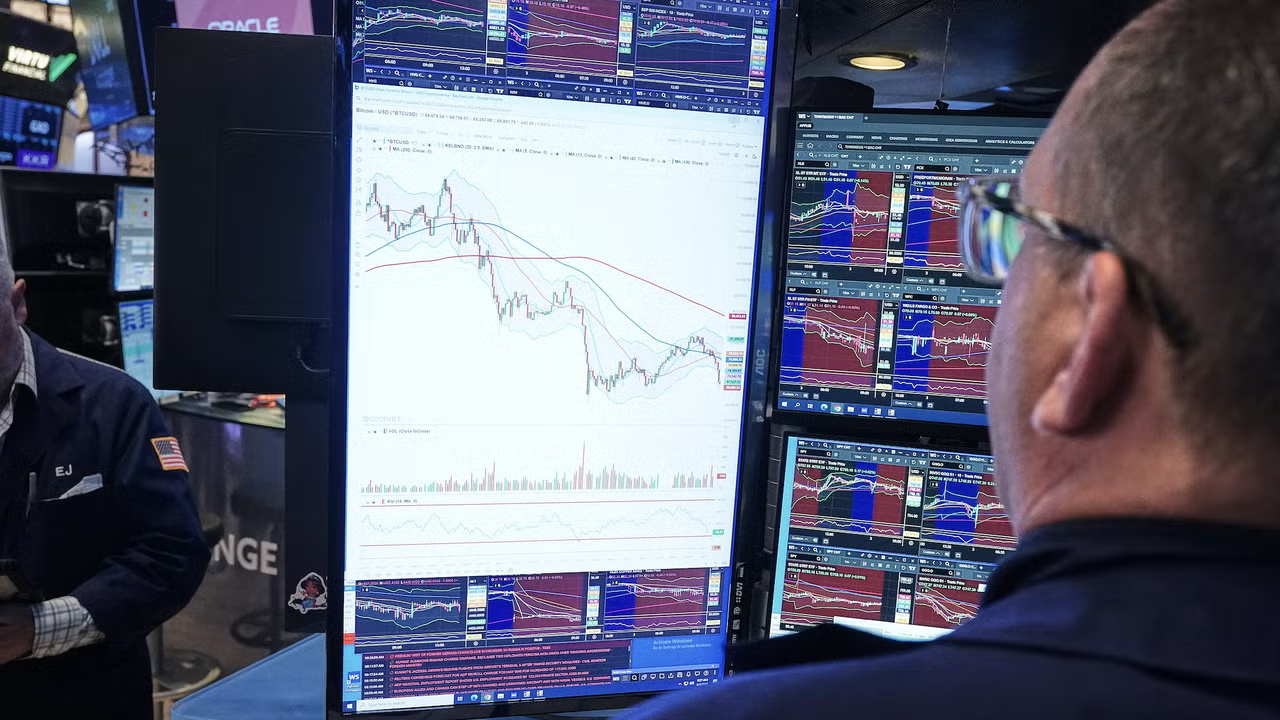
As oil prices inch closer to the $100 mark, the U.S. stock market finds itself in a precarious position, retreating from recent record highs. The latest developments, particularly tensions surrounding U.S.-Iran relations, have contributed to this volatility. The S&P 500 recently dipped by 0.5%, while the Dow Jones Industrial Average experienced a more significant drop of 466 points, marking a critical inflection point for investors.
The Ripple Effect on Investments
With Brent crude oil prices climbing 1.9% to reach $97.81 per barrel, the implications for businesses across sectors are profound. Investors are now faced with a landscape where rising oil prices and bond yields are painting a challenging picture for economic growth. The yield on the 10-year Treasury note has increased to 4.49%, a concerning trend that has the potential to stifle borrowing and, by extension, hinder growth—especially for smaller enterprises.
Miami’s Unique Position in the Market
For Miami-based businesses, the fluctuations in oil prices and stock indices are particularly relevant. The city’s economy, heavily reliant on tourism and service industries, must navigate these changing tides with agility. Companies in sectors such as hospitality and retail are already feeling the pinch from inflationary pressures, with many reporting heightened costs due to tariffs and rising oil prices. The recent performance of iconic retailers, like Macy’s, illustrates the delicate balance between robust sales and the challenges posed by an increasingly expensive operational landscape.
Adapting to Inflationary Pressures
- Businesses should adopt innovative strategies to mitigate the impact of rising costs.
- Enhancing customer service and product offerings may resonate more with consumers, as seen in Macy’s recent success.
- Exploring alternative financing options can help smaller companies maintain growth during turbulent times.
Encouragingly, the Institute for Supply Management reported a surprising acceleration in growth for U.S. construction and service sectors. However, the sentiment among many businesses reflects anxiety about ongoing inflationary pressures, a sentiment echoed in surveys from the accommodation and food services industry.
Future Outlook: A Balancing Act
Despite the current challenges, there remains a cautious optimism on Wall Street. Investors are hopeful that diplomatic efforts will lead to a reopening of the Strait of Hormuz, allowing for an improved flow of oil and potentially lower prices. This optimism has underpinned a recent nine-day winning streak for the stock market, hinting at resilience amidst uncertainty.
Embracing Innovation for Sustainable Growth
The rise of artificial intelligence has significantly influenced market sentiment, with many tech companies experiencing substantial gains. Firms like Marvell Technology have seen their stock soar, buoyed by the promising prospects of AI. For Miami businesses, leveraging technology and innovation will be critical in navigating the economic headwinds posed by rising oil prices and inflation.
As Miami continues to evolve as a hub for innovation and business, the ability to adapt to shifting market conditions will determine long-term success. By embracing design thinking and strategic leadership, local businesses can position themselves not just to survive but to thrive in an increasingly complex economic landscape.
Editorial note: This article was created by A Bit Lavish Miami’s Magazine as an original editorial reinterpretation based on publicly available reporting. Original source: fastcompany.com. Read the original article here: https://www.fastcompany.com/91553457/stocks-markets-iran-oil-ai-trump.
Images are used for editorial reference with source credit. If an image requires correction or removal, please contact A Bit Lavish.










Navigating the AI Frontier: A Dance with Modern Sorcery
As AI technology evolves, so do its challenges. Explore the implications of...
 3 Mins read

Transforming Workplace Engagement: The $10 Trillion Challenge Ahead
Discover how innovative workplace strategies can enhance employee engagement and productivity, addressing...
3 Mins read
Navigating the New Frontier of AI Transparency: California’s Law and Its Implications
Explore the implications of California's new AI transparency law, its approach to...
3 Mins read



Garth Brooks Concert Tickets Remain Available in Denver Following Week of Sales
The availability of Garth Brooks tickets underscores shifting dynamics in the concert...
1 Mins read
