

A Subtle Shift in Inflation Trends
In a landscape marked by economic uncertainty, recent developments in U.S. inflation have offered a glimmer of hope for consumers and businesses alike. As of July, inflation eased slightly to 3.4%, a marginal decrease from the previous month’s 3.5%. While this may suggest a cooling off, it is essential to contextualize this change against the backdrop of ongoing geopolitical tensions, particularly the Iran war, which has kept energy prices stubbornly high.
For Miami’s business leaders, understanding the nuances of these economic indicators is crucial. Inflation levels remain elevated compared to pre-war numbers, when inflation sat at a comfortable 2.4%. This underscores the ongoing pressure on consumer spending and wage growth, areas that are pivotal for the vibrant Miami economy.
The Impact of Rising Energy Costs
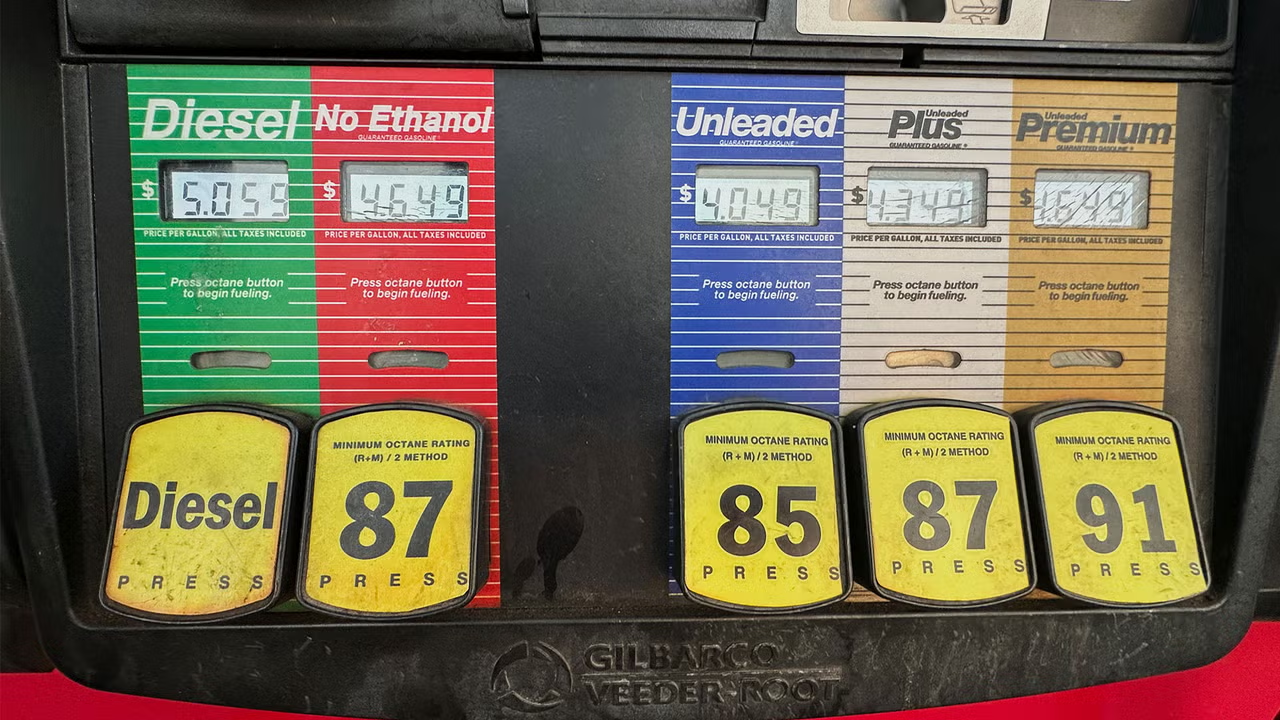
The persistence of high energy prices continues to shape consumer behavior and business strategies. Gas prices, for instance, surged to an average of $4.04 per gallon nationwide, indicating a 16-cent increase from the previous month. Such fluctuations can ripple through various sectors, from hospitality to transportation. Miami, a city dependent on tourism and service industries, could face challenges as increased fuel costs might deter visitors and impact local businesses.
Moreover, businesses like Sherwin-Williams are already feeling the pinch, announcing an 8% price increase to manage escalating raw material costs. This trend raises significant questions for Miami’s retailers and service providers: How will they balance maintaining profit margins with the need to keep prices attractive to consumers?
Wages vs. Costs: A Complicated Equation
Despite the slight easing in inflation, the struggle for consumers remains palpable, particularly as wages have not kept pace with rising costs. A recent report indicated that essential items such as groceries, healthcare, and gas have continued to experience price increases that exceed wage growth. This disparity presents a significant challenge for Miami’s workforce, many of whom are grappling with the dual pressures of rising living costs and stagnant incomes.
As the Federal Reserve contemplates its next steps regarding interest rates—currently held steady at about 3.6%—many in the business community are left pondering the implications. Will the Fed’s decision to maintain rather than increase rates provide the necessary breathing room for consumers and businesses alike, or will inflationary pressures continue to mount?
Consumer Adaptation: Strategies for Survival
In light of these challenges, consumers have begun to adopt various coping strategies to navigate the high cost of living. From comparison shopping to embracing discounts, the adaptive behaviors of Miami residents reflect a shifting economic landscape. Retail giants like Walmart have responded by rolling back food prices, a move that could signal an emerging trend of price sensitivity among consumers.
However, not all sectors are following suit. The technology sector, for example, is experiencing price hikes due to increased demand for artificial intelligence infrastructure. Such increases can have a cascading effect, as higher computer prices contribute to an overall inflationary environment. Miami’s tech startups and businesses reliant on technology must remain vigilant, adapting their pricing strategies to both consumer expectations and supply chain realities.
Looking Ahead: A Confluence of Factors
The complexity of the current economic situation is compounded by various factors—from ongoing geopolitical instability to shifts in consumer behavior. As businesses in Miami strategize for the future, they must also consider the potential for inflation to accelerate in the coming months, particularly if global tensions escalate. With core inflation dipping slightly to 2.5%, there is cautious optimism, but the path ahead remains fraught with uncertainty.
Miami’s business leaders must keep a close watch on evolving economic indicators, leveraging insights and data to make informed decisions. This includes anticipating shifts in consumer preferences, adjusting pricing strategies, and exploring innovative solutions to maintain competitiveness in a rapidly changing market.
Conclusion: A Call for Strategic Adaptation
As Miami navigates this inflationary landscape, the focus must shift toward strategic adaptation. By understanding the interplay of factors influencing inflation, from energy prices to consumer spending habits, businesses can position themselves for resilience. Embracing innovative practices and fostering strong relationships with consumers will be critical in weathering the economic storm ahead.
Editorial note: This article was created by A Bit Lavish Miami’s Magazine as an original editorial reinterpretation based on publicly available reporting. Original source: fastcompany.com. Read the original article here: https://www.fastcompany.com/91589034/inflation-eased-slightly-3-4-july-energy-prices-still-high.
Images are used for editorial reference with source credit. If an image requires correction or removal, please contact A Bit Lavish.




Trump Announces Creation of ‘Super Intelligence Force’ to Oversee AI Policy
The establishment of the 'Super Intelligence Force' marks a pivotal shift in...
 2 Mins read
Supreme Court Hears Arguments on Big Oil’s Climate Liability
The Supreme Court's opening session includes a critical examination of Big Oil's...
2 Mins read
Navigating the Digital Frontier: Understanding the Impact of Digital Media on Youth Health
A comprehensive analysis of how digital media affects the physical and mental...
3 Mins read
OPEC Maintains Steady Oil Output Amid Rising Middle East Tensions
OPEC's decision to hold oil output steady is a significant move amid...
2 Mins read