
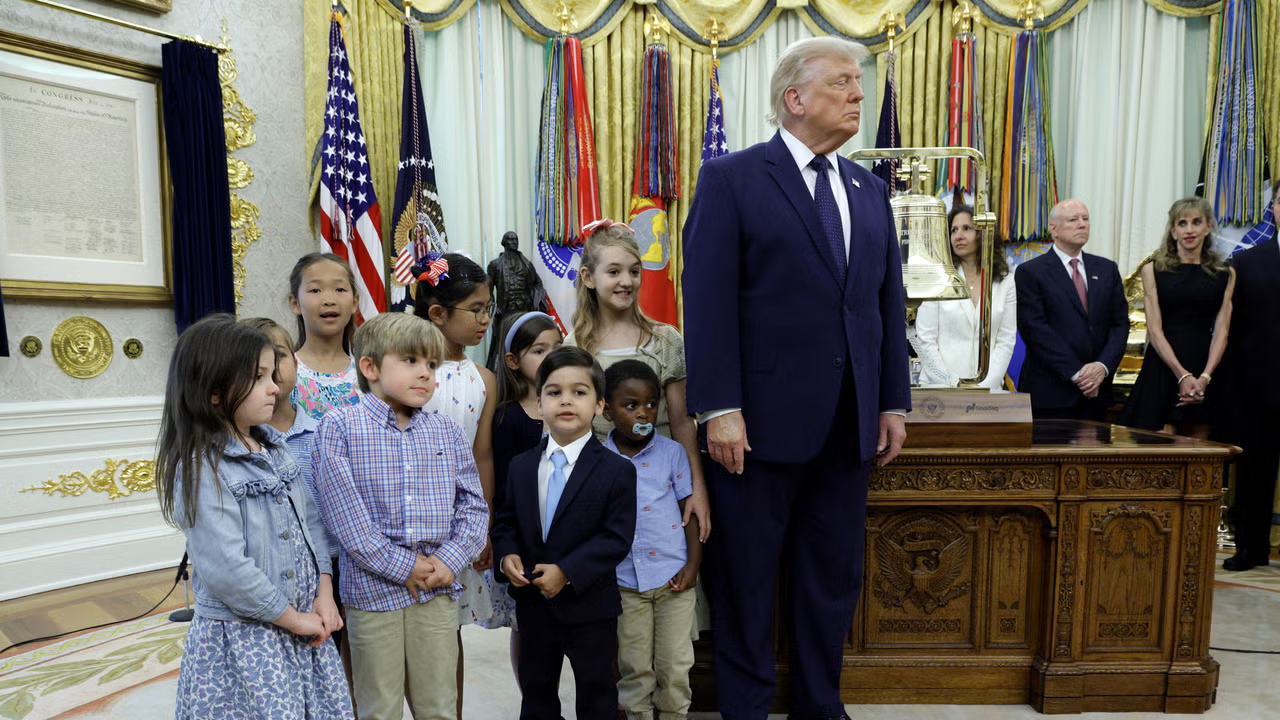
The Promise of Investment Accounts for the Next Generation
In a move aimed at fostering financial literacy and investment opportunities among the youth, the recently launched tax-advantaged investment accounts for children, colloquially known as ‘Trump accounts,’ have garnered significant attention. With over 7 million children enrolled just weeks after their introduction, these accounts are being heralded as a promising initiative to provide financial empowerment to the younger generation. However, beneath the surface of this well-intentioned program lies a complex narrative that raises questions about its efficacy in bridging the wealth gap.
Understanding the Enrollment Landscape
The striking statistic that 86% of enrollees come from families earning less than $200,000 annually has been touted as evidence that the program is reaching those in need. Yet, this benchmark itself warrants scrutiny. In 2024, the median household income in the U.S. stood at approximately $83,730, with only 16% of households exceeding the $200,000 threshold. This raises a critical question: Are we truly addressing the needs of the most economically disadvantaged families, or are we simply reinforcing an existing status quo?
Payroll Deductions and Accessibility Issues
The proposed allowance for employees to contribute up to $2,500 annually through pretax payroll deductions has the potential to enhance participation. However, this model mirrors challenges seen in traditional retirement plans. According to the U.S. Bureau of Labor Statistics, a significant portion of eligible workers, particularly those from lower-income brackets, do not take advantage of 401(k) plans due to financial constraints. This reality raises concerns about whether families struggling to make ends meet can realistically set aside funds for their children’s investment accounts.
The Role of Employers in Child Investment Accounts
Many major corporations, including Vanguard and Visa, have pledged support by contributing to their employees’ Trump accounts. While employer sponsorship can significantly improve participation rates, it also highlights a disparity in access. Data indicates that only a fraction of low-income workers have access to retirement plans, and even fewer enjoy matching contributions. If similar patterns hold true for Trump accounts, the benefits may not reach those who need them most, further entrenching economic divides.
Evaluating the Long-Term Impacts
While the initiative aims to provide a platform for upward mobility, the manner of its implementation raises concerns about its long-term effectiveness. It is crucial to recognize that providing access to information and accounts alone does not equate to meaningful financial empowerment. The structural barriers faced by lower-income families—including rising living costs and debt burdens—may impede their ability to participate fully in these investment opportunities.
A Closer Look at the Intended Outcomes
Critics argue that the current framework of Trump accounts may inadvertently cater more to affluent families seeking to preserve their wealth rather than fostering genuine economic mobility for lower-income households. The question remains whether these accounts are designed to empower all children equally, or if they serve as a tool for wealth retention among those already financially secure.
Concluding Thoughts: A Call for Inclusive Solutions
As Miami continues to evolve as a hub of innovation and entrepreneurship, the implications of programs like Trump accounts cannot be understated. It is imperative to ensure that initiatives aimed at financial literacy and investment accessibility are genuinely inclusive and effectively reach the families that reside on the margins. Moving forward, a more equitable approach to financial empowerment could help close the wealth gap and create a brighter future for all children.
Editorial note: This article was created by A Bit Lavish Miami’s Magazine as an original editorial reinterpretation based on publicly available reporting. Original source: fastcompany.com. Read the original article here: https://www.fastcompany.com/91589527/how-the-trump-accounts-for-kids-could-widen-the-wealth-gap.
Images are used for editorial reference with source credit. If an image requires correction or removal, please contact A Bit Lavish.




A Short-Term Fix in a Complex Healthcare Landscape
Exploring the implications of the Trump administration's $500 refund checks for Obamacare...
 ABL2 Mins read
Reimagining Military Branding: A Controversial Shift in Iconography
The recent unveiling of the Department of War's logo has sparked debates...
ABL3 Mins read
Middle East Oil Exports Surpass Pre-War Levels Amidst Geopolitical Tensions
The recent surge in Middle East oil exports marks a significant shift...
 2 Mins read
Dow Jones Drops 300 Points Amid Fed Rate Uncertainty
The Dow Jones Industrial Average fell sharply by 300 points on October...
1 Mins read