
Navigating Venezuela’s Judicial Landscape: A Call for Transparency and Integrity
Understanding the Current Judicial Climate
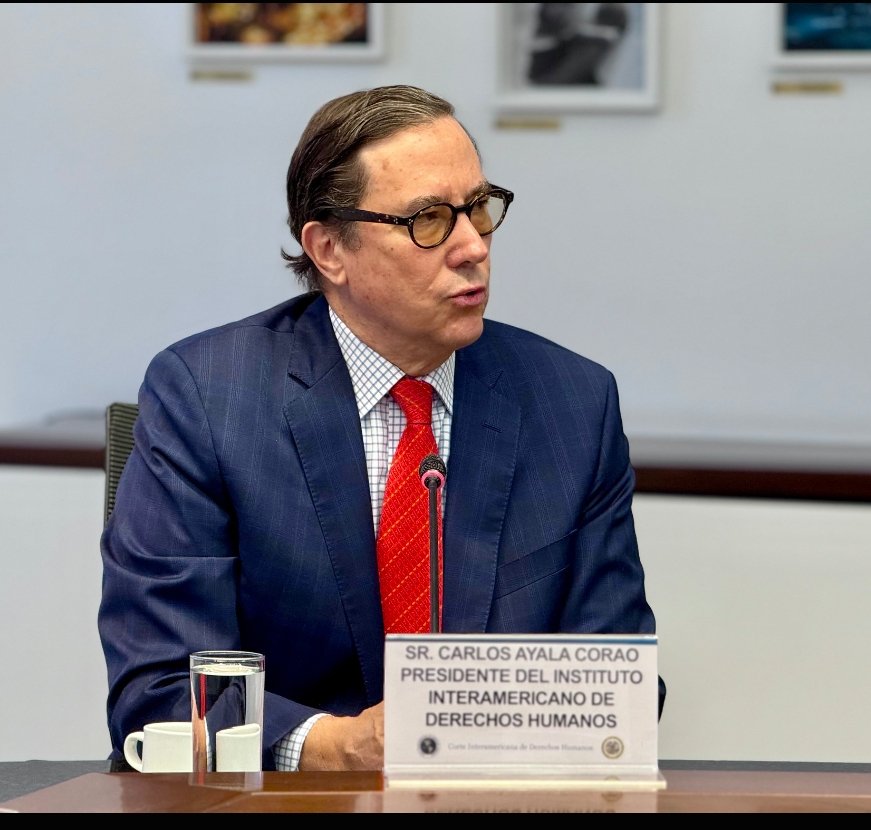
Venezuela’s aspiration for a democratic transition remains a complex and precarious journey, fraught with challenges that could undermine its very fabric. Renowned lawyer Carlos Ayala Corao, recently appointed president of the Inter-American Institute of Human Rights, raises significant concerns regarding the proposed judicial reforms, particularly those affecting the Supreme Tribunal of Justice (TSJ).
Judicial Reform: A Double-Edged Sword
The reform of the TSJ is ostensibly aimed at revitalizing Venezuela’s judiciary, yet Ayala Corao warns that the current approach risks legitimizing existing structural unconstitutionalities. The reforms, primarily centered around the organic law of the TSJ, have drawn criticism for failing to adhere to constitutional mandates that call for the judiciary to represent societal interests rather than state agendas.
“The committee responsible for nominations should reflect society’s diverse voices, not merely echo political directives,” he emphasizes. The presence of political representatives, particularly from the National Assembly, within this selection committee raises alarms about the potential for political quotas, or ‘cuoteo’, which could prioritize loyalty to the government over adherence to constitutional principles.
Establishing Standards for Selection
Central to the integrity of judicial appointments is the establishment of clear, objective criteria. The evaluation process must transcend mere political affiliation, focusing instead on merit, honorability, and independence. Ayala Corao advocates for a transparent selection mechanism that could include a commission composed of legal experts and civil society representatives, thus ensuring a rigorous and impartial evaluation of candidates.
“It is essential to outline what constitutes an exemplary magistrate, weighing academic qualifications alongside professional integrity and independence,” he notes. Should the Assembly National become a mere rubber stamp, the legitimacy of the judiciary could be irreparably compromised.
A Pathway to Legal Integrity
In the face of Venezuela’s ongoing constitutional crisis, Ayala Corao suggests a dual approach: adherence to constitutional processes and, where necessary, the establishment of independent mechanisms to ensure the appointment of competent and impartial magistrates. This could involve public evaluations of judges and the introduction of a robust system for appointing new magistrates through transparent public competitions.
The urgency of reform is particularly pronounced in areas such as criminal jurisdiction—where abuses have been rampant—and in mechanisms to counteract political persecution. Drawing lessons from Spain’s transition, Ayala Corao emphasizes the need to dismantle politicized judicial structures and foster a non-partisan Ministry of Justice.
Reclaiming Sovereignty through Popular Will
The overarching theme of Ayala Corao’s discourse is the restoration of Venezuela’s sovereignty, which has been eroded by systemic inconstitutionality and a lack of adherence to electoral mandates. He argues that the only way to reclaim national sovereignty is through the exercise of popular will—primarily via fair and transparent elections.
“The absence of genuine representation leads to legal ambiguity, as seen in the aftermath of the constitutional crisis that unfolded in early January,” he states. As the country grapples with the complexities of governance and public trust, the imperative to return to constitutional norms becomes increasingly critical.
Looking Beyond Borders: A Regional Perspective
While deeply engaged in the Venezuelan context, Ayala Corao also reflects on the broader implications for human rights across Latin America. He remarks on the heightened awareness among citizens regarding their rights compared to previous decades, yet notes the concurrent rise of authoritarian populism as a troubling phenomenon. These regimes often promise change but ultimately stifle freedoms and undermine the rule of law.
“The duality of progress and regression in the region paints a complex picture,” he observes. The emergence of new rights, particularly concerning environmental issues and gender equality, coexists with grave violations such as arbitrary detentions.
As Latin America continues to navigate these contradictions, the need for clarity, integrity, and a commitment to human rights remains paramount. For Venezuela, the journey toward a transparent and accountable justice system is not merely a legal necessity; it is a vital step towards restoring trust and hope among its citizens.
Editorial note: This article was created by A Bit Lavish Miami’s Magazine as an original editorial reinterpretation based on publicly available reporting. Original source: efectococuyo.com. Read the original article here: https://efectococuyo.com/la-humanidad/ayala-corao-y-el-comite-de-postulaciones-para-el-tsj-el-peligro-es-que-lleguemos-a-la-reparticion-por-cuotas/.
Images are used for editorial reference with source credit. If an image requires correction or removal, please contact A Bit Lavish.




Venezuelan Political Landscape: A New Judicial Committee Takes Shape
Explore the recent developments in Venezuela's political scene as the National Assembly...
 2 Mins read
A New Dawn for Venezuela: María Corina Machado’s Courageous Return
Explore the strong political movement led by María Corina Machado as she...
1 Mins read
Unfolding the Complexities of US Immigration Policy: A New Chapter in Migrant Deportation
An exploration of the recent Supreme Court decision allowing temporary deportation of...
 ABL3 Mins read
Echoes of Resilience: The Plight of Political Prisoners in Venezuela
An exploration of recent developments concerning political prisoners in Venezuela, highlighting ongoing...
2 Mins read