
Political Winds Shift in Germany: The Rise of the AfD in Saxony-Anhalt

Shifting Political Landscape
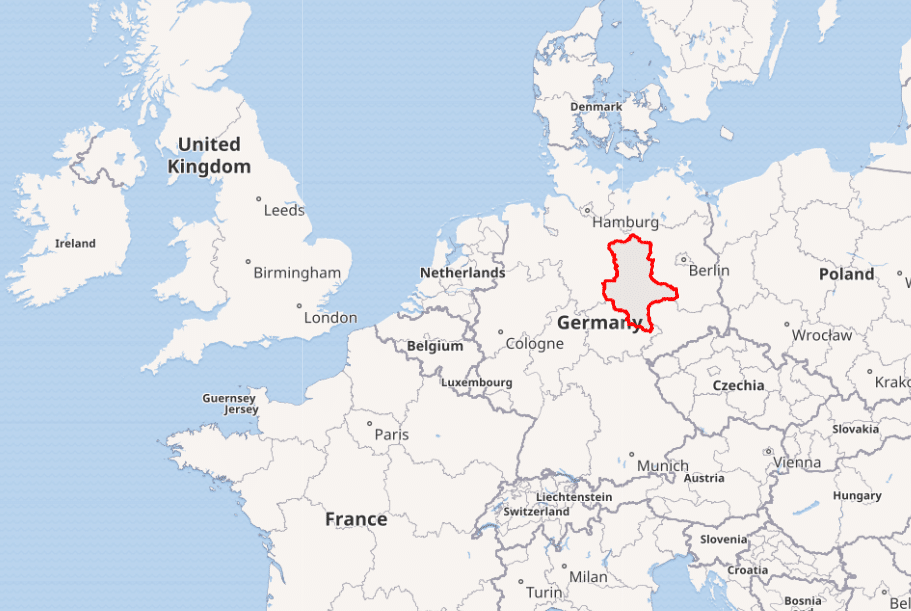
In a surprising turn of events, the far-right party Alternative for Germany (AfD) has emerged victorious in the recent elections held in the eastern region of Saxony-Anhalt. Preliminary projections indicate the party garnered between 44.3% and 44.4% of the votes, placing it on the cusp of achieving an absolute majority. This pivotal moment could lead to the establishment of the first far-right regional government in modern German history.
A New Era for Governance
The triumph of the AfD signifies a significant political shift, particularly as it surpassed the Christian Democratic Union (CDU), led by regional Prime Minister Sven Schulze, who managed only 18.4% of the vote. In the aftermath of this electoral success, Alice Weidel, co-leader of the AfD, expressed her excitement, stating that the outcome was a mandate to form a government. The party is now in discussions regarding potential coalitions, with options for cooperation or even a minority government.
Challenges for Traditional Parties
The CDU’s defeat in Saxony-Anhalt has prompted introspection within the party. Schulze acknowledged the harsh reality of their loss, recognizing the AfD as the dominant political force in the regional parliament. This electoral result poses a challenge for traditional parties to reassess their strategies and address the concerns of their constituents, particularly amid rising populist sentiments.
Voices of Concern
The implications of the AfD’s rise are not lost on other political figures in Germany. Lars Klingbeil, co-leader of the Social Democratic Party (SPD) and Germany’s Vice Chancellor, noted the apprehension among communities, especially those with immigration backgrounds. The SPD, along with others like the Left Party, has expressed the need to engage with the electorate’s fears and ensure that the evolving political landscape does not alienate significant segments of the population.
Minor Parties and Their Influence
In this election, smaller parties also played a crucial role in shaping the outcome. The Left Party secured around 9.3% of the vote, while the Greens followed closely with 8.7%. The Free Democratic Party (FDP), previously part of the governing coalition with the CDU and SPD, failed to clear the 5% threshold, further complicating the political dynamics in Saxony-Anhalt. The performance of the Alliance Sahra Wagenknecht (BSW) remains uncertain, as its potential entrance into the parliament could significantly impact coalition discussions.
Future Political Dynamics
The political future of Saxony-Anhalt now hinges on coalition negotiations. The AfD’s potential to form a government, whether in cooperation with other parties or autonomously, raises questions about the direction of governance in the region. The CDU has ruled out partnerships with left-leaning parties, firmly positioning itself against any collaboration with groups it perceives as extremist.
Implications Beyond Saxony-Anhalt
The outcome of the Saxony-Anhalt elections serves as a microcosm of broader trends in German politics and may influence forthcoming elections across the nation. With voter participation reaching record levels of 78%, the electorate’s engagement signals an urgent need for traditional parties to reconnect with their base and address the rising tide of populism that the AfD has capitalized on.

Editorial note: This article was created by A Bit Lavish Miami’s Magazine as an original editorial reinterpretation based on publicly available reporting. Original source: efectococuyo.com. Read the original article here: https://efectococuyo.com/internacionales/ultraderecha-gana-en-region-sajonia-anhlt-en-alemania/.
Images are used for editorial reference with source credit. If an image requires correction or removal, please contact A Bit Lavish.




Venezuela Denies Seeking Immunity for Nicolás Maduro Amid U.S. Legal Concerns
Venezuela's government has officially confirmed that it did not seek Nicolás Maduro's...
 1 Mins read
The Return of María Corina Machado: A New Chapter for Venezuela?
Exploring the implications of María Corina Machado's anticipated return to Venezuela amidst...
2 Mins read
Navigating Pragmatism: Brazil’s Political Shift and Its Implications for Venezuela
Explore the evolving political landscape in Brazil and its potential effects on...
2 Mins read
Venezuela’s National Assembly Launches Special Commission to Reform Law Against Hate
The Venezuelan National Assembly has initiated a special commission aimed at reforming...
2 Mins read