
Reimagining Accountability: The Federal Reserve’s Role in a Changing Economy
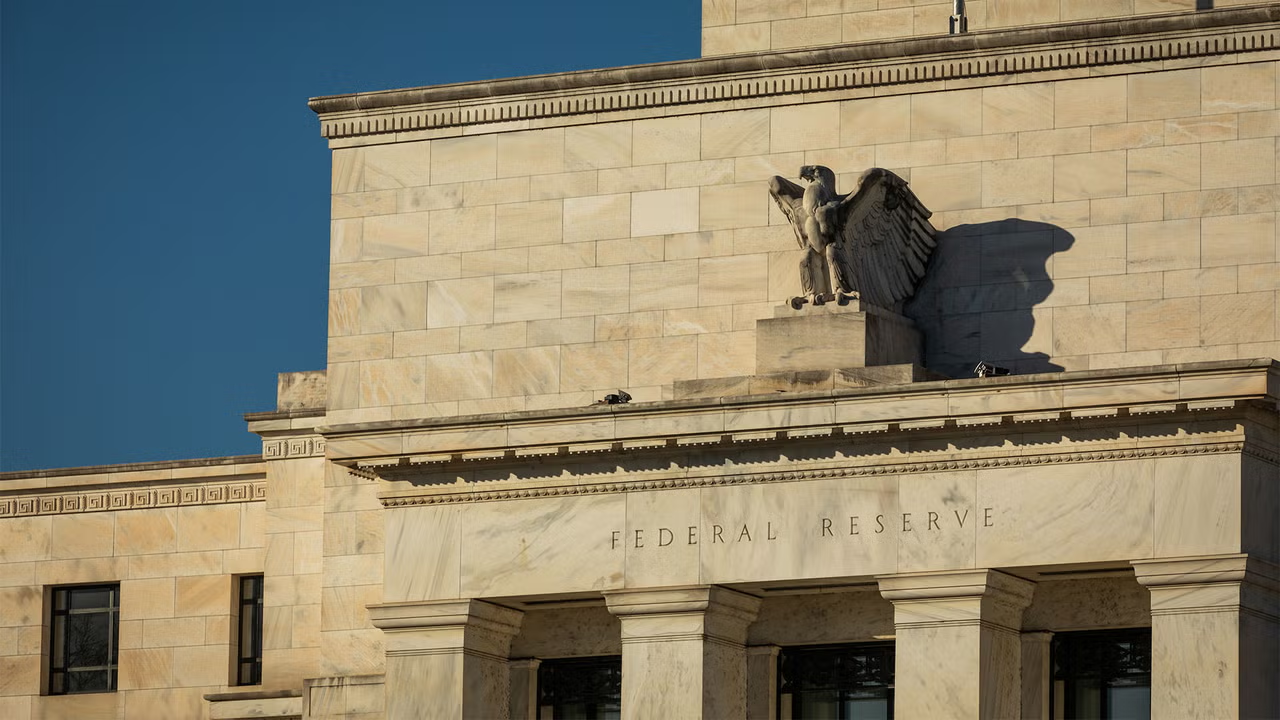
A Pillar of Economic Influence
The Federal Reserve stands as a cornerstone of the U.S. economic framework, wielding a level of influence unmatched by any other governmental agency. Its policies shape essential aspects of financial life—from interest rates that determine mortgage costs to regulations that govern banking practices. For many, the Fed operates as a black box, where critical decisions are made behind closed doors, often out of reach for the average American. As we navigate through economic recovery and turbulence, the question of how accountable the Fed should be has never been more pertinent.
Historical Context of Accountability
The discourse surrounding the Fed’s accountability is not new. In 1978, Congress initiated a formal oversight mechanism through the Humphrey-Hawkins Act, mandating biannual reports from the Fed’s chair to Congress. This legislative action highlighted the growing concern over inflation and economic stagnation at the time. It was a significant step toward ensuring that the Fed operated with a degree of transparency, albeit with careful limitations to preserve its independence from the whims of political influences.
- Self-Financing Structure: The Fed operates independently of congressional appropriations, giving it a unique standing among federal entities.
- Long Terms for Governors: With 14-year terms that can only be terminated for cause, Fed governors enjoy a level of job security uncharacteristic of other federal positions.
Shifts in Responsibilities
Since the 2008 financial crisis, the Fed has expanded its operational scope dramatically. This has included utilizing emergency lending powers and purchasing vast amounts of government securities to stabilize the economy. Such unprecedented actions blurred the lines between monetary policy and fiscal interventions, leading to a growing chorus of voices calling for enhanced scrutiny of the Fed’s decisions.
The Fed’s balance sheet swelled to nearly $9 trillion, a stark increase that raises questions about the implications of such size on wealth distribution and economic equity. Critics argue that interventions traditionally within the purview of Congress are now being executed by the Fed, necessitating a reevaluation of how its actions should be monitored and assessed.
Defining Accountability
Accountability can manifest in various forms—ranging from the transparency of decision-making processes to the retrospective evaluation of policies and their impacts. For the Fed, the challenge lies in balancing these accountability measures with its need for independence. Critics like Andrew Levin propose reforms such as shorter terms for Fed officials and regular audits by the Government Accountability Office (GAO) to ensure that the institution remains aligned with public interests.
Conversely, experts like former Fed Vice Chair Donald Kohn caution against measures that may compromise the institution’s autonomy. They advocate for careful oversight that does not infringe upon the essential independence required for effective monetary policy-making.
A New Era of Leadership
As Kevin Warsh steps into the role of Fed Chair, he faces the dual challenge of navigating the complexities of economic recovery while reimagining the Fed’s approach to accountability. His commitment to transparency and public accountability positions him to potentially reshape the narrative around the Fed. By fostering a clearer understanding of who is making decisions and the rationale behind them, Warsh could bridge the gap between the Fed’s independence and its responsibility to the public.
At the recent Jackson Hole conference, global economic leaders gathered to discuss the Fed’s evolving role and the implications for future monetary policy. While no immediate policy shifts were expected, the conference served as a platform for Warsh to outline his vision for a more communicative and accountable Fed.
Implications for the Future
The ongoing dialogue surrounding the Fed’s independence versus accountability is critical as the global economy faces shifting dynamics. As Miami continues to emerge as a pivotal financial hub, understanding these mechanisms will be vital for local businesses and investors. The interplay between Fed policies and economic outcomes will directly affect the financial landscape of the region, influencing everything from real estate markets to entrepreneurial ventures.
The path forward requires a concerted effort to ensure that the Fed can operate independently while remaining responsive to the economic realities faced by everyday Americans. As we look ahead, the evolution of the Fed’s accountability could serve as a model for other institutions grappling with similar challenges in transparency and governance.
Editorial note: This article was created by A Bit Lavish Miami’s Magazine as an original editorial reinterpretation based on publicly available reporting. Original source: fastcompany.com. Read the original article here: https://www.fastcompany.com/91598131/federal-reserve-independence-accountability-congress.
Images are used for editorial reference with source credit. If an image requires correction or removal, please contact A Bit Lavish.










G7 Nations Agree to Release 100 Million Barrels of Oil and Diesel Fuel
The G7's decision to release significant oil reserves aims to stabilize global...
 2 Mins read

Trump Signals End to Iran Conflict, Causing Oil Prices to Plummet
Former President Donald Trump's recent comments regarding the Iran conflict have led...
2 Mins read

Federal Ban Threatens THC Beverage Boom
A new federal ban on THC beverages could disrupt the rapidly growing...
2 Mins read



Ken Griffin Invests $2 Billion in New University in Miami
Ken Griffin's substantial investment in a new university in Miami signals a...
2 Mins read
