
A Political Quandary
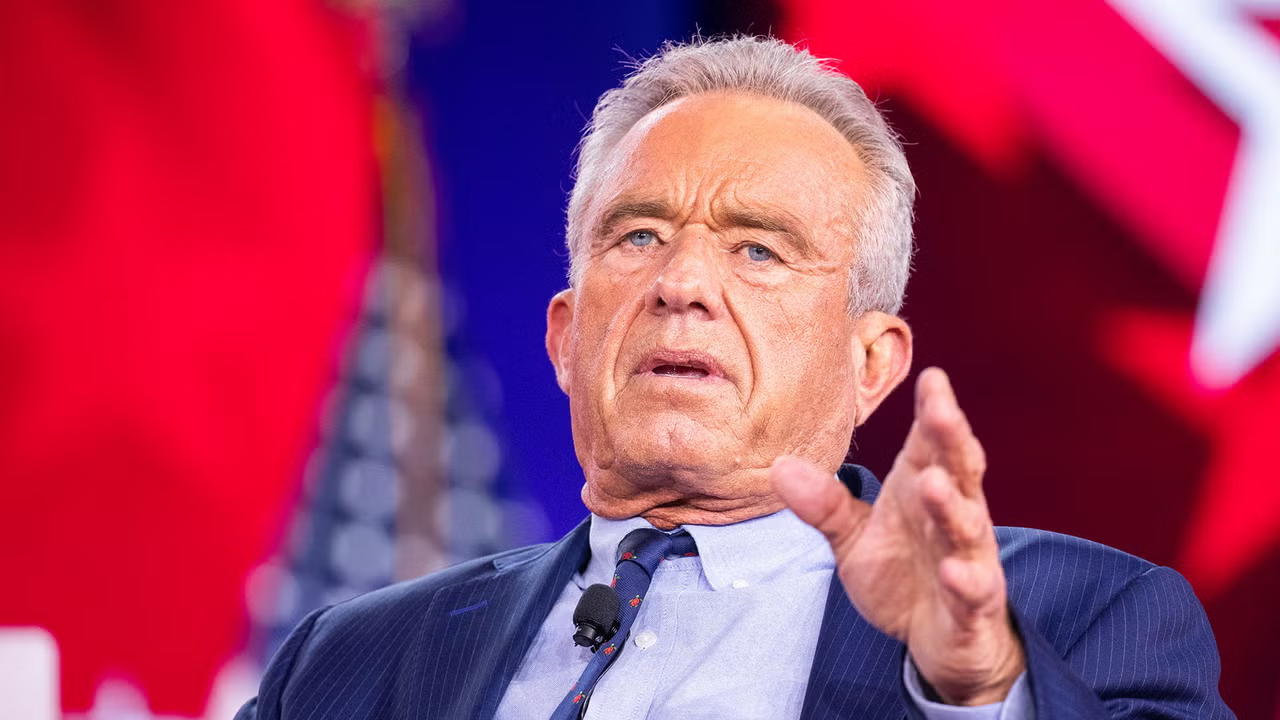
In a surprising revelation, Robert F. Kennedy Jr., the current Health and Human Services Secretary and a prominent figure in American politics, has declared that he is unable to cast his vote anywhere in the United States. This assertion, made during a press conference addressing homelessness in Los Angeles, raises questions not only about the legal frameworks governing residency and voting but also about the complex intersections of personal circumstance and public service.
The Legal Landscape
RFK Jr.’s predicament stems from a series of legal battles during his recent presidential campaign. He has claimed that the Democratic Party attempted to challenge his candidacy in multiple states, leading to a court ruling that declared him without a legal residence. This unusual situation leaves him in a state akin to homelessness concerning his voting rights, despite his high-profile government role. The ruling from Judge Christina Ryba highlighted skepticism regarding his claimed residency at a friend’s home in Katonah, New York, citing the improbability of his living arrangements given his familial and personal commitments.
A Reflection on Residency and Citizenship
The implications of Kennedy’s situation extend beyond mere politics; they touch upon the very fabric of citizenship in the United States. While one does not need a permanent address to vote, as stipulated by the U.S. government, the intersection of legal definitions and personal realities can create barriers that are both complex and troubling. Kennedy’s claims bring to light the challenges faced by many Americans who may find themselves without a stable living situation, yet still wish to exercise their democratic rights.
Homelessness and Political Discourse
Discussing homelessness in America is often fraught with emotion and urgency, and Kennedy’s remarks have potentially reignited critical conversations about the state of housing and civil rights. By linking his voting rights to broader issues of homelessness, he raises awareness of the vulnerabilities faced by those without stable housing—a demographic that often remains underrepresented in political dialogues. This connection underscores the need for a more nuanced understanding of how homelessness affects civic engagement and political representation.
Leadership in Uncertain Times
Kennedy’s unique position as a public figure grappling with this legal and personal dilemma speaks volumes about the challenges of leadership in uncertain times. His struggle to clarify his voting status symbolizes the broader complexities many face in navigating the intersections of law, personal identity, and public service. As he seeks to resolve his situation ahead of the next election, his experience may serve as a catalyst for deeper discussions about voter rights, residency laws, and the very essence of citizenship in America.
The Path Forward
As the 2024 election approaches, Kennedy’s situation prompts critical reflections on the systems that govern voting rights and the need for reforms that ensure all citizens, regardless of their housing status, can participate in the democratic process. The conversation around his predicament can act as a touchstone for addressing broader societal issues, urging lawmakers and citizens alike to consider how to support those who find themselves on the fringes of society.
Conclusion: A Call for Inclusivity
RFK Jr.’s unexpected voting dilemma serves not only as a personal challenge but also as a reminder of the importance of inclusivity in the democratic process. As Miami and the nation at large reflect on these issues, it becomes imperative to advocate for systems that uphold the rights of all citizens, fostering an environment where everyone can engage meaningfully in the political landscape. In doing so, we honor the democratic ideals that underpin our society and work towards a more equitable future.
Editorial note: This article was created by A Bit Lavish Miami’s Magazine as an original editorial reinterpretation based on publicly available reporting. Original source: fastcompany.com. Read the original article here: https://www.fastcompany.com/91589193/rfk-jr-says-he-cant-legally-vote-anywhere-in-america-heres-why.
Images are used for editorial reference with source credit. If an image requires correction or removal, please contact A Bit Lavish.



Trump and AI CEOs Forge Safety Pact Amid Data Center Expansion
A significant agreement between Trump and leading AI CEOs aims to enhance...
 2 Mins read
The New Age of School Photos: AI’s Role in Parental Economies
Explore how parents are leveraging AI technologies like ChatGPT to navigate the...
2 Mins read
Trump Reaffirms Support for Data Centers and AI Industry Safeguards
The former president's recent discussions with AI executives signal a pivotal moment...
2 Mins read
Disney’s Strategic Shift: Navigating Workforce Reductions in a Changing Landscape
Explore the implications of Disney's recent layoffs under new CEO Josh D’Amaro...
 ABL2 Mins read