
The Fiery Farewell of Vaillancourt Fountain: A Cultural Landmark’s Dismantling
A Controversial Legacy
In the heart of San Francisco, the Vaillancourt Fountain has long been a polarizing symbol of the city’s artistic landscape. Designed by the Canadian artist Armand Vaillancourt, this monumental installation was celebrated for its bold, abstract form, yet it also faced intense scrutiny and calls for preservation amid ongoing debates about public art’s role in urban spaces. As efforts to save this iconic fountain have faltered, its dismantling marks not just the end of a structure, but a profound shift in how we regard art in public spaces.
The Dismantling: A Moment of Reflection
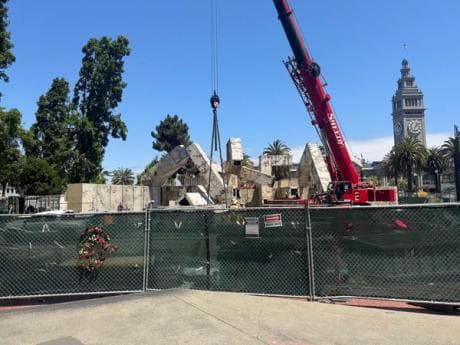
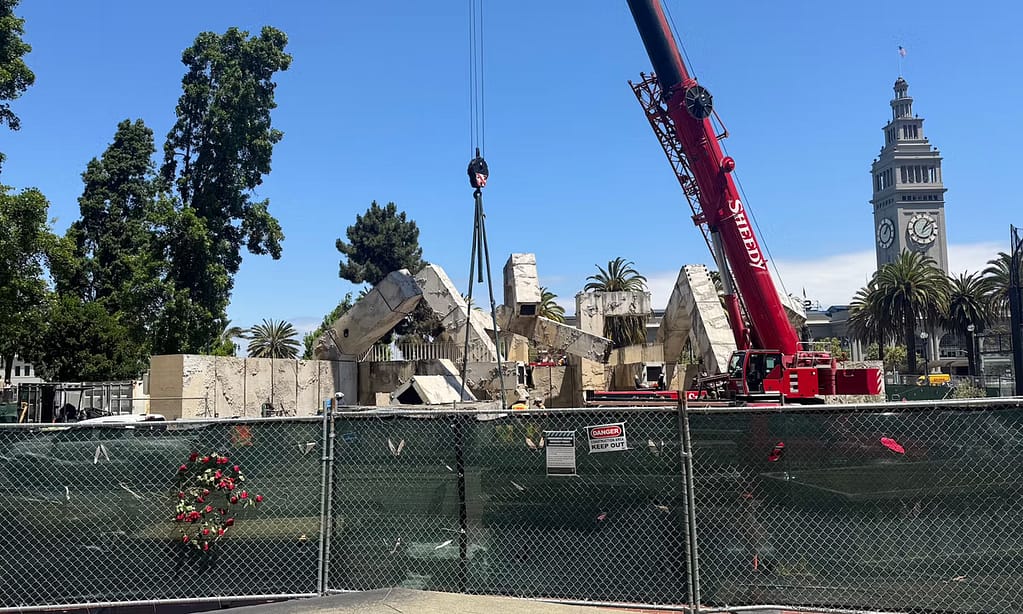
The recent dismantling of the Vaillancourt Fountain was not merely a logistical endeavor but a poignant moment that encapsulated the tensions surrounding the preservation of modernist art. This event ignited discussions on the significance of public art and the responsibilities of cities to protect cultural heritage. Opponents of its removal argued that the fountain, with its unique design and historical context, was an integral part of San Francisco’s identity.
Art and Urban Identity
Public art serves as a reflection of a city’s values and aspirations. The Vaillancourt Fountain, with its striking aesthetics and location, contributed to the urban narrative of San Francisco. Its removal raises questions about what is deemed worthy of preservation and who gets to decide the fate of such landmarks. In a world increasingly driven by rapid development and changing societal values, the fate of the Vaillancourt Fountain serves as a case study for how cities negotiate their cultural landscapes.
Provenance and Market Implications
As collectors and investors reflect on the legacy of the Vaillancourt Fountain, the conversation extends into the realms of provenance and market significance. The dismantling of such a well-known piece invites a renewed interest in the value of similarly situated works. Art collectors are often drawn not only to the aesthetics of a piece but also to its history and narrative. The story of the Vaillancourt Fountain, infused with controversy and artistic merit, may very well influence future investments in public art and the valuation of modernist works.
A Collector’s Mindset
For discerning collectors, the emotional and psychological dimensions of art acquisition are paramount. The story of a piece can enhance its allure—attributes that are particularly poignant in the case of the Vaillancourt Fountain. As potential investors consider their next acquisitions, they may find themselves reflecting on how the broader cultural dialogues surrounding a work can impact its long-term value and significance in their collections. The psychology of collecting often intertwines with the narratives of preservation and loss, making the case of the Vaillancourt Fountain a compelling study in the intersection of art, culture, and investment.
A New Chapter for Public Art
The dismantling of the Vaillancourt Fountain signals not only an end but also a new chapter in the ongoing discourse about public art in urban environments. As cities evolve, so too must their approaches to cultural heritage. The lessons learned from this landmark’s contentious fate may pave the way for more thoughtful engagement with public art, encouraging dialogue that honors both the past and future.
Editorial note: This article was created by A Bit Lavish Miami’s Magazine as an original editorial reinterpretation based on publicly available reporting. Original source: theartnewspaper.com. Read the original article here: https://www.theartnewspaper.com/2026/05/08/vaillancourt-fountain-san-francisco-dismantling-fire.
Images are used for editorial reference with source credit. If an image requires correction or removal, please contact A Bit Lavish.




A Monument of Resilience: Celebrating Cultural Identity Through Art
Explore Nirbhai Singh Sidhu's monumental sculpture at the Scarborough Gurdwara, a symbol...
 2 Mins read
A Vision Beyond Sight: Exploring Éric Baudelaire’s Groundbreaking Documentary
Discover how Éric Baudelaire's documentary showcases the unique perspectives of blind students,...
2 Mins read
Francis Halzen Awarded Nobel Prize in Physics for Groundbreaking Study on Ghost Particles
The Nobel Prize in Physics 2026 has been awarded to Francis Halzen...
2 Mins read
Echoes of Resilience: The Transformative Power of Art in Gaza
Explore how Palestinian artists, navigating life under the Gaza ceasefire, use their...
2 Mins read