
The Grand Ambitions Beneath the White House: A Deep Dive into Trump’s Ballroom Controversy
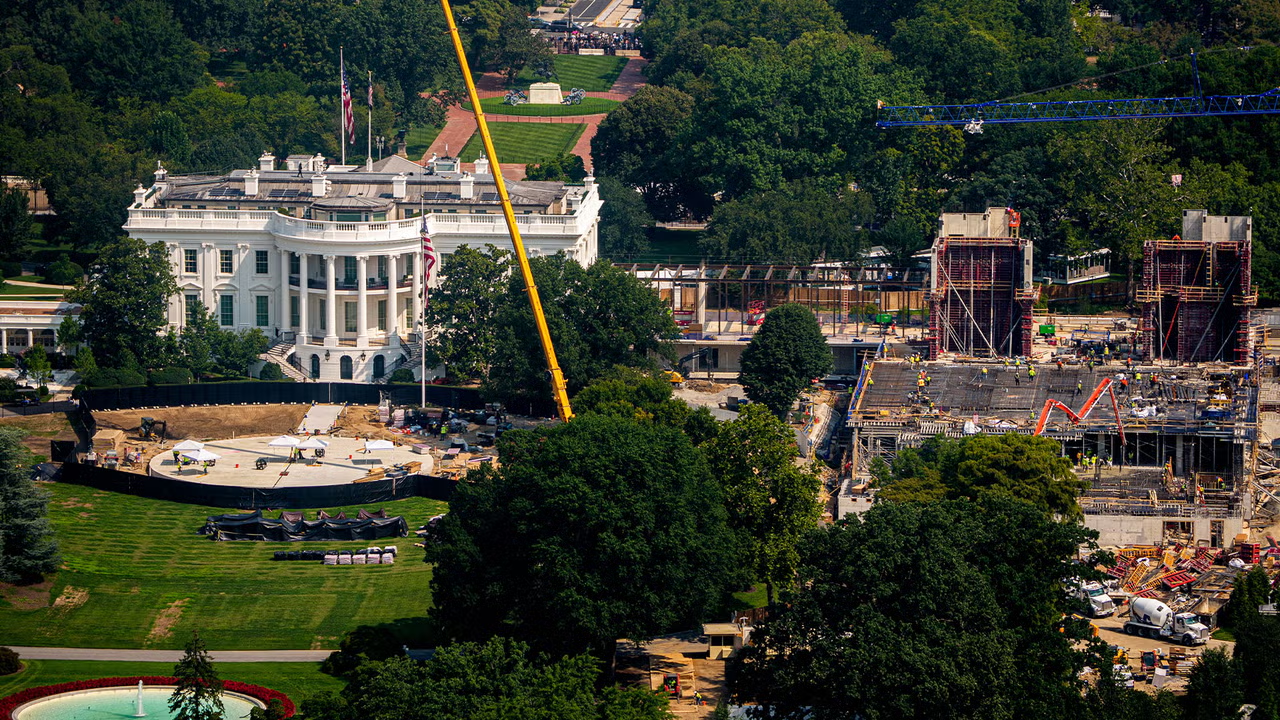
Unearthing Ambition: The Ballroom Project
In the heart of Washington, D.C., a significant construction project has become a focal point of controversy and legal entanglements. The Trump administration’s ambitious plan to build a lavish ballroom next to the iconic White House has met with fierce opposition and a series of legal challenges. As the project faced a critical halt, the administration sought intervention from the Supreme Court, framing the situation as a matter of national security—a narrative shift that reflects the intersection of power, politics, and public perception.
Legal Maneuvers and National Security Claims
The stakes of this construction project extend beyond mere aesthetics or event hosting. U.S. Solicitor General D. John Sauer argued in an emergency filing that halting the ballroom’s construction poses a national security threat, asserting that the project is too far along to stop. With substantial materials already procured and structural elements in place, the administration contended that a judicial freeze would disrupt not only construction but also the integrity of governmental operations. This assertion, however, raises questions about the balance between executive ambition and legislative oversight.
The Shift from Celebration to Security
Initially pitched as a grand venue for hosting high-profile events, the narrative surrounding the ballroom has evolved dramatically. What began as an effort to enhance the social fabric of the White House has morphed into a justification for extensive security features, including a proposed underground bunker equipped with missile-resistant steel and drone-proof ceilings. This pivot underscores a broader trend in governance where the lines between public engagement and security concerns are increasingly blurred.
Historical Preservation vs. Modern Ambitions
At the core of the legal battle lies the tension between modernization and historical preservation. The National Trust for Historic Preservation has emerged as a vocal opponent of the ballroom project, arguing that significant alterations to the White House should require Congressional approval. Their position highlights a critical debate over who holds the power to make decisions about the nation’s most iconic residence. The judges’ sympathetic response to the Trust’s arguments suggests a recognition of the need to protect the integrity of a structure that symbolizes American democracy.
Implications for Leadership and Governance
This ongoing saga serves as a case study in leadership and governance in contemporary America. The Trump administration’s approach—pushing through a controversial project while facing opposition—reflects a broader trend of executive assertiveness. However, it also raises questions about accountability and the role of checks and balances in the face of ambitious undertakings. As the administration navigates these turbulent waters, the implications for future governance and public trust remain profound.
The Miami Connection: Lessons in Luxury and Leadership
Miami, known for its opulent lifestyle and dynamic business environment, can draw parallels from this situation. The city’s real estate development often faces scrutiny regarding preservation and urban planning, echoing the challenges seen in Washington. The lessons learned from the ballroom’s controversies remind us that innovation and ambition must be tempered with respect for history and community input. Miami’s leaders can glean insights into navigating the complexities of growth while ensuring that the rich tapestry of the city is preserved for future generations.
Conclusion: A Call for Reflection
The unfolding events surrounding the Trump administration’s ballroom project invite us to reflect on the broader implications of such monumental undertakings. As the legal battles continue, the discourse surrounding national security, historical preservation, and executive authority remains crucial. In a world where the stakes are high, the balance between ambition and accountability must be carefully managed. The White House ballroom may serve as a luxurious venue for future gatherings, but its journey to completion will undoubtedly mark a pivotal chapter in the annals of American governance.
Editorial note: This article was created by A Bit Lavish Miami’s Magazine as an original editorial reinterpretation based on publicly available reporting. Original source: fastcompany.com. Read the original article here: https://www.fastcompany.com/91590900/trumps-400-million-ballroom-fight-reveals-whats-really-being-built-beneath-the-white-house.
Images are used for editorial reference with source credit. If an image requires correction or removal, please contact A Bit Lavish.




Middle East Crude Oil Exports Surpass Pre-War Levels Amid Ongoing Geopolitical Tensions
Crude oil exports from the Middle East have exceeded pre-war levels, highlighting...
 1 Mins read
Middle East Crude Oil Exports Surpass Pre-War Levels Amid Rising Tensions
The resurgence of Middle East crude oil exports has significant implications for...
2 Mins read
Schneider Electric Shares Plunge 7% Following $22.6 Billion PTC Acquisition Announcement
The significant drop in Schneider Electric's shares highlights investor concerns regarding the...
2 Mins read
Pereira Launches Ready-to-Cook Shrimp at Conxemar 2026
The launch of Pereira's ready-to-cook shrimp at Conxemar 2026 marks a significant...
1 Mins read