
The Intersection of Sports and Politics: How FIFA and Trump Redefined the World Cup Narrative
The World Cup: A Stage for Global Unity
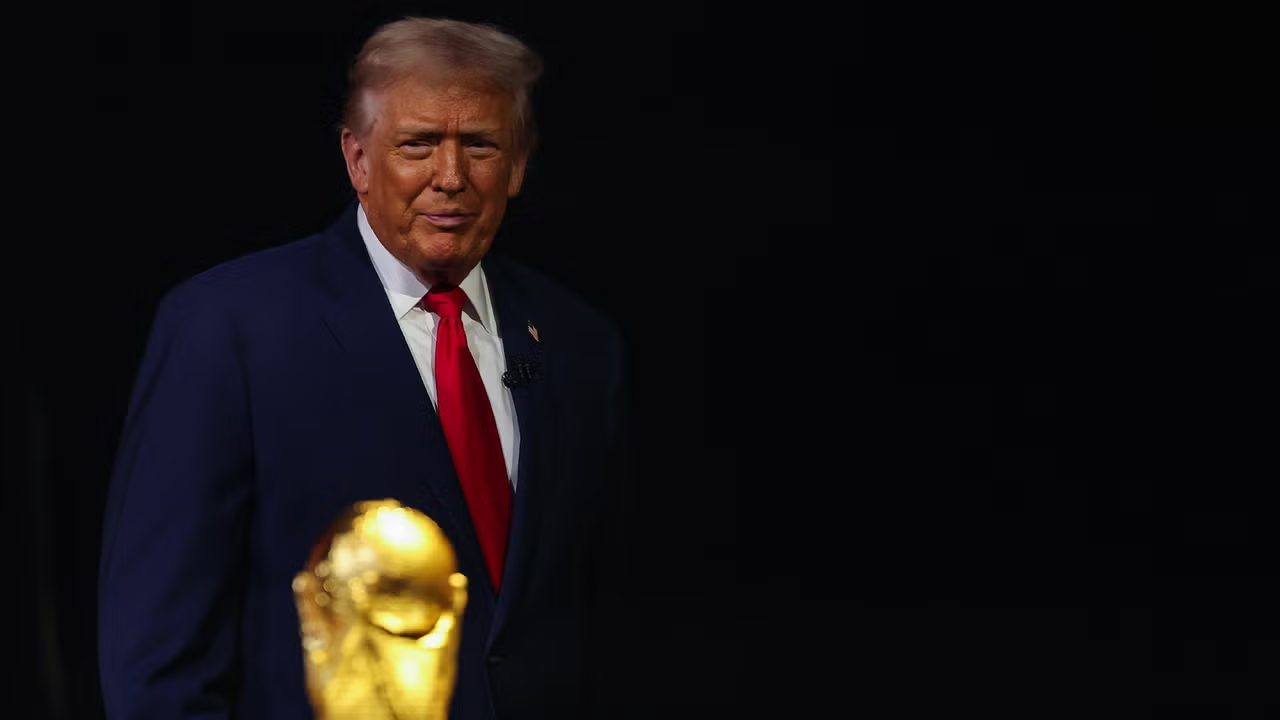
The FIFA World Cup has long been a celebration of global unity, where nations come together to revel in their shared love for football. This year, however, as the tournament unfolded, it became evident that the event was overshadowed by the unexpected intersection of sports and political machinations, particularly involving former President Donald Trump.
Controversy Brews on the Field
As fans gathered to witness the dynamic matches of the U.S. Men’s National Team (USMNT), a pivotal moment arose when striker Folarin Balogun faced an unexpected ejection due to a contentious referee decision. The incident, which occurred during a match against Bosnia and Herzegovina, sparked heated debates among commentators, ex-players, and fans alike. Many questioned whether the referee’s call warranted such a severe punishment, igniting conversations about the potential for an appeal.
Trump’s Unconventional Interference
In a move that seemed to politicize the sporting event, Trump intervened by reaching out to FIFA President Gianni Infantino, urging a review of Balogun’s red card. This intervention led to an unprecedented decision by FIFA to suspend Balogun’s ban, allowing him to continue playing—a move that many viewed as a troubling precedent.
The Dynamics of Power
Infantino’s willingness to align closely with Trump raises questions about the ethical implications of political influence in sports. As the World Cup approached, Infantino had made it clear that cultivating a good relationship with Trump was vital for the tournament’s success, given the government’s role in security and logistics. This relationship was solidified through gestures of admiration, including the awarding of a special “FIFA Peace Prize” to Trump, further intertwining the worlds of football and politics.
Navigating a New Narrative
With Trump’s involvement, the World Cup’s narrative shifted dramatically. What was once a source of joy and national pride for many became entangled in the complexities of political allegiance and controversy. The tournament, often seen as a temporary escape from political discourse, now became a backdrop for discussions about Trump’s influence and the implications of such interventions in sporting events.
The Ripple Effect on the USMNT
Ultimately, the USMNT’s early exit from the tournament raised further questions about the long-term effects of this incident. While Trump may have drawn attention to himself, the team faced the potential stigma of having their achievements overshadowed by political maneuvering. As fans processed the implications of FIFA’s decisions, it became evident that the intersection of sports and politics could forever alter the essence of the World Cup experience.
A Call for Reflection
The events surrounding this year’s World Cup compel us to reflect on the delicate balance between sportsmanship and political influence. As we celebrate the spirit of the game, we must also remain vigilant about the forces that seek to reshape its narrative. The World Cup should be a testament to unity and competition, not a stage for political spectacle.
Editorial note: This article was created by A Bit Lavish Miami’s Magazine as an original editorial reinterpretation based on publicly available reporting. Original source: fastcompany.com. Read the original article here: https://www.fastcompany.com/91569897/fifa-trump-world-cup.
Images are used for editorial reference with source credit. If an image requires correction or removal, please contact A Bit Lavish.







Empowering Creativity: Exploring Whorl and Flux 3 for Modern Visual Design
Discover how Whorl and Flux 3 are revolutionizing visual design, making it...
 3 Mins read
The Rise of Competitive Play: Mattel’s UNO Championship Redefines Family Game Night
Explore how Mattel's new UNO Championship is transforming family game night into...
2 Mins read

The Transformative Power of Questions in Business and Beyond
Explore how the art of questioning shapes our understanding, relationships, and innovation...
2 Mins read


USA Fencing: A Bold Strategy to Revitalize a Timeless Sport Ahead of the 2028 Olympics
USA Fencing's innovative approach to revamping the sport and capturing audience interest...
3 Mins read
