
Unearthing the Past: A Colossal Discovery from the Ancient Lydian Civilization
 ABLUpdated 1 month Ago2 Mins read64

A Monument to Time
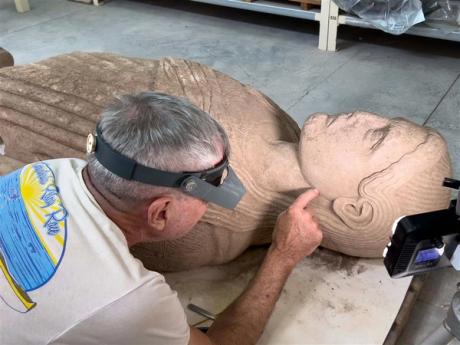
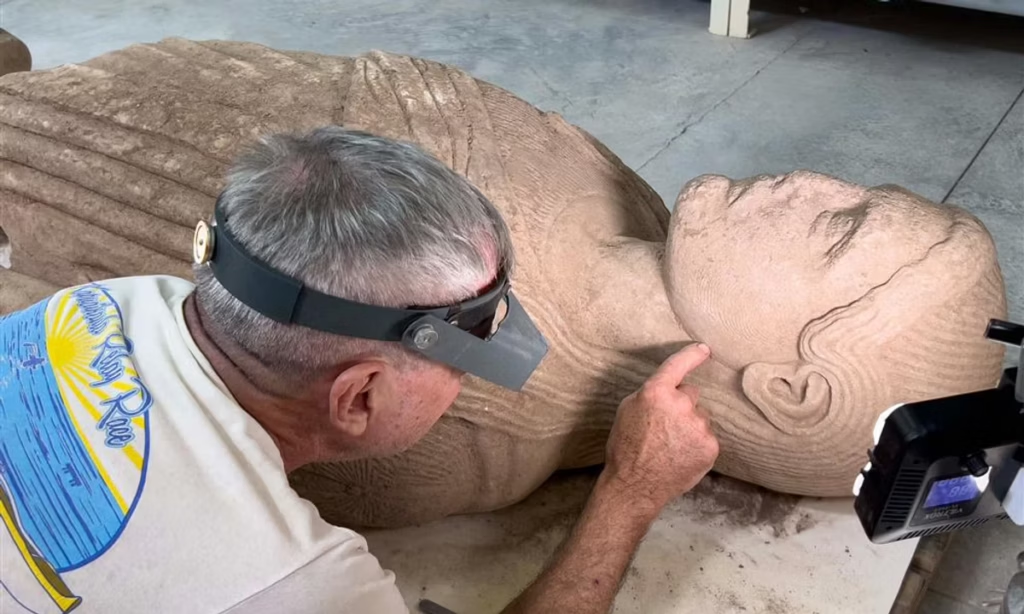
In a remarkable archaeological revelation, a colossal sculpture dating back 2,500 years has been unearthed at a UNESCO site in Turkey, shedding light on the enigmatic Lydian civilization. This extraordinary find not only captures the awe of experts but also serves as a testament to the artistic prowess and cultural profundity of an ancient society that has long remained overshadowed in the annals of history.
Rediscovering Lydian Legacy
The Lydians, who flourished in western Anatolia, were known for their innovative contributions to trade, coinage, and art. Yet, despite their significance, much of their civilization has been studied only superficially. The recent discovery of this statue, heralded by Turkey’s culture ministry, provides scholars with a rare opportunity to delve deeper into the artistic and sociopolitical narratives of the Lydian era.
Artistry and Material Insights
Crafted from exquisite local stone, the statue stands as a monumental representation of Lydian artistry. Its dimensions and intricate details suggest a high level of skill and craftsmanship that were likely reserved for the most significant figures or deities in their society. The material used not only speaks to the technological advancements of the time but also to the trade networks that enabled such artistry to flourish.
The Cultural Context
This discovery arrives at a time when global interest in ancient civilizations is burgeoning. The Lydians were pioneers in many respects, including the introduction of coinage, which transformed trade across the region. By examining the statue in its cultural context, we gain insights not just into the Lydians’ artistic expressions, but also their societal structures, beliefs, and interactions with neighboring cultures.
Market Significance and Collectors’ Interest
As the art market becomes increasingly fascinated with ancient artifacts, the provenance of such discoveries is paramount. The Lydian statue could potentially alter the landscape of ancient art collection, as it embodies a rare opportunity for collectors to acquire pieces from a civilization that has until now remained largely overlooked. With its rich backstory and historical significance, this statue is poised to attract the attention of both seasoned collectors and new investors eager to diversify their portfolios with unique artifacts.
Miami’s Connection to the Ancient World
As a vibrant cultural hub that celebrates diversity and creativity, Miami offers a fertile ground for the appreciation of ancient art. Galleries and museums in the city frequently showcase exhibitions that explore the intersections of history and contemporary culture. This newfound interest in Lydian civilization aligns with Miami’s broader narrative, where art transcends time and geography, inviting both residents and visitors to explore the depth of human creativity.
Curatorial Perspectives
For curators, the implications of this discovery extend beyond mere aesthetics. The statue’s unveiling presents an opportunity to curate exhibitions that not only highlight the Lydian culture but also provoke discussions around the importance of preserving and understanding ancient histories. The collector’s psychology is equally vital; the allure of owning a piece of history appeals deeply to those who appreciate the narratives woven into each artifact.
A Lasting Legacy
As we stand on the brink of a deeper understanding of the ancient Lydians, this colossal sculpture serves as a bridge connecting us to an extraordinary past. By celebrating these discoveries, we honor the legacy of civilizations that have shaped our present and continue to influence our future. The discovery of this statue is not just an archaeological triumph; it is a cultural renaissance that invites us all to reflect on the artistry and complexities of human history.
Editorial note: This article was created by A Bit Lavish Miami’s Magazine as an original editorial reinterpretation based on publicly available reporting. Original source: theartnewspaper.com. Read the original article here: https://www.theartnewspaper.com/2026/08/07/colossal-2500-year-old-sculpture-discovered-turkey-unesco-site.
Images are used for editorial reference with source credit. If an image requires correction or removal, please contact A Bit Lavish.










Lucas Museum Opens with Star-Studded Gala, Signaling a New Era in Art Institutions
The Lucas Museum of Narrative Art officially opened on September 20, 2026,...
 2 Mins read

Hollywood Celebrates the Opening of the Lucas Museum of Narrative Art
The Lucas Museum of Narrative Art officially opened its doors, marking a...
1 Mins read
Archaeologists Race Against Time to Save Centuries-Old Artifacts in Alaska After Typhoon Halong
Urgent efforts are underway to recover invaluable historical artifacts scattered by Typhoon...
1 Mins read


High School Teacher Uncovers Rare T. Rex Tracks in Pivotal Paleontological Discovery
A high school science teacher's remarkable find of rare T. Rex tracks...
2 Mins read
