
Unlocking Leadership Potential: The Neurobiological Path to Effective Decision-Making
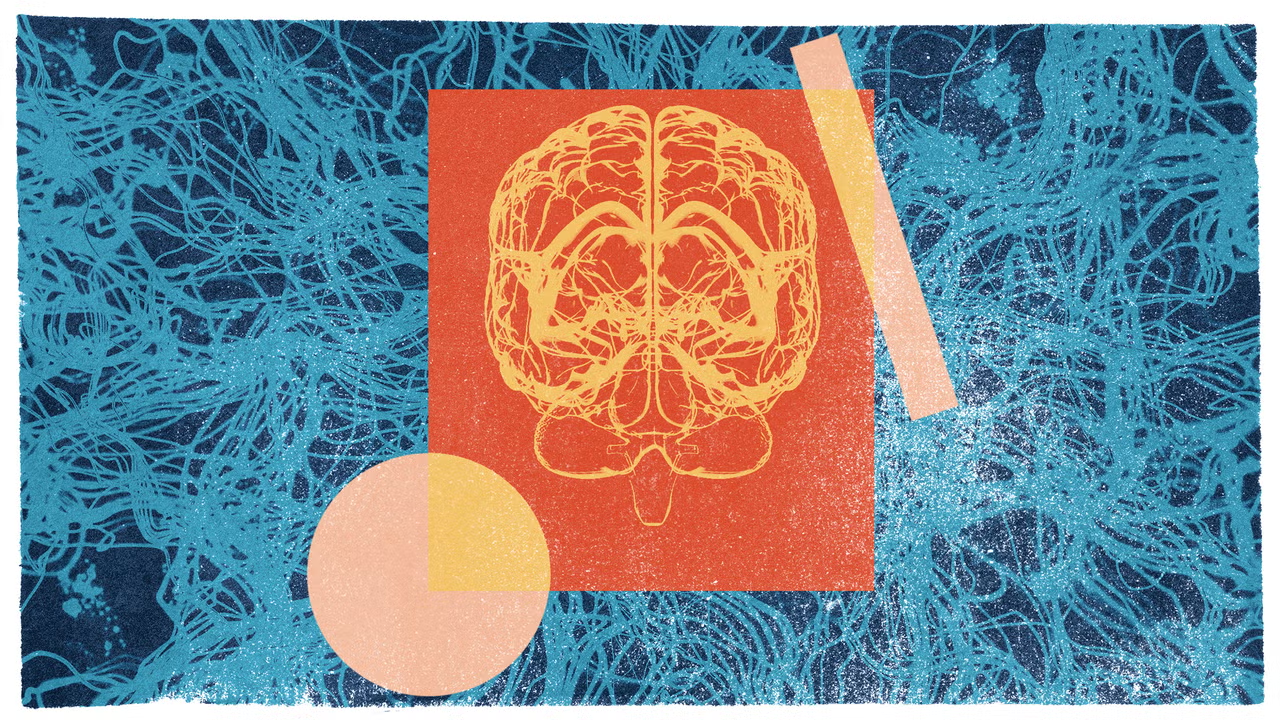
The Brain Behind Leadership
In today’s fast-paced business environment, the ability to lead effectively is more crucial than ever. Yet, many leaders find themselves overwhelmed by the complexities of strategy and decision-making. Recent insights from neurobiology shed light on how the brain’s intricate systems can dictate our leadership capabilities, emphasizing that our cognitive health is pivotal to success.
Navigating the Neural Landscape
The human brain, a remarkable organ housing around 80 billion neurons, operates through two primary systems that significantly influence leadership performance: the analytic network and the limbic system. The analytic network, primarily located in the prefrontal cortex, is responsible for high-level cognitive functions, including decision-making, problem-solving, and strategic planning. In contrast, the limbic system governs our emotional responses and is often triggered by stress, creating a state of heightened alertness.
In moments of pressure, such as crafting a strategic vision, leaders may find themselves in what is termed a ‘threat state.’ This heightened state of anxiety inhibits their ability to think clearly and make rational decisions, ultimately obstructing their capacity to lead effectively. Understanding this neural response is essential for leaders in Miami’s vibrant business landscape, where emotional intelligence and resilience are paramount.
Transforming Threats into Rewards
The good news is that leaders can actively shift from this ‘threat state’ to a more productive ‘reward state.’ In this state, the brain’s analytic network operates at its best, allowing leaders to approach complex tasks with clarity and confidence. Here are four fundamental strategies to foster this transformation:
- Reconnect with Purpose: Focusing on the core mission behind one’s role can significantly enhance cognitive function. Leaders should embrace their personal, organizational, and immediate purposes to reduce anxiety and engage their prefrontal cortex.
- Practice Emotional Regulation: Employing techniques such as mindfulness, controlled breathing, and self-affirmation can help calm the limbic system. These practices signal to the brain that the present situation is safe, promoting clarity and focus.
- Seek Social Support: Building connections and fostering relationships within the workplace can create a supportive environment. Engaging with mentors or colleagues can release oxytocin, which mitigates stress and enhances resilience.
- Utilize Organizational Tools: Implementing journaling or task management systems can help leaders offload cognitive noise. This approach allows them to maintain focus on critical decision-making processes while staying energized through proper hydration and nutrition.
Designing Resilient Leadership
In a city like Miami, where innovation and competition thrive, leaders must adapt and evolve continuously. The application of neurobiological principles offers a unique framework for enhancing leadership effectiveness. By understanding and leveraging the brain’s capabilities, leaders can foster a culture of resilience that not only drives performance but also nurtures a positive workplace environment.
As businesses grapple with unprecedented challenges, the ability to navigate emotional landscapes will define the leaders of tomorrow. Those who can manage their own emotional responses and foster connections with their teams will be better equipped to guide their organizations through uncertainty.
The Future of Leadership in Miami
Miami’s dynamic business ecosystem is ripe for leaders who embrace a neurobiological approach to leadership. By prioritizing mental health and emotional intelligence, executives can unlock new levels of creativity and innovation. As neurobiologists suggest, effective leadership is not solely about strategies but about understanding the brain’s influence on behavior and decision-making.
Ultimately, as leaders learn to shift themselves and their teams into a ‘reward state,’ they will find that the strategies they once struggled to articulate will flow effortlessly. The brain, when nurtured and understood, becomes a powerful ally in the quest for impactful leadership.
Editorial note: This article was created by A Bit Lavish Miami’s Magazine as an original editorial reinterpretation based on publicly available reporting. Original source: fastcompany.com. Read the original article here: https://www.fastcompany.com/91549139/the-neurobiology-of-leadership-why-brains-not-strategies-drive-performance-neuroscience-performance.
Images are used for editorial reference with source credit. If an image requires correction or removal, please contact A Bit Lavish.









Revving Up the Capital: The Freedom 250 Grand Prix in Washington, D.C.
Experience the thrilling Freedom 250 Grand Prix in Washington, D.C., an event...
 2 Mins read

Navigating the New Frontier: Young Writers in the Age of AI
Explore the challenges faced by young writers in Miami as they grapple...
2 Mins read

The Unseen Burden: Navigating Invisible Labor in Leadership
Exploring the hidden challenges faced by women in leadership roles, this article...
2 Mins read



Funding Compassion: The Unfolding Narrative of Lindsay Clancy’s GoFundMe Campaign
Explore the intricacies of the GoFundMe campaign supporting Lindsay Clancy's family amidst...
2 Mins read
