

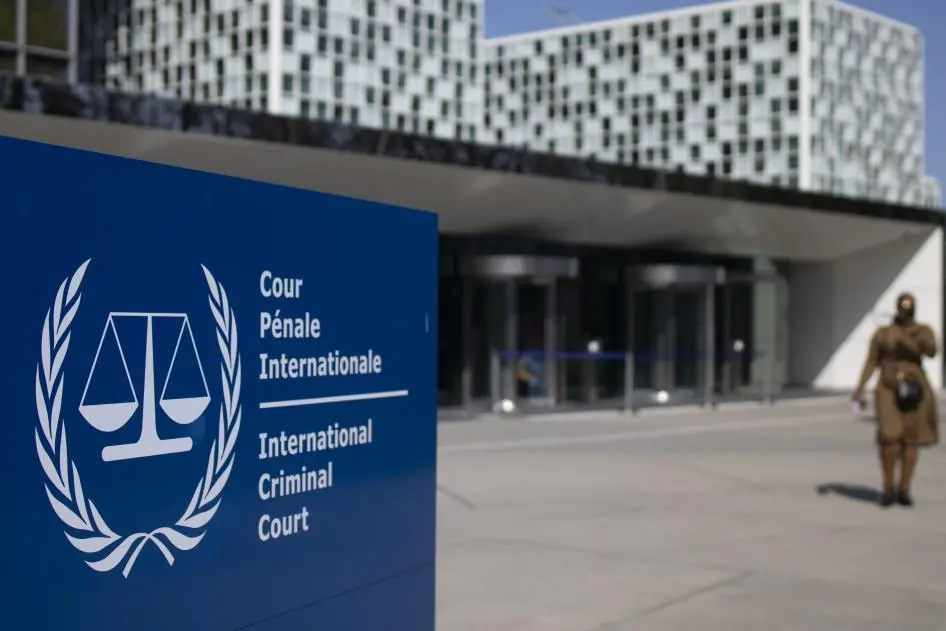
Changing the Course of Justice
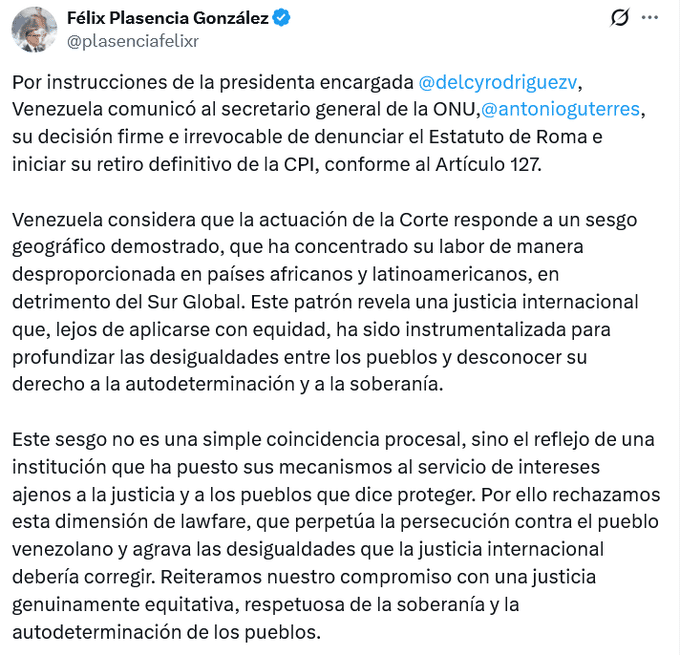
In a striking development that illuminates the complex political landscape of Latin America, Venezuela’s interim government has declared its irrevocable decision to withdraw from the International Criminal Court (ICC). This action, announced by the country’s Foreign Minister, Félix Plasencia González, via social media, marks a pivotal moment for Venezuela on the international stage.
A Declaration of Intent
According to the formal communication sent to António Guterres, the Secretary-General of the United Nations, this withdrawal is executed under Article 127 of the Rome Statute. The government, led by the acting president, Delcy Rodríguez, asserts that the ICC’s actions demonstrate a geographical bias, disproportionately focusing on nations in Africa and Latin America while neglecting issues faced by the Global South.
Concerns Over Sovereignty and Self-Determination
Venezuela’s leadership has framed this decision as a defense of national sovereignty and the right to self-determination. In their view, the ICC’s ongoing investigation into alleged crimes against humanity since 2017 is a politically motivated endeavor aimed at undermining Venezuela’s government. This perspective highlights a broader narrative often echoed by nations facing international scrutiny, portraying such actions as ‘lawfare’—a judicial warfare against the state and its people.
The Political Landscape and Global Implications
Venezuela stands as one of the few Latin American countries that had ratified the Rome Statute, which reflects a commitment to international justice. However, the current administration’s stance underscores a growing skepticism towards international legal frameworks, particularly when perceived through a geopolitical lens. As Venezuela embarks on this withdrawal, it raises questions about how this decision will influence its relationships with other nations and international organizations.
Miami: A Hub of Venezuelan Diaspora
In the vibrant streets of Miami, a city with a significant Venezuelan community, the implications of this political shift resonate deeply. Many Venezuelans in South Florida have fled the ongoing crisis, seeking refuge from what they describe as a regime marked by oppression and economic turmoil. The news of Venezuela’s ICC withdrawal is likely to elicit strong reactions among both supporters and critics of the Maduro administration, further polarizing opinions within this diaspora.
Looking Ahead: The Year of Transition
The withdrawal process, as stipulated in Article 127, will take effect one year after the notification to the UN Secretary-General, during which time Venezuela remains bound by the Rome Statute concerning ongoing investigations. This transitional phase invites speculation about the government’s next steps in navigating international relations and addressing the challenges posed by the ICC’s inquiries.
Conclusion: A Defining Moment
Venezuela’s decision to withdraw from the International Criminal Court is emblematic of a broader struggle over justice, sovereignty, and the geopolitical dynamics that shape international law. As the country charts its course amidst a complex web of global influences, the world watches closely, anticipating how this bold move will redefine Venezuela’s role on the international stage.
Editorial note: This article was created by A Bit Lavish Miami’s Magazine as an original editorial reinterpretation based on publicly available reporting. Original source: efectococuyo.com. Read the original article here: https://efectococuyo.com/politica/gobierno-interino-anuncia-retiro-definitivo-de-venezuela-de-la-corte-penal-internacional/.
Images are used for editorial reference with source credit. If an image requires correction or removal, please contact A Bit Lavish.




Venezuela Reports 8.4% Inflation Rate for September 2026
The Central Bank of Venezuela has announced an inflation rate of 8.4%...
 2 Mins read
A Shift in the Winds: Flávio Bolsonaro’s Call for Change in Brazil
Explore Flávio Bolsonaro's vision for Brazil's future following his strong showing in...
2 Mins read
A Surprising Turn in Brazilian Politics: Lula’s Unexpected First-Round Results
Brazil's President Luiz Inácio Lula da Silva reacts to unexpected election results,...
2 Mins read
Venezuela’s Inflation Rate Hits 8.4% in September 2026
The Central Bank of Venezuela has reported an inflation rate of 8.4%...
2 Mins read