
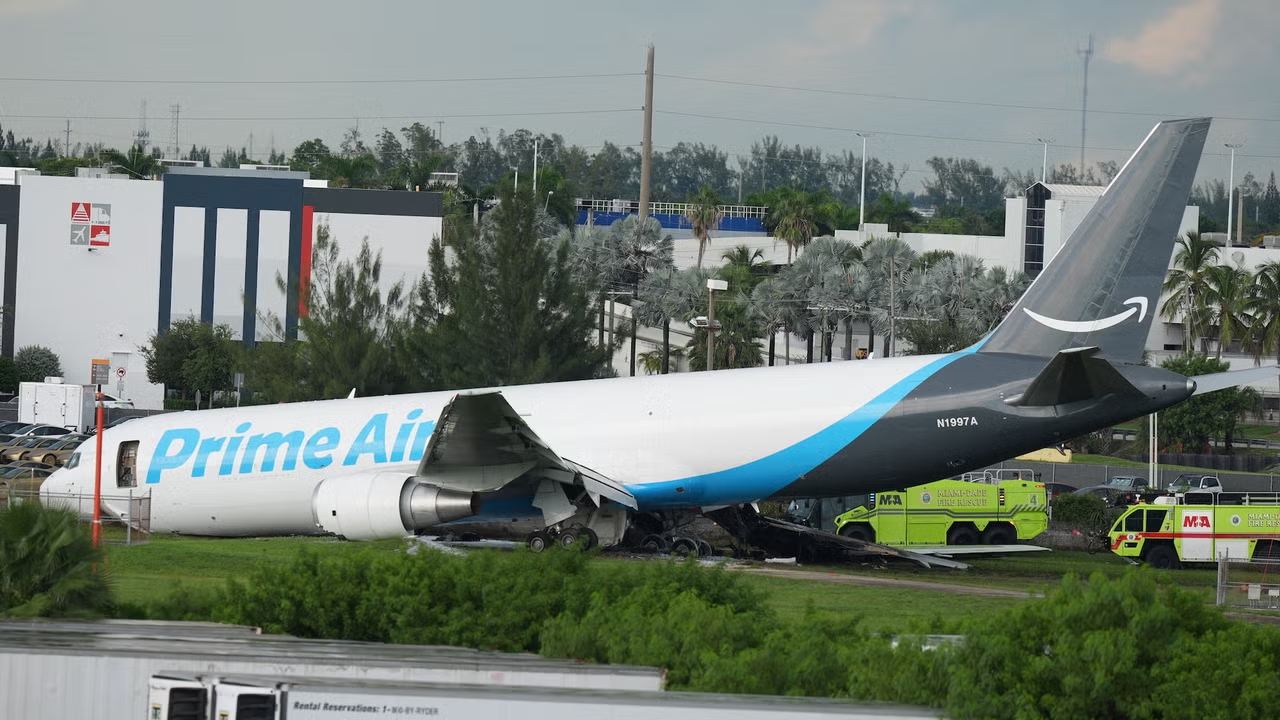
When Aviation Meets Urban Landscape
The tragic cargo plane crash at Miami International Airport serves as a stark reminder of the complex interplay between aviation safety and urban infrastructure. On a fateful Sunday afternoon, a Boeing 767, operated by 21 Air for Amazon, overran the runway, resulting in the loss of five lives and raising critical questions about operational protocols and aircraft design.
As Miami continues to evolve as a global hub for business and travel, the incident underscores the urgent need for a synchronized approach to aviation safety in densely populated areas.
Investigative Focus: A Deep Dive into the Incident
Federal investigators from the National Transportation Safety Board (NTSB) have embarked on a comprehensive examination of the crash, with a keen focus on the moments leading up to the landing. Eyewitness accounts and video footage suggest the aircraft may have touched down well beyond the designated landing zone, sparking debates among aviation experts about the decision-making protocols employed by the pilots.
Mary Schiavo, a former Inspector General of the Transportation Department, highlighted critical factors such as weather conditions, mechanical performance, and pilot judgment. The absence of rainfall, contrasted against dark storm clouds and reported strong winds, may have contributed to the aircraft’s prolonged airborne status before landing.
Design Failures and Regulatory Gaps
A glaring issue brought to light by this incident is the lack of arresting systems at Miami International Airport. Unlike over 120 airports across the nation equipped with these safety measures, Miami’s absence of such technology leaves both passengers and those on the ground vulnerable to catastrophic outcomes when planes overrun runways.
The FAA has credited these lightweight, crushable materials at the end of runways with saving hundreds of lives. The lack of such infrastructure in Miami raises critical questions: How can urban airports adapt to increasing traffic while ensuring safety protocols evolve to match the complexities of modern aviation?
The Human Cost: Beyond the Statistics
The human impact of the crash extends far beyond the immediate fatalities. Emergency response teams faced harrowing challenges, including extricating individuals trapped in vehicles. The psychological toll on first responders and the community at large cannot be understated. Amazon’s response, expressing deep sympathy for those affected, reflects the emotional gravity surrounding this incident.
The local community, renowned for its vibrant culture and bustling economy, is now grappling with the aftermath of a tragedy that has left an indelible mark on its landscape. As discussions around safety and design evolve, Miami’s resilience will be tested in the face of such adversity.
Future Considerations: A Call for Innovation and Leadership
In light of the crash, industry leaders and policymakers must engage in robust discussions about the future of aviation in urban environments. The balance between operational efficiency and safety requires innovative solutions that prioritize both technological advancements and infrastructure improvements.
Investments in safety systems, alongside rigorous training for pilots and ground crew, could serve as a model for other airports facing similar challenges. The need for an agile response to market shifts and technological progress is crucial as the aviation industry evolves in tandem with urban expansion.
Rethinking the Urban Airspace
As Miami propels itself further into the future, the integration of aviation safety with urban design is paramount. The recent tragedy highlights a pressing need for a comprehensive approach that encompasses not just airport operations but also community engagement and regulatory oversight.
By fostering a culture of innovation and safety, Miami can set a precedent for other metropolitan areas facing similar challenges in aviation. The intersection of technology, design thinking, and human empathy will be vital as the city navigates its role in the global air transport landscape.
Editorial note: This article was created by A Bit Lavish Miami’s Magazine as an original editorial reinterpretation based on publicly available reporting. Original source: fastcompany.com. Read the original article here: https://www.fastcompany.com/91603308/cargo-plane-crash-miami-airport-amazon-prime.
Images are used for editorial reference with source credit. If an image requires correction or removal, please contact A Bit Lavish.








Rekindling Connections: TSA Gateside Revives the Air Travel Experience
Discover how TSA Gateside is transforming air travel by allowing non-flying PreCheck...
 ABL2 Mins read
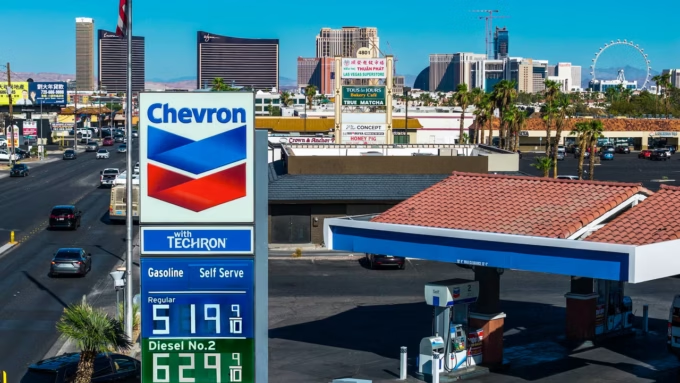
Navigating High Gas Prices: The New Reality for Miami’s Drivers
As gas prices soar to unprecedented levels, Miami's drivers must adapt to...
ABL3 Mins read

The Federal Reserve’s 2% Inflation Target: A Hidden Burden for Retirees and Homeowners
The Fed's inflation target disproportionately impacts retirees and homeowners, raising urgent economic...
 1 Mins read



A New Era of Storytelling: Emmys Celebrate Creativity and Innovation
The recent Emmys showcased groundbreaking storytelling, with 'Widow's Bay' and 'The Pitt'...
2 Mins read

Leave a comment