
The Rising Tide of Fuel Costs
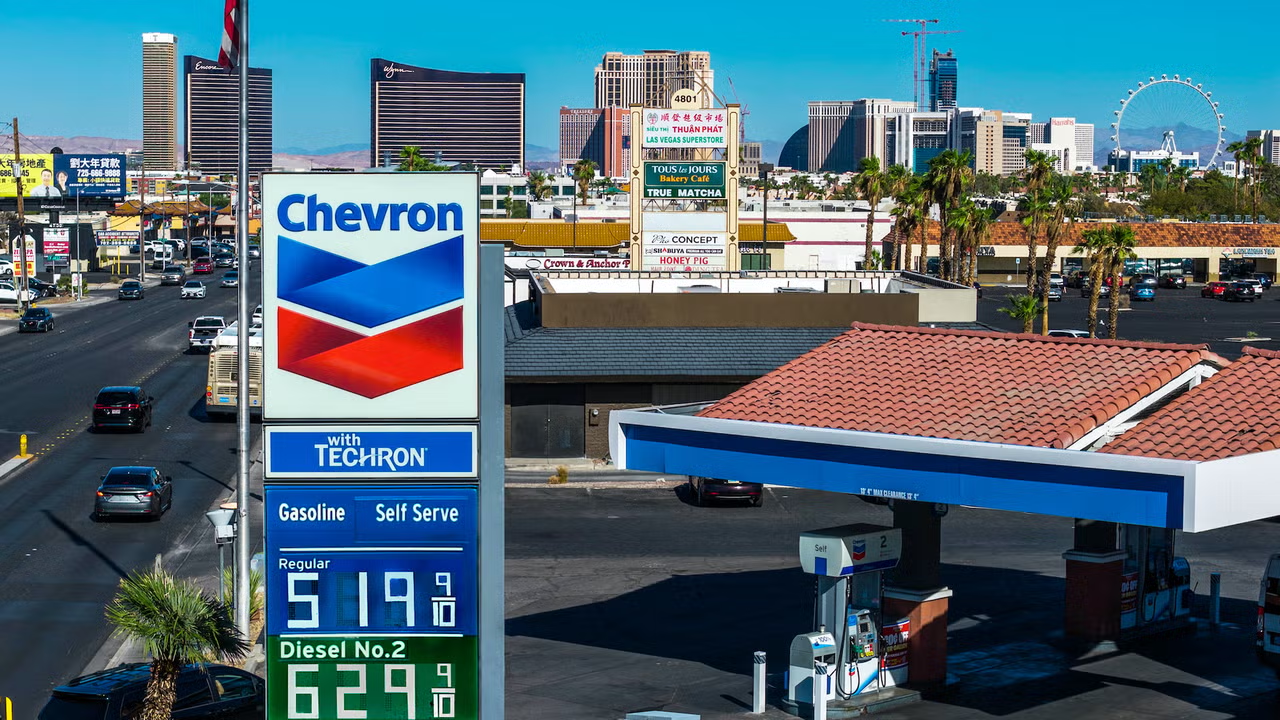
This year, Miami’s drivers face an unprecedented challenge as gas prices reach record highs, leading to a fundamental shift in consumer behavior and travel plans. With average prices hovering around $4.14 per gallon as of the Labor Day weekend, families and commuters alike are feeling the pinch at the pump. This figure marks nearly a dollar increase compared to the previous year and significantly surpasses the Labor Day record of $3.82 set in 2012.
For many, including families planning end-of-summer getaways, the reality of these soaring prices has forced a reevaluation of travel plans. Nicole Collins, a family-oriented traveler, exemplifies this shift, noting how her family has curtailed their usual excursions due to the financial burden of fuel costs. The strain is palpable, especially for those managing family expenses amid the rising costs of living.
Geopolitical Factors at Play
The surge in gas prices has been heavily influenced by geopolitical events, particularly the ongoing tensions in the Middle East. The U.S. and Israel’s military actions in Iran have significantly impacted crude oil traffic, particularly through the crucial Strait of Hormuz, leading to a pronounced drop in availability. Energy experts, including Tom Seng, a professor of energy finance, highlight how the conflict has created a ripple effect on global supply chains.
Energy Secretary Chris Wright has acknowledged the challenges ahead, admitting that consumers may have to brace for sustained high prices. While the national average remains lower than the peak of $5.02 per gallon seen in June 2022, the current trajectory suggests that relief may not be imminent.
Compounding Supply Chain Issues
The complexity of the current fuel crisis is exacerbated by domestic refinery challenges and international conflicts. U.S. refineries are operating at near full capacity, yet the harsh summer conditions in Texas have raised concerns about potential disruptions. Furthermore, geopolitical turmoil is not limited to the Middle East; issues such as Ukrainian drone attacks on Russian refineries and declining outputs from Chinese facilities are constraining the supply of both gasoline and diesel.
Matthew Metzgar, a clinical professor of economics at UNC Charlotte, points out that the supply chain is under unprecedented strain, leaving consumers with fewer options and higher prices. The reality is that as the summer driving season wanes, typical price drops may not materialize this year due to these compounded issues.
Strategies for Consumers
In this challenging environment, Miami residents can adopt various strategies to mitigate the impact of high gas prices. Utilizing price comparison apps is one effective method to ensure that consumers secure the best rates. Often, gas stations just off the interstate can offer prices that are significantly lower—by as much as 10 to 15 cents per gallon— than those found at stations directly on major highways.
Moreover, as families and businesses adapt to these new economic realities, there’s an increasing impetus to explore alternative transportation methods. Carpooling, public transportation, and ride-sharing services are becoming increasingly attractive options, particularly in urban centers like Miami.
Looking Ahead: A Market in Flux
With the energy market in a state of flux, predictions about future gas prices remain uncertain. The futures market indicates a potential decline, with prices for bulk gasoline projected to be approximately 35 cents lower in two months. However, geopolitical tensions and domestic challenges may disrupt these forecasts.
As Miami’s economy continues to evolve, so too must the strategies employed by its residents. The intersection of high gas prices and economic resilience will undoubtedly shape consumer behavior and urban planning in the months and years to come.
The Long-Term Implications
The current spike in gas prices serves as a critical reminder of the interconnectedness of global markets and local economies. For Miami, a city known for its vibrant lifestyle and reliance on travel, the implications are profound. Rising fuel costs affect everything from grocery prices to delivery services, signaling a need for businesses and consumers alike to adapt to a landscape characterized by volatility and change.
As residents navigate this new reality, it is essential to stay informed and proactive. The challenges posed by high fuel costs may also serve as a catalyst for innovation and adaptation, pushing Miami toward more sustainable transportation solutions and a more resilient economy.
Editorial note: This article was created by A Bit Lavish Miami’s Magazine as an original editorial reinterpretation based on publicly available reporting. Original source: fastcompany.com. Read the original article here: https://www.fastcompany.com/91603313/labor-day-record-high-gas-prices.
Images are used for editorial reference with source credit. If an image requires correction or removal, please contact A Bit Lavish.










Rekindling Connections: TSA Gateside Revives the Air Travel Experience
Discover how TSA Gateside is transforming air travel by allowing non-flying PreCheck...
 ABL2 Mins read
A Tragic Intersection of Progress and Safety: The Aftermath of the Miami Cargo Plane Crash
Explore the implications of the recent Amazon cargo plane crash in Miami,...
ABL2 Mins read

The Federal Reserve’s 2% Inflation Target: A Hidden Burden for Retirees and Homeowners
The Fed's inflation target disproportionately impacts retirees and homeowners, raising urgent economic...
 1 Mins read



A New Era of Storytelling: Emmys Celebrate Creativity and Innovation
The recent Emmys showcased groundbreaking storytelling, with 'Widow's Bay' and 'The Pitt'...
2 Mins read

Leave a comment