
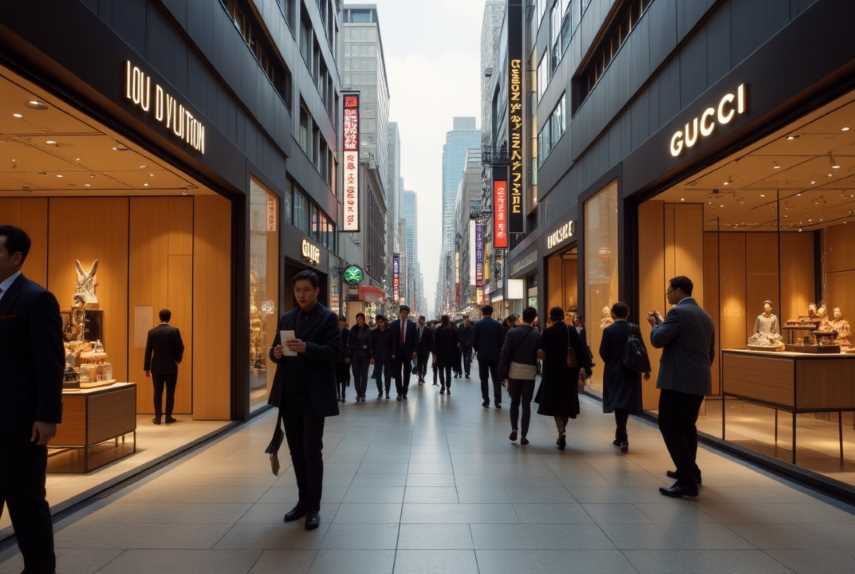
The Impact of Declining Chinese Tourist Spending on Japan’s Luxury Retail Market
Published on September 12, 2025
The luxury retail landscape in Japan is undergoing a significant transformation, primarily driven by a notable decline in spending by Chinese tourists. Between April and June of 2022, spending by Chinese visitors to Japan plummeted by one-third compared to pre-pandemic levels in 2019. This downturn has had profound implications for Japanese luxury retailers, particularly for French luxury giants like Kering and LVMH, which have reported decreased sales in the region.
Understanding the Economic Context
The relationship between Japan and China has always been complex, especially regarding economic interactions. The recent economic slowdown in China has altered spending patterns among Chinese tourists, who traditionally contribute significantly to Japan’s luxury market. As the Chinese economy falters, so does the purchasing power of its citizens, leading to a reduced willingness to invest in high-end goods abroad.
Moreover, the appreciation of the Japanese yen against the Chinese yuan has further complicated matters. While a weaker yen previously made luxury goods in Japan more appealing to Chinese tourists, the current economic climate has shifted this dynamic. Tourists are now less inclined to pay retail prices for luxury items, which are often viewed as high-currency-sensitive products.
Challenges for Luxury Brands
Luxury brands like Kering and LVMH are grappling with these changes, as their business models heavily rely on international travel and spending. The decline in Chinese tourist expenditure has strained their performance in Japan. However, some brands, such as Hermès, have managed to navigate this downturn more effectively. Hermès’ strong connections with ultra-wealthy consumers have allowed it to maintain stability, highlighting the importance of targeting high-net-worth individuals in a fragmented luxury market.
The disparity in performance among luxury brands underscores the significance of customer demographics. Brands that cater to a broader middle market have experienced more pronounced declines compared to those focused on affluent clientele.
Shifting Focus to Alternative Markets
In response to the challenges faced in Japan, luxury brands are increasingly looking toward emerging markets in Southeast Asia, including Singapore, Thailand, and Malaysia. These regions are becoming attractive destinations for luxury goods, as consumers demonstrate a willingness to spend significantly on high-end products. This trend reflects a broader shift in the luxury market, where companies are diversifying their focus to capitalize on underdeveloped areas.
Despite the decline in spending from Chinese tourists, the demand for luxury products among Japanese consumers remains robust. Wealthy Japanese individuals continue to seek premium goods, albeit with changing purchasing habits. This resilience provides a lifeline for certain luxury brands, allowing them to stabilize their operations in Japan.
Leveraging Events to Boost Luxury Spending
While the luxury sector faces challenges from reduced spending by Chinese tourists, Japan continues to attract international travelers through large-scale events and exhibitions. Cultural events, such as the Tokyo International Film Festival, draw affluent individuals who are inclined to spend on luxury goods.
In light of the decline in foreign tourist spending, luxury retailers are increasingly targeting domestic consumers and international visitors. This shift in demand has prompted brands to broaden their focus, catering to a wider range of consumers who prioritize experiential purchases over mass tourism.
Enhancing Customer Experience and E-Commerce Adoption
Japanese luxury retailers are adapting their strategies to address the decline in spending by Chinese tourists. Many brands are prioritizing customer experience, offering personalized services, building loyalty programs, and introducing limited-edition products. These initiatives aim to foster deeper connections with consumers and enhance brand loyalty.
Additionally, the rise of e-commerce has provided a crucial avenue for luxury brands to reach consumers beyond traditional brick-and-mortar stores. The surge in online shopping in Japan has helped mitigate some of the adverse effects of reduced international tourism, offering a lifeline to many luxury retailers.
Conclusion: Navigating Future Challenges
The decline in spending by Chinese tourists poses a significant threat to Japan’s luxury market, yet it also serves as a catalyst for brands to innovate and diversify. As the purchasing behavior of consumers evolves, particularly among Middle Eastern tourists and domestic buyers, Japanese retailers must adapt to these changes.
By cultivating a loyal customer base, enhancing omni-channel experiences, and investing in innovative strategies, Japan’s luxury market can navigate the complexities of shifting consumer patterns. Despite the challenges posed by reduced tourist spending, the resilience of Japan’s luxury segment remains evident, with the potential to thrive in an ever-changing landscape.









The Frank C. Ortis Art Gallery in Pembroke Pines presents ‘Monumentalizing the Trace’ by Collaborative Artist Duo TREIZMAN + ZURILLA opening May 14, 2026
Monumentalizing the Trace presents the first solo exhibition by the collaborative artist...
 ABL3 Mins read

Cinco by the Bay: Regatta Grove Stretches the Fiesta Across Two Waterfront Days
Coconut Grove’s Regatta Grove turns Biscayne Bay into a two-day Cinco de...
ABL2 Mins read

The 38 Best Restaurants in Miami
A piece of gooey Basque cake from Stubborn Seed. Miami is a...
ABL1 Mins read


Where to Eat at LoanDepot Park in 2026
Baseball season is back, and LoanDepot Park is rolling out new food...
ABL2 Mins read