

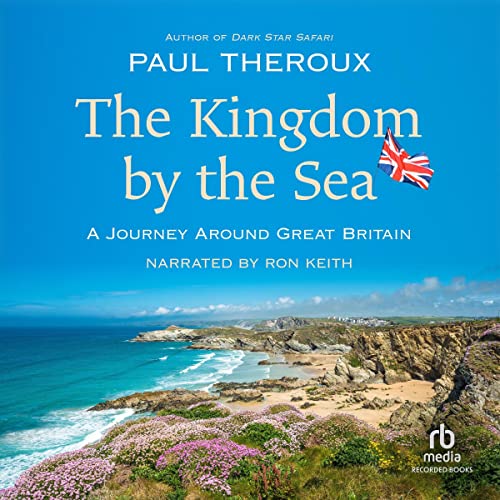
From Page to Path: Paul Theroux, The Kingdom by the Sea, and England’s New Coast examines Theroux’s literary journey along the English coastline. The work highlights the intricate relationship between the author’s observations and the evolving landscape of England’s shores. By weaving together personal narrative and geographical exploration, it offers a profound reflection on the impact of coastal changes on cultural identity. This analysis underscores the significance of Theroux’s contributions to travel literature and the broader discourse on environmental transformation. Paul Theroux’s 1983 account of circling Britain, The Kingdom by the Sea, became for many the definitive portrait of a nation seen from its margins: seaside bed‑and‑breakfasts, small‑town TV rooms and the textured lives of coastal communities during the Falklands War. In March 2026, that literary frame has been literalized. England has completed and opened the King Charles III Coast Path, a continuous public route of 2,689 miles that invites travelers to walk, rather than merely read, a coastline once fragmented by private land and logistical obstacles.
A journey reopened
Theroux’s original journey—undertaken on foot, by rail and local buses—offered an intimate method of encountering place. His keen, analog observations recorded a Britain of the early 1980s: hard‑pressed but resilient, and unmediated by the internet or smartphones. The newly unified coast path translates that literary mode into infrastructure. As a spokesperson for the initiative put it, “The path makes literal what Theroux made literary.”
The significance is not merely recreational. Where Theroux wandered piecemeal—detouring around inaccessible stretches and negotiating private ways—the uninterrupted trail now allows prolonged, continuous encounters with cliffs, fishing villages and the cultural seams of a nation. The path renders a once-fractured margin coherent, enabling travelers to sample the same rhythms and dislocations Theroux described, but on their own terms.
The return of slow travel
The opening arrives amid a broader appetite for slower, more intentional journeys. Decades after Theroux helped revive interest in long-form travel narrative with works such as The Great Railway Bazaar, his approach—observant, solitary, patient—resonates with travelers seeking depth over itinerary. The coast path offers an infrastructure for that impulse: long sections meant to be walked, absorbed and reflected upon, rather than checked off a list.
From Britain to Canada: Theroux’s next chapter
As England stitches its coastline into a continuous route, Theroux is preparing what the press materials describe as his final travel book. True North: On the Road in Canada (scheduled for publication September 22, 2026) shifts scale from the footpath to the highway: a cross‑country drive from Newfoundland to Vancouver. Where The Kingdom by the Sea mapped the edge of an island nation, True North promises a panoramic exploration of a vast country—its cities, remote communities, Indigenous voices and the writer’s personal roots in Quebec—while reflecting on the cultural contrasts between Canada and the United States.
That pairing—a coastal footpath realized in England and a continental odyssey across Canada—creates a tidy, poignant arc in contemporary travel: the path and the highway, the margin and the interior, observation and movement at scale.
Industry context: why this matters
For the travel and cultural industries, the King Charles III Coast Path is a noteworthy convergence of literature, heritage and public policy. It demonstrates how cultural narratives can inform—and be institutionalized by—physical infrastructure. The result alters how destinations are marketed, how local economies can develop around sustained foot traffic, and how conservation and access debates are framed. For travel writing, the path underscores a growing interest in experiential, slow journeys that resist the quick‑consumption model driven by social media.
For publishers and media, Theroux’s simultaneous move toward a new, final travel volume makes the moment particularly marketable: a canonical writer revisits the kinds of journeys that defined his career even as countries invest in the landscapes those journeys portray.
Key highlights
- England has opened the King Charles III Coast Path, a continuous 2,689‑mile public route, in March 2026.
- Paul Theroux’s The Kingdom by the Sea (1983) chronicled his three‑month circuit of Britain’s coastline during the Falklands War; the new path offers a way to walk that experience end‑to‑end.
- Theroux’s forthcoming True North: On the Road in Canada is scheduled for release September 22, 2026, and is presented as his final travel book (the 12th in his Lifetime series).
- The moment reframes travel writing’s role: narrative as infrastructure, and infrastructure as invitation to slow, participatory travel.
For readers and travelers accustomed to digital immediacy, the idea that a nation has translated a travel book into a continuous public route raises a question Theroux has long posed: what is lost—and what is gained—when journeys are made fully accessible? The coast path promises broader participation, but it also asks walkers to calibrate curiosity and attention in a world where paths can be charted and photographed in an instant.
Whether one follows Theroux’s original footsteps or approaches the trail anew, the opening of the King Charles III Coast Path is both a cultural milestone and an invitation: to move more slowly, to encounter the margins that shape national identity, and to consider how travel writing continues to influence the landscapes we traverse.
Make publications with A Bit Lavish in Miami, Florida. Contact us at 305-332-1942







The Hinckley Picnic Boat 39: A New Era of Nautical Elegance
Discover the sophistication and advanced design of the Hinckley Picnic Boat 39,...
 3 Mins read

Navigating the Future: Avikus’ Neuboat Control Revolutionizes Yacht Autopilot
Explore Avikus’ Neuboat Control, a cutting-edge AI-assisted autopilot system designed for seamless...
2 Mins read
The Prestige M8 Evo: A New Era in Luxury Power Catamarans
Discover the Prestige M8 Evo, a cutting-edge power catamaran that redefines luxury...
2 Mins read


Legacy Harbour Marina: A New Dawn on Florida’s Waterfront
Explore the revitalization of Legacy Harbour Marina, a $15 million project transforming...
2 Mins read
