

Charting a New Course
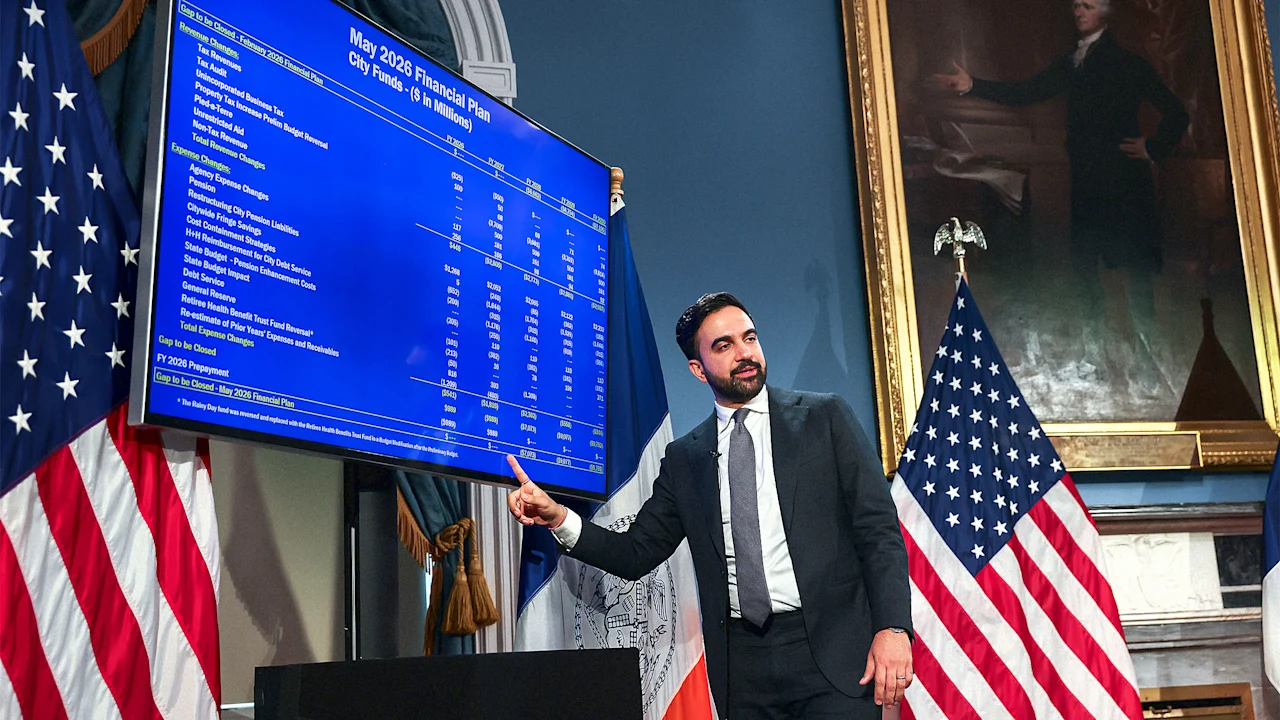
In the bustling heart of New York City, 34-year-old Mayor Zohran Mamdani stands at a critical juncture, tasked with converting ambitious campaign promises into actionable policies amid an economic landscape fraught with challenges. With an inherited budget deficit estimated at a staggering $12 billion—the largest since the Great Recession—Mamdani’s leadership is being put to the ultimate test.
A Bold Budget Proposal
Recently unveiling a $124.7 billion budget for the upcoming fiscal year, Mamdani’s proposal underscores his commitment to making the city more affordable for its residents. This comprehensive budget includes vital funding for childcare, worker protections, and expanded access to mental health services, alongside groundbreaking initiatives aimed at increasing affordable housing options for low-income families.
In a recent social media address, he articulated a clear vision: “While critics may argue that balancing the budget necessitates raising property taxes or slashing essential services, we have chosen a different path.” His administration’s approach aims to achieve fiscal equilibrium without compromising the quality of life for New Yorkers, emphasizing investments in public parks, libraries, and safety initiatives.
Collaborative Solutions
Key to this ambitious financial strategy is collaboration with state leadership. Mamdani has partnered with New York State Governor Kathy Hochul to secure additional financial support, recently announcing a significant increase of $4 billion in state assistance, totaling $8 billion over two years. This crucial funding is intended to bolster essential services and facilitate the implementation of transformative policies.
“We are making strides toward realizing universal childcare while also making substantial investments in education, public safety, and infrastructure,” Hochul stated, highlighting the collaborative effort to support New Yorkers effectively.
Innovative Cost-Cutting Measures
Mamdani’s administration is not solely reliant on external aid; it is actively pursuing cost-reduction strategies to enhance fiscal responsibility. One notable initiative involves the appointment of Chief Savings Officers across government agencies, a reform that has already yielded $1.77 billion in savings. Additionally, the proposal to reduce the Unincorporated Business Tax (UBT) credit—primarily benefiting high-net-worth individuals—aims to generate an additional $68 million, further aligning the tax structure with equity principles.
Facing Opposition
However, the mayor’s plans have not been without controversy. Some critics argue that his policies may deter business investment in the city. Notably, Citadel CEO Ken Griffin has expressed concerns over the proposed “pied-à-terre” luxury tax, which could lead to a shift of his firm’s expansion plans from New York to Miami. Griffin’s apprehensions underscore a broader concern among affluent residents regarding increased taxation.
Governor Hochul also weighed in on the debate, cautioning against the exodus of wealthy New Yorkers. “We require the support of high-net-worth individuals to sustain the generous social programs we aspire to implement,” she remarked, reflecting the delicate balance between fiscal policy and economic growth.
A Leader’s Test
As Mamdani navigates these complexities, he faces the quintessential challenge of any forward-thinking leader: making decisions that serve long-term goals, even in the face of opposition. His proposal to increase tax rates for individuals earning $1 million or more could potentially generate an additional $3 billion annually for the city. While such measures may alienate some, they resonate with constituents seeking a fairer tax structure.
The path Mamdani is forging serves as a case study for leadership in urban governance, particularly in a city as dynamic and diverse as New York. His approach embodies a commitment to fiscal integrity while addressing the pressing social needs of a complex urban populace.
In the forthcoming months and years, the effectiveness of Mamdani’s policies will be closely scrutinized, but one thing is certain: his administration’s strategies will significantly influence not only the economic landscape of New York City but also serve as a model for other urban centers grappling with similar challenges.
Editorial note: This article was created by A Bit Lavish Miami’s Magazine as an original editorial reinterpretation based on publicly available reporting. Original source: fastcompany.com. Read the original article here: https://www.fastcompany.com/91541683/how-new-york-mayor-zohran-mamdani-solved-the-citys-budget-crisis.
Images are used for editorial reference with source credit. If an image requires correction or removal, please contact A Bit Lavish.










Nurturing Culinary Leadership: American Express Launches Innovative Academy for Restaurant Operators
Explore how American Express's new Restaurant Academy aims to equip restaurant owners...
 3 Mins read

Bending Spoons Makes Its Mark: A New Era in Tech IPOs
Exploring Bending Spoons' unique IPO journey and its implications for the tech...
2 Mins read

The Quest for Tranquility: Navigating the New Office Landscape
As the return-to-office movement unfolds, employees grapple with the challenges of noisy...
3 Mins read



Cultivating Creativity: The Art of Embracing Boredom in a Hyper-Connected World
Exploring the surprising benefits of boredom on creativity and mental well-being amidst...
2 Mins read
