
Iris van Herpen: Where Fashion Meets the Art of Science
A Fusion of Art and Innovation
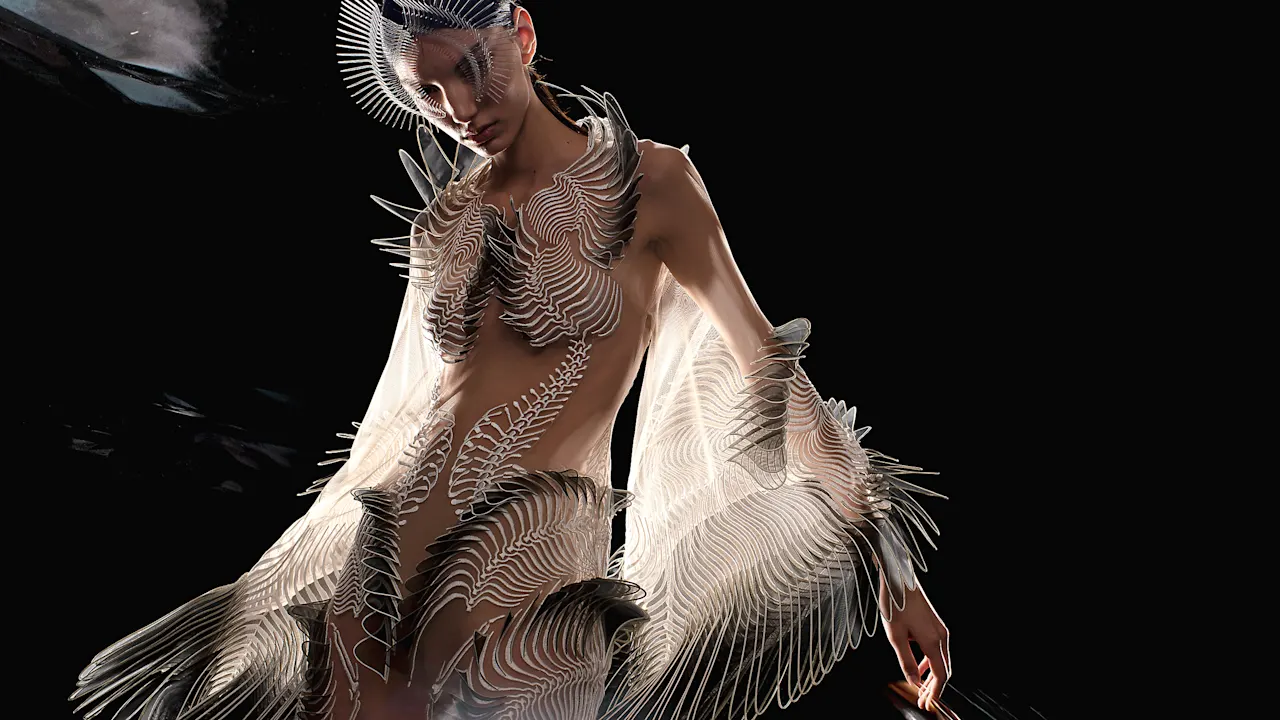
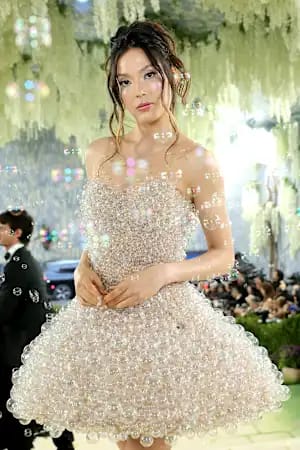
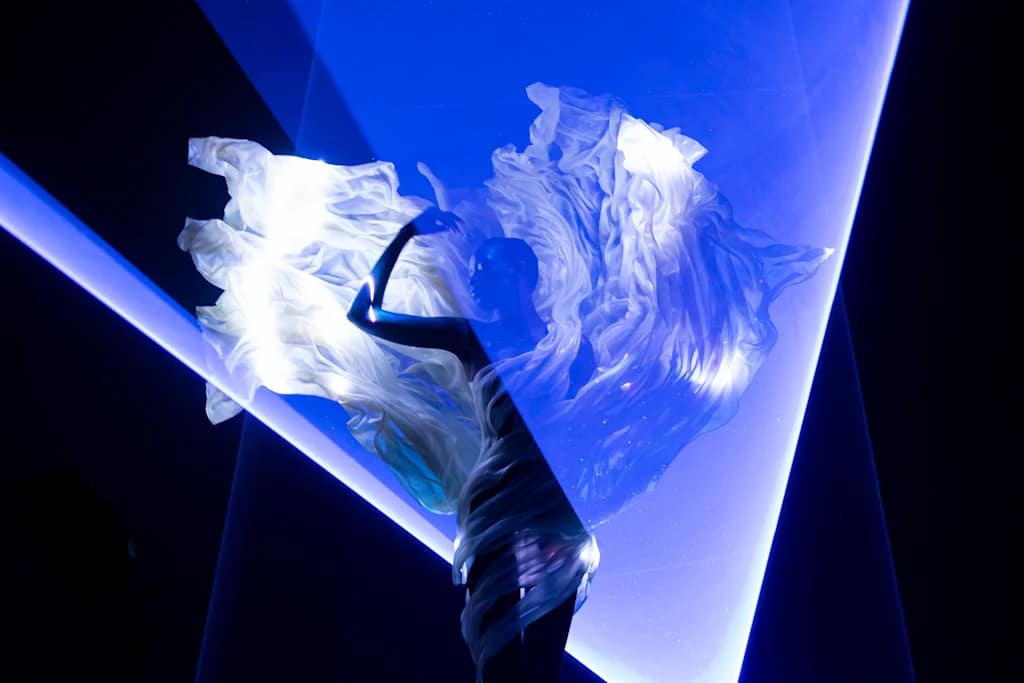
In the vibrant landscape of fashion, few names resonate with the same level of transformative creativity as Iris van Herpen. Celebrated for her avant-garde designs that marry technology with nature, van Herpen’s work challenges traditional boundaries, positioning fashion as a dynamic form of art. Her recent collaboration with Olympic skier Eileen Gu for the Met Gala epitomizes this ethos. The gown, resembling ethereal soap bubbles, was a testament to her meticulous craftsmanship and innovative spirit, taking over 2,500 hours to materialize from a staggering 15,000 hand-formed glass bubbles.
From Local Inspiration to Global Recognition
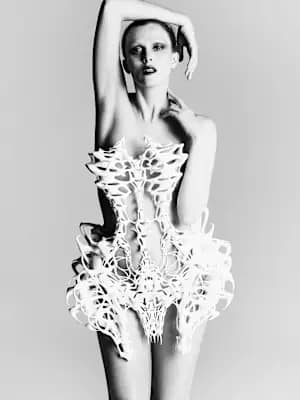
Growing up in the serene Dutch village of Wamel, van Herpen’s connection to nature became a cornerstone of her artistic vision. This deep-rooted affinity for water—its fluidity, forms, and transformations—has significantly influenced her collections over the years. Her 2010 Crystallization collection marked a pivotal moment in her career, introducing the first 3D-printed garment to the runway, crafted in collaboration with British architect Daniel Widrig. This groundbreaking piece not only showcased her pioneering use of technology but also captured the essence of natural elements through the lens of high fashion.
The Brooklyn Museum’s Retrospective: A Celebration of Creativity
The Sculpting the Senses exhibit at the Brooklyn Museum, which debuted in May, serves as a comprehensive retrospective of van Herpen’s illustrious career. This exhibition, which traversed cities from Paris to Singapore, highlights the intricate relationship between nature and fashion. Matthew Yokobosky, the museum’s senior curator, emphasizes the thematic exploration of water in various states, paralleling the designer’s journey through inspiration drawn from the natural world.
A Dialogue with Nature and Technology
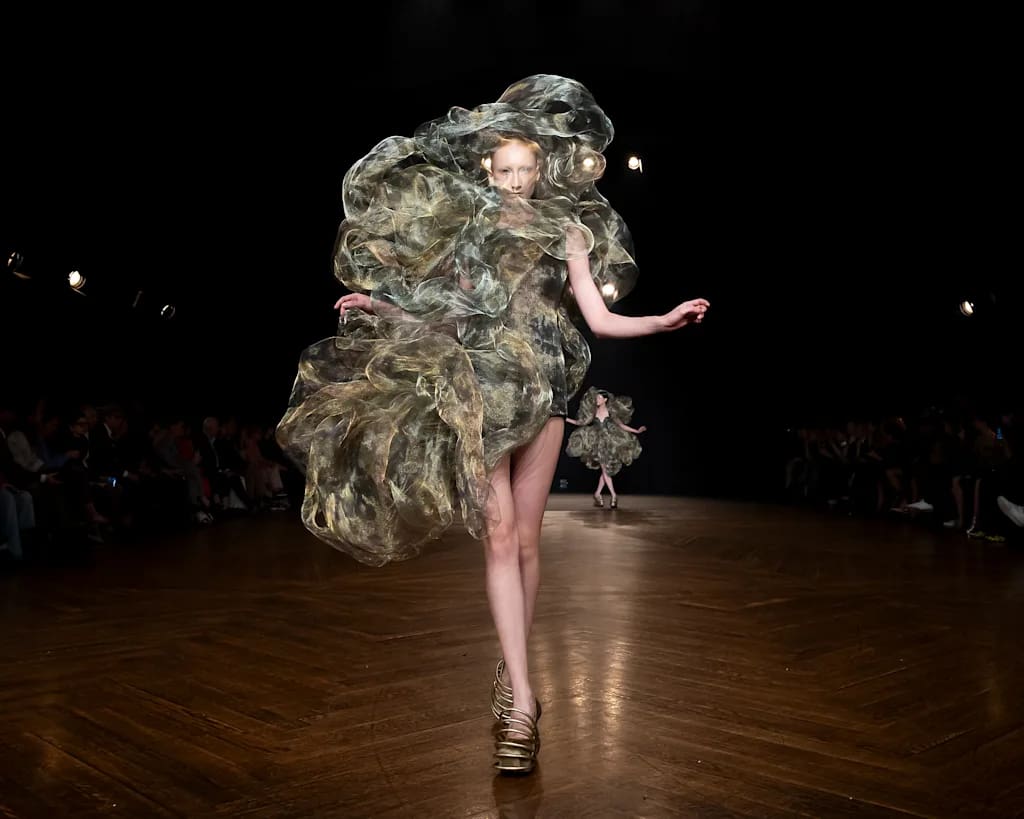
Van Herpen’s oeuvre is characterized by a profound engagement with scientific principles. Her collaborations extend beyond the fashion realm, involving architects, paleontologists, and biologists in her creative process. This interdisciplinary approach has resulted in pieces that mimic the structures of the natural world, such as gowns inspired by bird skeletons and even coral systems. Each collection serves as an exploration of biomimicry, reflecting her commitment to sustainability and innovation.
Redefining Couture in a Fast-Paced World
In an era dominated by fast fashion and AI-driven design, van Herpen stands apart with her dedication to the art of couture. Her atelier operates on principles of slow fashion, where each piece is crafted with care and precision, devoid of the pressures of mass production. By focusing solely on bespoke creations, she invites her audience to appreciate the artistry behind each garment, which often integrates elements like recycled materials and bioluminescent organisms.
A Cosmic Perspective on Fashion
The exhibition culminates in a striking installation dubbed Cosmic Bloom, where van Herpen’s most surreal gowns are suspended in a darkened space, inviting viewers to reconsider the very essence of fashion. In her hands, the human body transcends the role of a mere clothing hanger; it becomes a canvas for expression, a reflection of the universe at large. As the exhibit draws to a close on December 6, it leaves an indelible mark on the understanding of fashion as not just clothing, but as a profound narrative interwoven with art, science, and humanity.
Editorial note: This article was created by A Bit Lavish Miami’s Magazine as an original editorial reinterpretation based on publicly available reporting. Original source: fastcompany.com. Read the original article here: https://www.fastcompany.com/91542791/fashion-iris-van-herpen.
Images are used for editorial reference with source credit. If an image requires correction or removal, please contact A Bit Lavish.









The Quest for Tranquility: Navigating the New Office Landscape
As the return-to-office movement unfolds, employees grapple with the challenges of noisy...
 3 Mins read

Cultivating Creativity: The Art of Embracing Boredom in a Hyper-Connected World
Exploring the surprising benefits of boredom on creativity and mental well-being amidst...
2 Mins read
Navigating the Future of AI in Science: Insights from Anthropic’s Pioneering Event
Explore the latest insights from Anthropic's 'AI for Science' event, highlighting advancements...
3 Mins read


Reimagining Productivity: Mark Zuckerberg’s Vision for AI and Employment
Mark Zuckerberg articulates a forward-thinking approach to AI's role in the future...
3 Mins read
