
The Future of Banking: Embracing AI with Leadership and Vision
A New Era in Banking
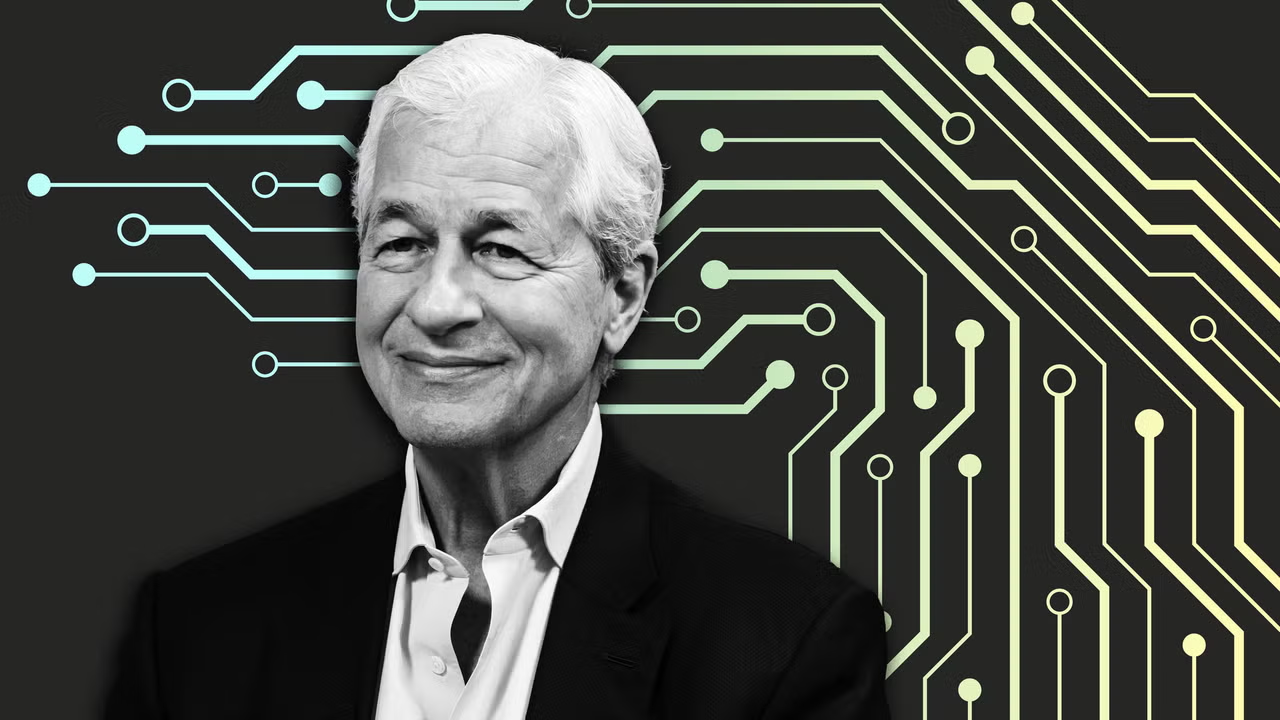
As the financial landscape undergoes a seismic shift, the role of artificial intelligence (AI) emerges as a pivotal force shaping the future of banking. Jamie Dimon, the CEO of JPMorgan Chase, has recently spotlighted this transformation, indicating a strategic pivot in workforce composition. With AI technologies evolving at an unprecedented pace, Dimon acknowledges that traditional roles, particularly within banking, will inevitably be redefined.
From Bankers to AI Specialists
In a candid dialogue with Bloomberg, Dimon articulated a forward-looking vision for his institution, suggesting that the bank would increasingly prioritize hiring AI specialists over traditional bankers. This shift is not merely about job reduction; it’s about evolving the skill set within the company. “I think we’ll be hiring more AI people and probably less bankers in certain categories,” he stated, reflecting a broader trend in the industry where technology and finance intersect.
Rethinking Workforce Dynamics
The implications of this shift are profound. Dimon notes that as AI integrates deeper into operational frameworks—ranging from marketing and risk management to fraud detection and document processing—the nature of work within the bank will change. While some jobs may be phased out, Dimon emphasizes the importance of retraining and redeploying existing employees, advocating for a proactive approach to workforce management. This forward-thinking strategy is essential not only for the bank’s viability but also for the well-being of its employees as they navigate this transition.
Investment in Innovation
In an era where fintech disruptors are reshaping customer expectations, JPMorgan is not standing still. The bank’s technology budget has surged to an impressive $20 billion, reflecting a commitment to remain competitive in an increasingly digital world. Dimon highlighted the significance of tracking AI usage among engineers, positioning this as a measure of performance and innovation. Such investments are aimed at enhancing client service and ensuring that JPMorgan remains at the forefront of banking technology.
AI’s Ripple Effects Across the Industry
While Dimon’s insights are specific to JPMorgan, they resonate across the banking sector. Other financial institutions are similarly navigating the complexities introduced by AI. For instance, Standard Chartered recently announced a reduction of nearly 8,000 positions over four years, a decision aimed at replacing “lower-value human capital” with technology. This move underscores the broader trend of banks reassessing their workforce in light of technological advancements.
Preparing for the Future
Dimon urges a collective readiness for the societal shifts that AI will catalyze. As traditional banking roles evolve, the fundamental functions of holding, transferring, and investing money will remain, but the methods and personnel involved will change dramatically. He envisions a future where blockchain technologies may play a central role, and where the workforce will be characterized by a higher concentration of AI professionals.
Conclusion: A Vision for Tomorrow
As Jamie Dimon leads JPMorgan Chase into this new era, his vision serves as a blueprint for navigating the complexities of a rapidly changing financial landscape. The integration of AI is not merely a trend; it’s a strategic necessity that will redefine the banking experience. For Miami and the global financial community, the challenge lies in embracing these innovations while fostering a culture that values adaptability and continuous learning. The future of banking is here, and with it comes the promise of unprecedented opportunities for those ready to evolve.
Editorial note: This article was created by A Bit Lavish Miami’s Magazine as an original editorial reinterpretation based on publicly available reporting. Original source: fastcompany.com. Read the original article here: https://www.fastcompany.com/91546461/jpmorgan-ceo-jamie-dimon-says-hell-hire-fewer-bankers-more-ai-people.
Images are used for editorial reference with source credit. If an image requires correction or removal, please contact A Bit Lavish.










Navigating the Crossroads: Is Your Next Promotion Truly Right for You?
Explore the complexities of career advancement and the importance of aligning promotions...
 3 Mins read

The Future of Gifting: Babylist’s Innovative Leap into Financial Literacy
Explore how Babylist is transforming the landscape of gifting and financial planning...
3 Mins read

Embracing the Soft Off Day: A New Paradigm for Remote Work in Miami
Exploring the concept of soft off days in remote work, their implications...
 ABL2 Mins read



The Legal Crossroads of AI: CNN’s Bold Stand Against Content Theft
CNN sues Perplexity AI for allegedly appropriating over 17,000 pieces of content...
ABL3 Mins read

Leave a comment