

The Tension Between Innovation and Intellectual Property
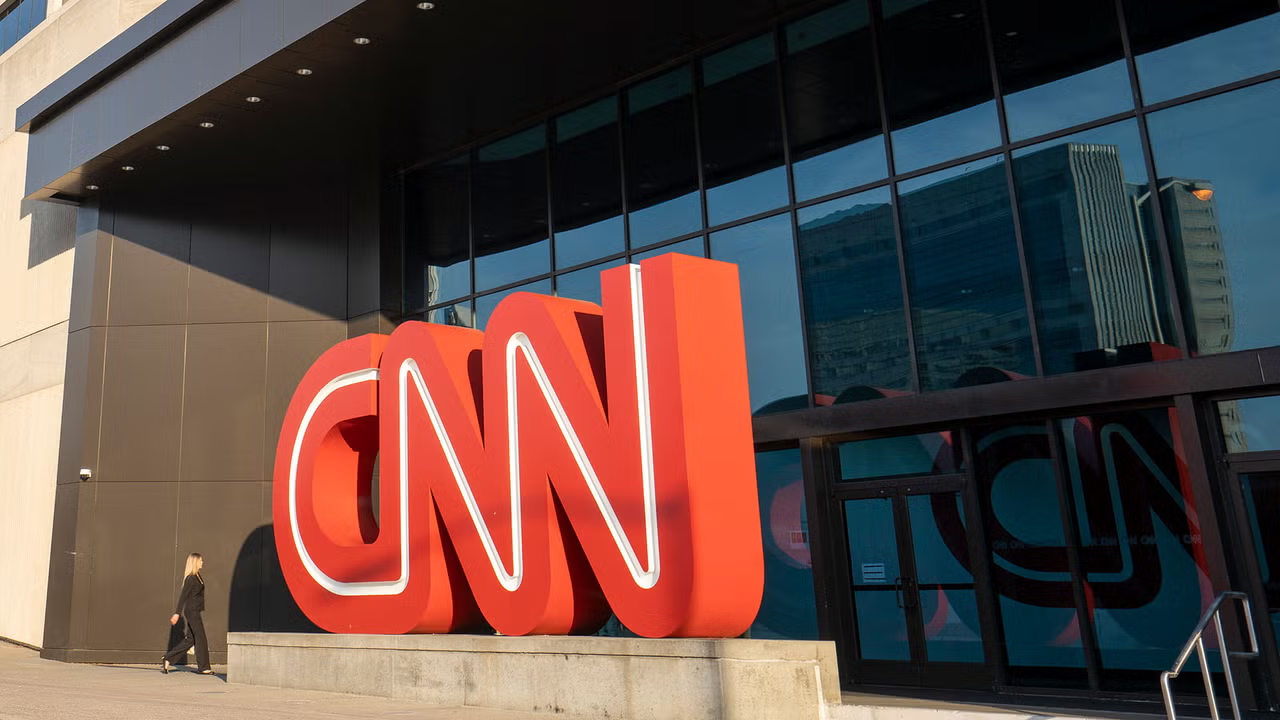
As the landscape of artificial intelligence continues to evolve, a pivotal legal battle has emerged, bringing to light the intricate relationship between technology and intellectual property rights. CNN has initiated a lawsuit against Perplexity, an AI company valued at billions, for allegedly utilizing over 17,000 of its copyrighted works without authorization. This case marks a significant moment in the ongoing discourse surrounding the ownership of digital content in an era where AI tools increasingly mimic human creativity.
High Stakes in the AI Arena
Filed in the United States District Court for the Southern District of New York, CNN’s lawsuit represents its first legal action against an AI entity. The case not only alleges copyright infringement but also claims that Perplexity misrepresented its affiliation with CNN, thereby violating trademark rights. This dual accusation underscores the gravity of the situation, as it raises pressing questions about how AI companies navigate the waters of content sourcing and brand representation.
The Fallout of Failed Negotiations
The roots of this legal confrontation trace back to failed negotiations between CNN and Perplexity in late 2025, during which the two entities attempted to forge a partnership. The deal aimed to grant Perplexity access to CNN’s paywalled material in exchange for appropriate compensation. However, the discussions fell apart, primarily due to unresolved issues, leading CNN to block Perplexity’s access to its content. According to the lawsuit, this was a clear indicator that Perplexity understood it was not permitted to use CNN’s intellectual property.
Implications for the Media Landscape
This lawsuit not only spotlights the specific actions of Perplexity but also serves as a warning to the broader AI community regarding the importance of respecting copyright laws. As AI tools become increasingly sophisticated in generating and disseminating information, the potential for infringement grows. The implications of this case extend beyond the parties involved, highlighting the delicate balance that must be maintained between technological advancement and the rights of content creators. For a city like Miami, with its burgeoning tech scene, the outcomes of such legal battles could shape the future landscape of innovation and content creation.
A Call for Accountability
CNN’s legal action is a clarion call for accountability in the tech industry. The network emphasizes that high-quality journalism is both challenging and costly to produce, and the reliance on original content is paramount for public understanding of complex global issues. CNN’s spokesperson articulated that it is essential for commercial entities to compensate content creators, a sentiment that resonates deeply in the current media environment, where attention and trust are hard-won commodities.
Perplexity’s Response
In the face of these allegations, Perplexity’s chief communications officer has asserted, “You can’t copyright facts.” This statement reflects a common defense in the tech industry, where the distinction between factual content and its presentation can become blurred. However, as legal precedents are set, the definition of copyright and its applicability to AI-generated content may evolve, requiring companies to rethink their strategies in sourcing information.
The Broader Context of AI and Media
The CNN lawsuit is not an isolated incident; Perplexity has faced similar legal challenges from multiple media organizations, including The New York Times and News Corp. As AI continues to disrupt traditional media models, the need for clear legal frameworks governing the use of copyrighted material is becoming increasingly urgent. For businesses in Miami and beyond, understanding these dynamics is critical for navigating the complex landscape of digital content and AI technology.
As this case unfolds, it will undoubtedly serve as a pivotal benchmark for future interactions between AI developers and content creators, setting the stage for how intellectual property rights are defined and protected in our increasingly digitized world.
Editorial note: This article was created by A Bit Lavish Miami’s Magazine as an original editorial reinterpretation based on publicly available reporting. Original source: fastcompany.com. Read the original article here: https://www.fastcompany.com/91549991/perplexity-ai-sued-by-cnn-for-allegedly-copying-over-17000-piece-of-content-without-permission.
Images are used for editorial reference with source credit. If an image requires correction or removal, please contact A Bit Lavish.










The Evolution of the Foldable Smartphone: A New Era of Personalization
As the foldable smartphone revolution unfolds, we analyze its implications for user...
 3 Mins read
Navigating Change: KCRW’s Blueprint for Public Media Resilience
Explore how KCRW in Los Angeles is redefining public media engagement amidst...
2 Mins read

Strategic Escapes: The Art of Vacationing as a Solopreneur
Explore the essential strategies for solopreneurs to effectively plan vacations without sacrificing...
2 Mins read



Navigating the Ethical Frontier: Claude’s Evolution in AI Agency
Exploring the implications of agentic AI through Amanda Askell's insights on Claude,...
3 Mins read
