
Uneasy Alliances in the AI Landscape
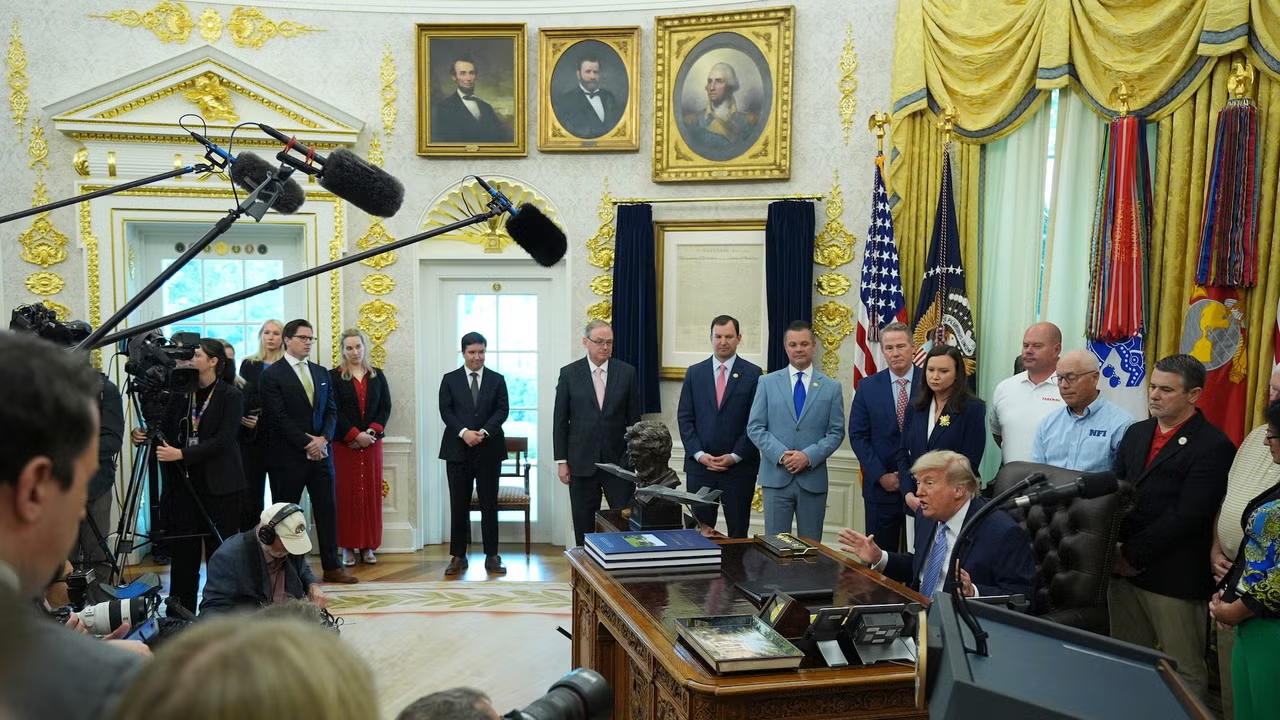
In an era where artificial intelligence is reshaping industries and redefining the boundaries of technology, the U.S. government finds itself at a crossroads. President Trump’s recent decision to halt an anticipated executive order on AI underscores the delicate balance between fostering innovation and addressing national security concerns. With tech giants like Google and OpenAI at the forefront, the administration’s approach reveals the intricate dynamics of leadership and strategy in a rapidly evolving sector.
Innovation at Risk?
Hours before a ceremonial signing was set to take place, Trump expressed apprehension over the executive order’s potential to stifle America’s technological edge. This hesitation highlights a critical tension: the need for regulatory frameworks that ensure safety without hampering the very innovation that drives economic growth. As cybersecurity threats loom larger, particularly in finance and data privacy, the government’s role in scrutinizing advanced AI systems becomes increasingly vital.
Responses from the Tech Community
Industry leaders have voiced concerns about the implications of government intervention. While many recognize the necessity of safeguarding against emerging threats, there is a palpable anxiety about bureaucratic delays hindering the pace of innovation. The proposed executive order aimed to establish a collaborative framework with tech companies, yet its abrupt cancellation signals an ongoing struggle within the administration. This struggle echoes the sentiments of leaders within the tech community who advocate for a proactive rather than reactive approach to regulation.
The Economic Engine of AI
Trump’s administration has long viewed the AI sector as a cornerstone for economic expansion. The optimism surrounding AI’s potential to enhance productivity and create jobs is tempered by public skepticism regarding its implications for the workforce and society at large. As debates rage on both sides of the aisle, the Republican party finds itself divided between embracing technological advancement and addressing voter concerns about job displacement and privacy violations.
A Balancing Act
The inherent complexities of regulating AI are magnified by the diverse interests within the government. While the intention to evaluate AI’s capabilities is commendable, the potential for excessive regulation poses a risk to innovation. The ongoing legal disputes with companies like Anthropic further complicate matters, as the administration seeks to maintain a collaborative relationship while navigating the murky waters of compliance and oversight.
Miami’s Role in the AI Dialogue
As a burgeoning hub for technology and innovation, Miami stands to benefit significantly from the national discourse surrounding AI regulation. With a vibrant startup ecosystem and a growing number of tech-focused events, the city has positioned itself as a focal point for discussions on technology’s future. Local leaders must engage with national trends, advocating for policies that both promote innovation and ensure responsible development of AI technologies.
Looking Ahead: The Future of AI Regulation
The path forward is fraught with challenges as the administration grapples with the dual imperatives of fostering growth and ensuring safety. A more deliberate approach to AI policy could pave the way for a robust framework that encourages innovation while addressing legitimate concerns about cybersecurity and ethical considerations. As the landscape evolves, Miami’s stakeholders are poised to play a critical role in shaping the future of AI—one that balances the need for technological advancement with the imperative of safeguarding societal interests.
Editorial note: This article was created by A Bit Lavish Miami’s Magazine as an original editorial reinterpretation based on publicly available reporting. Original source: fastcompany.com. Read the original article here: https://www.fastcompany.com/91546771/trump-ai-executive-order.
Images are used for editorial reference with source credit. If an image requires correction or removal, please contact A Bit Lavish.










Navigating the Crossroads: Is Your Next Promotion Truly Right for You?
Explore the complexities of career advancement and the importance of aligning promotions...
 3 Mins read

The Future of Gifting: Babylist’s Innovative Leap into Financial Literacy
Explore how Babylist is transforming the landscape of gifting and financial planning...
3 Mins read

Embracing the Soft Off Day: A New Paradigm for Remote Work in Miami
Exploring the concept of soft off days in remote work, their implications...
 ABL2 Mins read


The Legal Crossroads of AI: CNN’s Bold Stand Against Content Theft
CNN sues Perplexity AI for allegedly appropriating over 17,000 pieces of content...
ABL3 Mins read

Leave a comment