
The Mirage of Wonder Valley: Kevin O’Leary’s Ambitious Data Center Project Faces Daunting Challenges
Vision Meets Reality
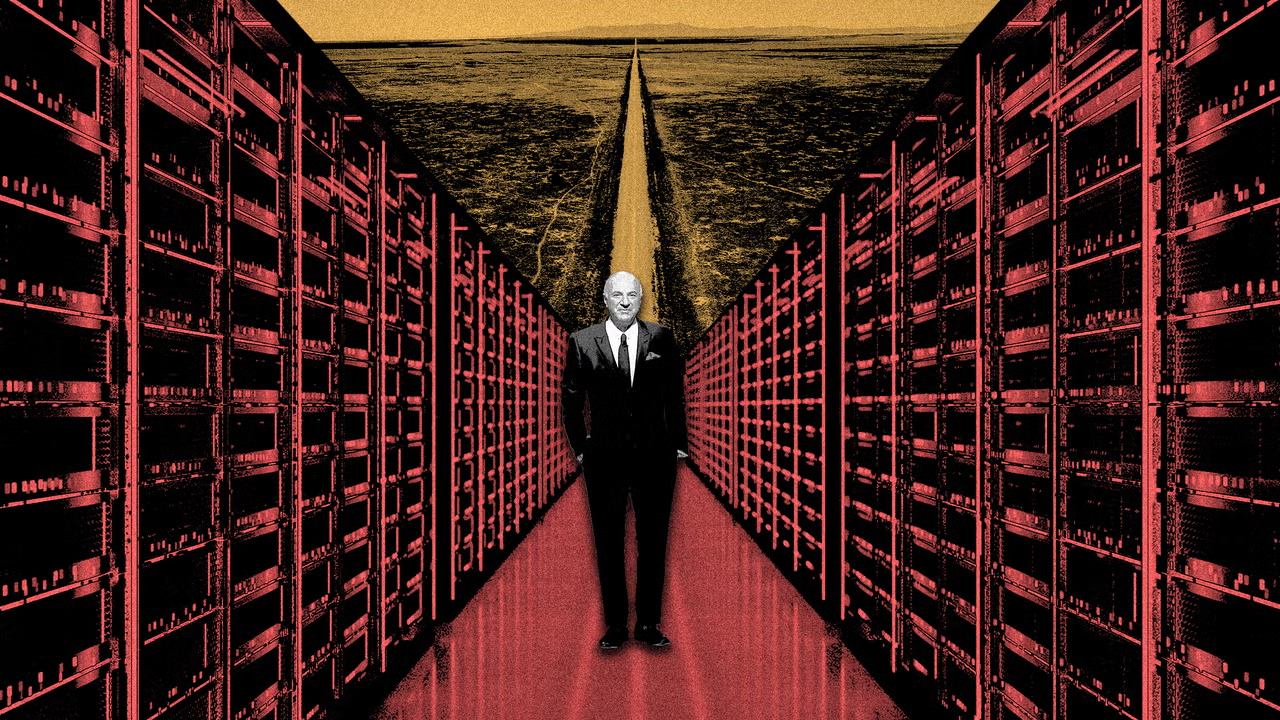
In the realm of technology and infrastructure, ambitious projects often capture the imagination. One such endeavor is the proposed Wonder Valley data center in Utah, envisioned by Shark Tank’s Kevin O’Leary. Spanning an astonishing 40,000 acres—twice the size of Manhattan—this colossal facility promises to redefine data processing capabilities. However, as excitement builds, an in-depth examination reveals a project fraught with substantial obstacles and skepticism.
The Numbers Game
O’Leary’s Stratos project is projected to consume an eye-watering 9 gigawatts (GW) of power, more than double the total average electricity usage of the entire state of Utah. This staggering requirement raises immediate questions about feasibility and sustainability. According to Olivia Wang, an energy analyst at Sightline Climate, the likelihood of this ambitious data center materializing appears grim, with current estimations placing its chances at a mere 15%.
The Building Blocks of Progress
Successful data center projects typically require a well-defined framework, including secured financing, tenant commitments, and the sourcing of power. Wang emphasizes that Wonder Valley currently lacks progress in all these critical areas. Despite O’Leary’s statements about potential tenants, no verified agreements have surfaced yet. Additionally, the necessary power contracts and financing remain elusive, casting further doubt on the project’s viability.
Environmental and Regulatory Hurdles
The path to construction is not only littered with financial uncertainties but also beset by environmental concerns. Wonder Valley aims to operate off-grid, yet no air quality permits have been filed with the Utah Department of Environmental Quality. This crucial step, which requires a year of monitoring, could delay the project by years. Furthermore, local opposition has emerged, with residents voicing concerns over water usage and environmental impacts, particularly in light of Utah’s ongoing drought crisis.
Public Sentiment and Market Dynamics
Public sentiment surrounding data centers has shifted dramatically. A recent Gallup poll indicates that a significant majority of Americans are opposed to constructing AI data centers in their communities. This growing resistance has already led to the cancellation or delay of numerous data center projects across the U.S. Wonder Valley is no exception; local protests and concerns over water rights have further complicated its trajectory.
Lessons from the Past
The history of large-scale data center projects is littered with cautionary tales. Experts warn that the ongoing AI data center boom may be more of a bubble than a sustainable trend. Tech writer Ed Zitron has pointed out that no data center of 1 GW capacity has ever been built, casting doubt on O’Leary’s ambitious plans. As the landscape evolves, stakeholders must navigate not only the technical and financial aspects of such projects but also the growing tide of public opposition and regulatory scrutiny.
A Miami Perspective
As Miami becomes a burgeoning tech hub, the challenges faced by the Wonder Valley project serve as a potent reminder of the complexities involved in large-scale infrastructure development. The city’s growth in technology and innovation thrives on a delicate balance between ambition and responsibility. Entrepreneurs and investors in Miami can draw lessons from O’Leary’s ambitious plans, understanding that sustainable growth hinges on addressing environmental concerns, securing community support, and navigating regulatory landscapes.
Editorial note: This article was created by A Bit Lavish Miami’s Magazine as an original editorial reinterpretation based on publicly available reporting. Original source: fastcompany.com. Read the original article here: https://www.fastcompany.com/91546420/kevin-oleary-massive-utah-data-center-wont-get-built-analyst.
Images are used for editorial reference with source credit. If an image requires correction or removal, please contact A Bit Lavish.









Navigating the Crossroads: Is Your Next Promotion Truly Right for You?
Explore the complexities of career advancement and the importance of aligning promotions...
 3 Mins read
The Future of Gifting: Babylist’s Innovative Leap into Financial Literacy
Explore how Babylist is transforming the landscape of gifting and financial planning...
3 Mins read

Embracing the Soft Off Day: A New Paradigm for Remote Work in Miami
Exploring the concept of soft off days in remote work, their implications...
 ABL2 Mins read


The Legal Crossroads of AI: CNN’s Bold Stand Against Content Theft
CNN sues Perplexity AI for allegedly appropriating over 17,000 pieces of content...
ABL3 Mins read

Leave a comment