
Navigating the Future: Uber’s Insight into America’s Economic Landscape
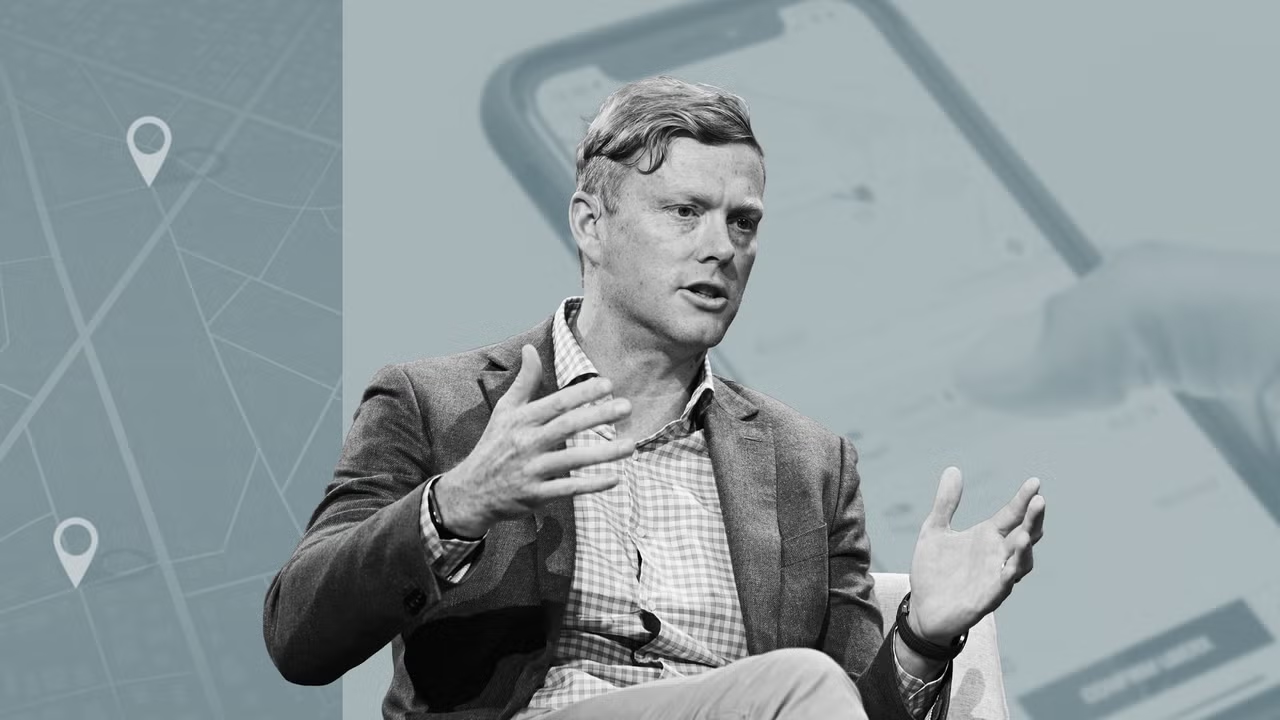
The Pulse of the Economy from the Driver’s Perspective
In an era where economic indicators are constantly evolving, few companies provide as clear a window into American consumer behavior as Uber. With Andrew Macdonald at the helm as president and COO, the company is not only redefining transportation but also offering valuable insights into the economic landscape from the driver’s seat.
Understanding Driver Dynamics Amid Rising Costs
As gas prices soar and economic pressures mount, Macdonald emphasizes the importance of understanding the financial health of Uber’s drivers. By analyzing real-time data, the company gauges how fluctuations in fuel costs affect its vast network of drivers. While it’s undeniable that rising gas prices strain drivers’ wallets, Macdonald notes that the overall impact on their earnings is relatively modest compared to other sectors, such as airlines, where costs are more directly passed on to consumers.
Uber’s approach to mitigating these pressures is multifaceted. Instead of imposing fixed surcharges that could alienate riders, Uber opts for dynamic pricing strategies that allow for flexibility in response to market conditions. This adaptability not only acknowledges the economic realities faced by drivers but also positions Uber as a responsive partner in their financial journey.
The Local Lens: A Barometer of Economic Health
Uber’s business model inherently reflects local economic conditions. From bustling nightlife in Miami to quiet suburban evenings, the platform serves as an economic pulse, capturing shifts in consumer behavior across diverse demographics. By delving into data segmented by zip codes and payment methods, Uber can detect early signs of economic shifts.
Macdonald asserts that Uber serves as a more accurate gauge of local labor markets than general consumer health metrics. With low barriers to entry for potential drivers, the company can quickly respond to changes in employment landscapes. As unemployment rates fluctuate, so does driver supply, impacting fare prices and the overall equilibrium of the marketplace.
Future Forward: The Road to Autonomous Vehicles
With ongoing advancements in technology, Uber is actively exploring the integration of autonomous vehicles (AVs) into its platform. Although the company previously halted its own AV development, Macdonald indicates a strategic pivot towards partnerships with industry leaders like Zoox and Waymo. These collaborations are not merely about deploying a few self-driving cars but rather about constructing the necessary infrastructure for large-scale operations.
Macdonald highlights that the transition to AVs is less about whether they will arrive and more about how to scale them effectively. He envisions a future where various ownership models coexist, allowing Uber to remain a vital player in the evolving transportation ecosystem without necessarily owning the vehicles themselves.
Balancing Progress with Responsibility
As Uber moves towards a hybrid model that includes both human drivers and autonomous vehicles, Macdonald is acutely aware of the company’s responsibility to its workforce. The concern of drivers about being replaced by technology is valid and requires a thoughtful approach. Macdonald believes that corporations must lead the charge in this transition, advocating for a model that allows for coexistence between human labor and automation.
By fostering a hybrid network, Uber aims to not only sustain but also grow its workforce, ensuring that the emergence of new technologies does not come at the expense of existing jobs. This approach not only benefits drivers but also contributes positively to the broader economic landscape.
A Commitment to the Future
With over 10 million individuals earning through the Uber platform, the company recognizes its responsibility to provide opportunities that can adapt alongside technological advancements. As Uber continues to evolve, Macdonald emphasizes the importance of corporate responsibility and collaborative efforts with government entities to facilitate a smooth transition into this new era of transportation.
In conclusion, Uber’s unique position allows it to serve as a microcosm of the broader American economy. Through innovative strategies and a commitment to its drivers, the company is not just navigating the challenges of today but also shaping the future of mobility in a way that is mindful of both economic realities and human potential.
Editorial note: This article was created by A Bit Lavish Miami’s Magazine as an original editorial reinterpretation based on publicly available reporting. Original source: fastcompany.com. Read the original article here: https://www.fastcompany.com/91547368/ubers-andrew-macdonald-on-what-americas-economy-looks-like-from-the-drivers-seat.
Images are used for editorial reference with source credit. If an image requires correction or removal, please contact A Bit Lavish.










Navigating the Crossroads: Is Your Next Promotion Truly Right for You?
Explore the complexities of career advancement and the importance of aligning promotions...
 3 Mins read

The Future of Gifting: Babylist’s Innovative Leap into Financial Literacy
Explore how Babylist is transforming the landscape of gifting and financial planning...
3 Mins read

Embracing the Soft Off Day: A New Paradigm for Remote Work in Miami
Exploring the concept of soft off days in remote work, their implications...
 ABL2 Mins read



The Legal Crossroads of AI: CNN’s Bold Stand Against Content Theft
CNN sues Perplexity AI for allegedly appropriating over 17,000 pieces of content...
ABL3 Mins read

Leave a comment