
Complex Negotiations Amidst Fragile Ceasefires
In a world increasingly characterized by geopolitical uncertainty, the recent tentative agreement between U.S. and Iranian negotiators marks a crucial juncture in the ongoing conflict. Aimed at extending the existing ceasefire by an additional 60 days, this agreement also sets the stage for critical discussions surrounding Iran’s contentious nuclear program. Yet, the path forward remains fraught with challenges, as confirmed by an anonymous U.S. official familiar with the proceedings.
The Stakes of the Strait
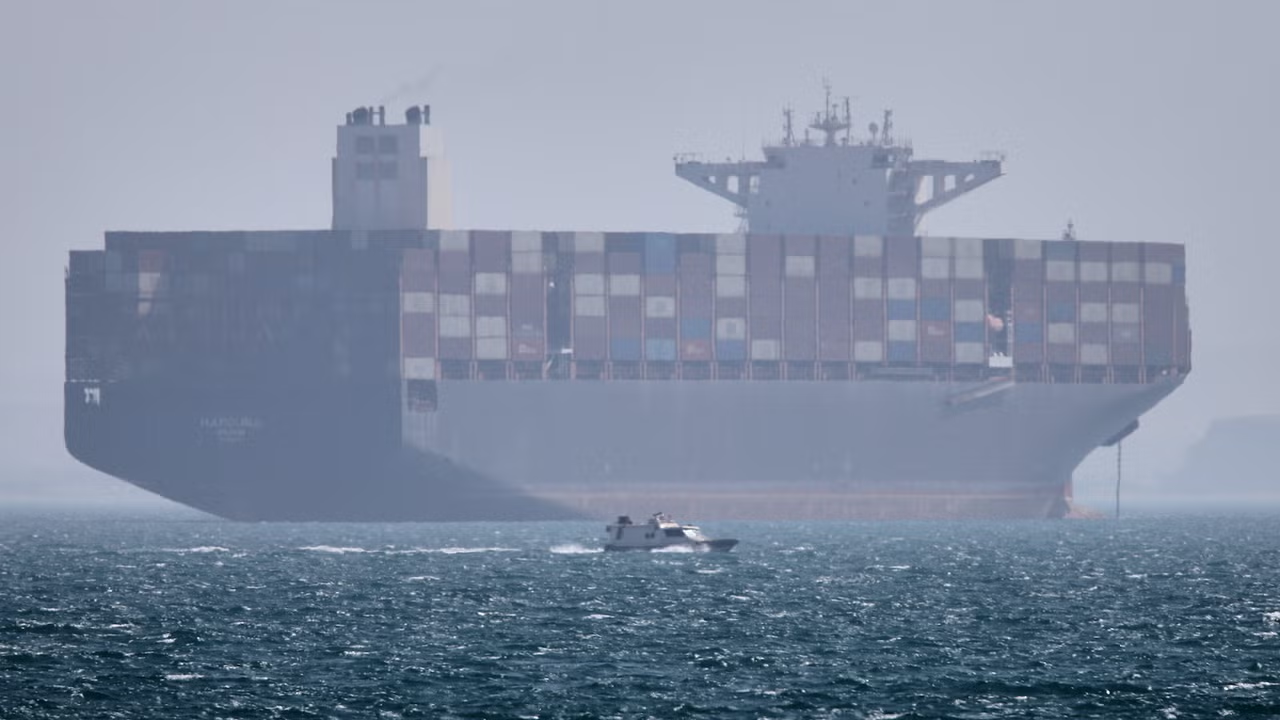
The negotiations come at a time when tensions in the Persian Gulf are palpable. The Strait of Hormuz, a vital artery for global oil and natural gas trade, has become the focal point of international concern. The memorandum of understanding stipulates that Iran must refrain from imposing tolls on this crucial waterway and mandates the removal of all mines within a strict 30-day timeline. In return, the U.S. would gradually lift its naval blockade, a move that could significantly ease global oil prices that have soared in recent months due to the ongoing conflict.
Energy Markets in Flux
With approximately one-fifth of the world’s traded oil and natural gas passing through the Strait, any disruption reverberates across global markets. The potential lifting of sanctions on Iranian oil sales could further complicate the energy landscape. For Miami and its affluent residents, who closely monitor energy prices that impact everything from transportation to luxury goods, the ramifications of these negotiations are significant. A stabilized Iranian oil market could help ease inflationary pressures that have plagued consumers worldwide.
Nuclear Ambiguities and Diplomatic Minefields
However, the nuclear issue remains a daunting challenge. Iran’s stockpile of highly enriched uranium, crucial for any discussions about its nuclear future, raises pressing questions. Currently, Iran possesses over 440 kilograms of uranium enriched to 60% purity—just a technical step away from weapons-grade levels. As diplomatic efforts unfold, the prospect of involving third parties like China or Russia adds another layer of complexity to the negotiations.
Striking a Balance Between Diplomacy and Defense
The delicate nature of these talks is underscored by recent escalations in military engagements. U.S. forces have conducted airstrikes against Iranian missile sites, while Iran has retaliated by targeting bases housing American troops. This cycle of aggression not only threatens to unravel the tenuous ceasefire but also complicates the broader diplomatic landscape, emphasizing the fine line negotiators must tread between military preparedness and diplomatic engagement.
The Regional Implications
Moreover, Iran’s insistence on addressing Israel’s military operations in Lebanon as part of any potential agreement highlights the regional dynamics at play. As tensions flare in Lebanon, compounded by Israeli airstrikes, it becomes clear that the U.S.-Iran negotiations are not merely bilateral but entangled with broader Middle Eastern politics. For Miami’s business leaders, particularly those involved in international trade and investment, understanding these multifaceted geopolitical shifts is critical for navigating risks and opportunities in the region.
A Path Forward Amidst Uncertainty
As the world watches these developments unfold, the outcome of this tentative agreement remains uncertain. While the U.S. administration has yet to provide definitive backing, the contours of a potential deal are beginning to take shape, contingent on further negotiations and diplomatic finesse. For Miami, a city deeply connected to global trade, the implications extend beyond immediate economic concerns, touching on the foundational elements of stability and peace in a complex international arena.
Editorial note: This article was created by A Bit Lavish Miami’s Magazine as an original editorial reinterpretation based on publicly available reporting. Original source: fastcompany.com. Read the original article here: https://www.fastcompany.com/91550157/iran-us-war-tentative-deal-nuclear.
Images are used for editorial reference with source credit. If an image requires correction or removal, please contact A Bit Lavish.










Navigating the Crossroads: Is Your Next Promotion Truly Right for You?
Explore the complexities of career advancement and the importance of aligning promotions...
 3 Mins read

The Future of Gifting: Babylist’s Innovative Leap into Financial Literacy
Explore how Babylist is transforming the landscape of gifting and financial planning...
3 Mins read

Embracing the Soft Off Day: A New Paradigm for Remote Work in Miami
Exploring the concept of soft off days in remote work, their implications...
 ABL2 Mins read


The Legal Crossroads of AI: CNN’s Bold Stand Against Content Theft
CNN sues Perplexity AI for allegedly appropriating over 17,000 pieces of content...
ABL3 Mins read

Leave a comment