
The Duality of Art: Record Sales Amidst a Struggling Contemporary Landscape
 ABLUpdated 3 hours Ago2 Mins read7

Art’s Dynamic Landscape
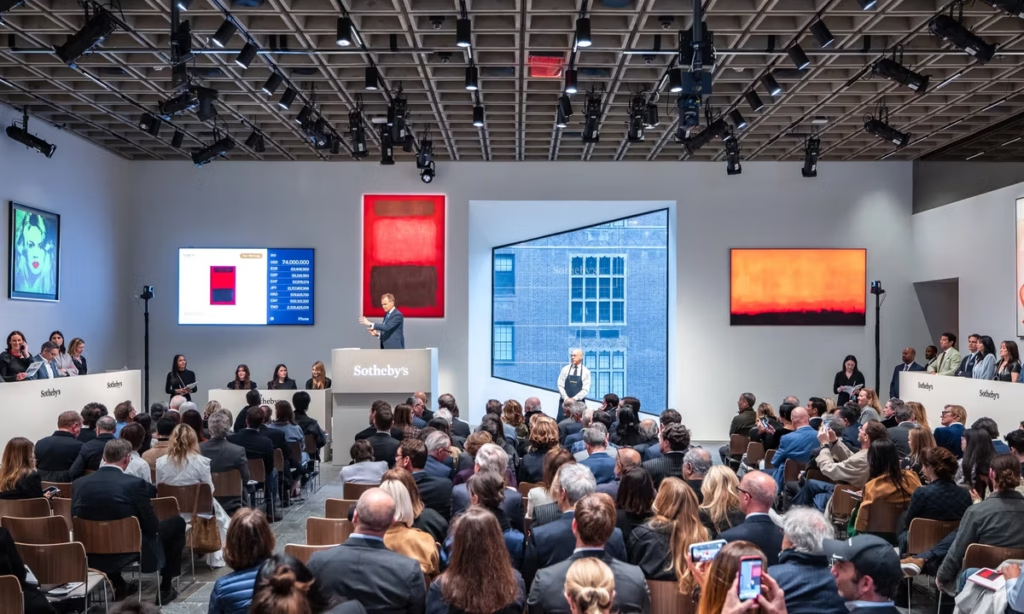
The world of art is in a state of flux, reflecting broader economic trends and shifting collector psychologies. Recent marquee auctions in New York have punctuated the vitality of blue-chip art, achieving record figures and reinforcing the stature of established artists. However, this upward trajectory is tinged with a stark contrast: the contemporary art market, particularly for emerging talents, is grappling with significant challenges.
The Allure of Established Artists
In the high-stakes arena of art auctions, the appeal of blue-chip artists continues to captivate collectors, as evidenced by the recent blockbuster sales that shattered previous records. Esteemed names in the art world have commanded staggering prices, underscoring their enduring market significance. This phenomenon is not merely a reflection of personal legacy; it speaks to a broader collector psychology that favors stability and proven return on investment.
A Fractured Market for Emerging Artists
Conversely, the primary market for contemporary art, particularly that of younger and edgier artists, appears to be stalling. Many galleries are feeling the pressure, with a marked decline in the sales of works from emerging creators. This is compounded by the economic uncertainty that has permeated the art world, leading collectors to gravitate towards established names instead of taking risks on the avant-garde.

Provenance and Investment Psychology
The importance of provenance cannot be overstated in the current art market. Collectors are increasingly cognizant of the historical significance of works and the narratives that accompany them. These stories enhance the allure of blue-chip artists, making their pieces not only prestigious acquisitions but wise investments. In contrast, emerging artists often lack this established narrative, which can hinder their market performance.
The Role of Galleries in Shaping Futures
Galleries have traditionally played a pivotal role in the success of emerging artists, providing much-needed exposure and support. However, many are now struggling to navigate the economic climate, leading to decreased visibility and opportunities for young talent. This has resulted in a stagnation of the contemporary market, where innovative voices are often overshadowed by the monumental sales of their predecessors.
Miami’s Unique Position
As a burgeoning cultural hub, Miami finds itself at the crossroads of these two divergent art market paths. The city’s vibrant art scene is home to both established figures and emerging talents, offering a unique perspective on this duality. Art Basel Miami Beach and other high-profile events serve as platforms for artists of all tiers, yet the disparity in market response is palpable. Collectors in Miami are increasingly discerning, often favoring the tried and true over the experimental.
The Future: Bridging the Gap
Looking ahead, the challenge lies in bridging the gap between established and emerging artists. As the market recalibrates, there is potential for a renaissance of interest in contemporary art, driven by innovation and fresh perspectives. Initiatives aimed at fostering deeper connections between artists and collectors could pave the way for a more balanced art ecosystem.
Editorial note: This article was created by A Bit Lavish Miami’s Magazine as an original editorial reinterpretation based on publicly available reporting. Original source: theartnewspaper.com. Read the original article here: https://www.theartnewspaper.com/2026/06/01/blue-chip-gets-a-boost-but-edgier-art-remains-in-the-doldrums.
Images are used for editorial reference with source credit. If an image requires correction or removal, please contact A Bit Lavish.









The Curious Case of the Missing Banana: Cattelan’s Comedian Revisited
An exploration of Maurizio Cattelan's provocative installation 'Comedian', its cultural relevance, and...
ABL2 Mins read

Cultural Resilience: The Intersection of History and Contemporary Discourse at Museums
Exploring the significance of cultural events at museums and the delicate balance...
ABL2 Mins read

Cultural Treasures: Recent Acquisitions Reshaping Institutional Collections
Explore the latest significant acquisitions in art institutions, including a double-sided print...
ABL2 Mins read



Transformative Waves: The Evolution of Arts Strategy in England
Exploring the significance of Arts Council England's strategic shift and its implications...
ABL2 Mins read

Leave a comment