
A Pivotal Moment in Technology
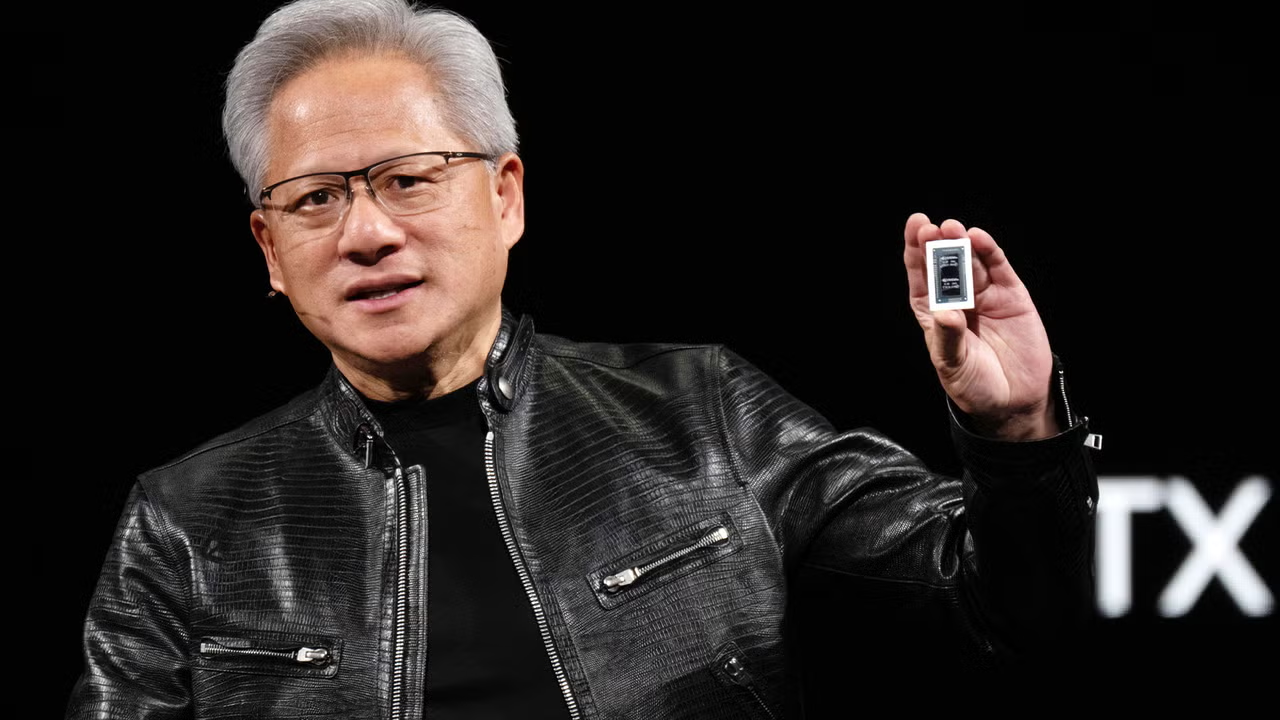
The tech landscape is witnessing a seismic shift, with Arm Holdings experiencing a dramatic surge in stock prices following Nvidia’s recent announcement of its groundbreaking RTX Spark superchip. This new chip, designed to elevate personal computing experiences, marks a significant pivot for Nvidia, a company traditionally recognized for its prowess in graphics processing units (GPUs). As Nvidia CEO Jensen Huang detailed at the Computex conference, the introduction of this AI-centric superchip aims to redefine what consumers can expect from their PCs.
The Reinvention of the Personal Computer
With the RTX Spark superchip, Nvidia is not just enhancing its portfolio but is also embarking on an ambitious journey to innovate the personal computer market. The chip integrates Nvidia’s new N1X processor—crafted in collaboration with Microsoft—and a powerful Blackwell GPU, both built on Arm’s superior architecture. This strategic alignment allows for enhanced on-device AI processing capabilities, reducing dependence on cloud computing and setting a new standard for performance in laptops and desktops.
Market Reactions and Competitive Landscape
The announcement reverberated throughout the stock market, sending Arm’s shares soaring over 15%, while competitors like Intel and Advanced Micro Devices (AMD) saw declines. This unexpected twist underscores the dynamic and often volatile nature of the tech industry, where innovation can lead to rapid shifts in market power. As Arm’s architecture becomes increasingly relevant, its transition to producing its own AI chips positions it uniquely against traditional rivals, even as it benefits from royalties generated by the new RTX Spark chips.
Consumer Sentiment: The AI Disconnect
Despite the excitement in the boardrooms and trading floors, a critical question lingers: Do consumers really care about AI capabilities in their personal computers? Insights from industry leaders suggest a disconnect between technological advancements and consumer priorities. Dell’s head of product, Kevin Terwilliger, candidly acknowledged that customers are not gravitating toward PCs based on AI features, emphasizing that their primary concerns remain price and battery life.
The Price of Progress
The initial models powered by the RTX Spark chip are expected to carry a premium price tag, raising further questions about market acceptance. As AI integration becomes more commonplace, it remains unclear how much this will influence consumer purchasing decisions. The tech industry must navigate these evolving consumer attitudes while balancing innovation with affordability, a challenge that could define the success of the RTX Spark and similar technologies.
The Road Ahead: Arm’s Strategic Positioning
As Arm embraces its new role in the semiconductor space, it illustrates a broader trend where companies are not just reacting to market changes but are actively shaping their futures. The ongoing evolution of AI technology presents both opportunities and challenges, and how Arm capitalizes on this moment could set the tone for the industry moving forward. The stakes are high as the tech world watches to see if Nvidia’s bold moves will resonate with consumers and redefine their computing experiences.
Editorial note: This article was created by A Bit Lavish Miami’s Magazine as an original editorial reinterpretation based on publicly available reporting. Original source: fastcompany.com. Read the original article here: https://www.fastcompany.com/91551586/chip-stocks-today-arm-rises-intel-falls-nvidia-ai-superchip-windows-pcs.
Images are used for editorial reference with source credit. If an image requires correction or removal, please contact A Bit Lavish.










Robo-Care: The Future of Elderly Assistance in Miami’s Evolving Landscape
Exploring how innovative robotic solutions are addressing the critical shortage of elderly...
 ABL3 Mins read

Navigating the New Retail Terrain: Strategies Amidst Tariff Turbulence
Explore the evolving landscape of retail in Miami as businesses face the...
ABL2 Mins read

Navigating the Frontier: AI’s Role in Modern Warfare and Military Strategy
An analysis of the Pentagon's push for AI integration in military operations...
ABL3 Mins read



Navigating Credibility: Jerome Powell’s Call for Resilience in the Federal Reserve
Jerome Powell emphasizes the importance of the Federal Reserve's independence amidst growing...
ABL2 Mins read

Leave a comment