

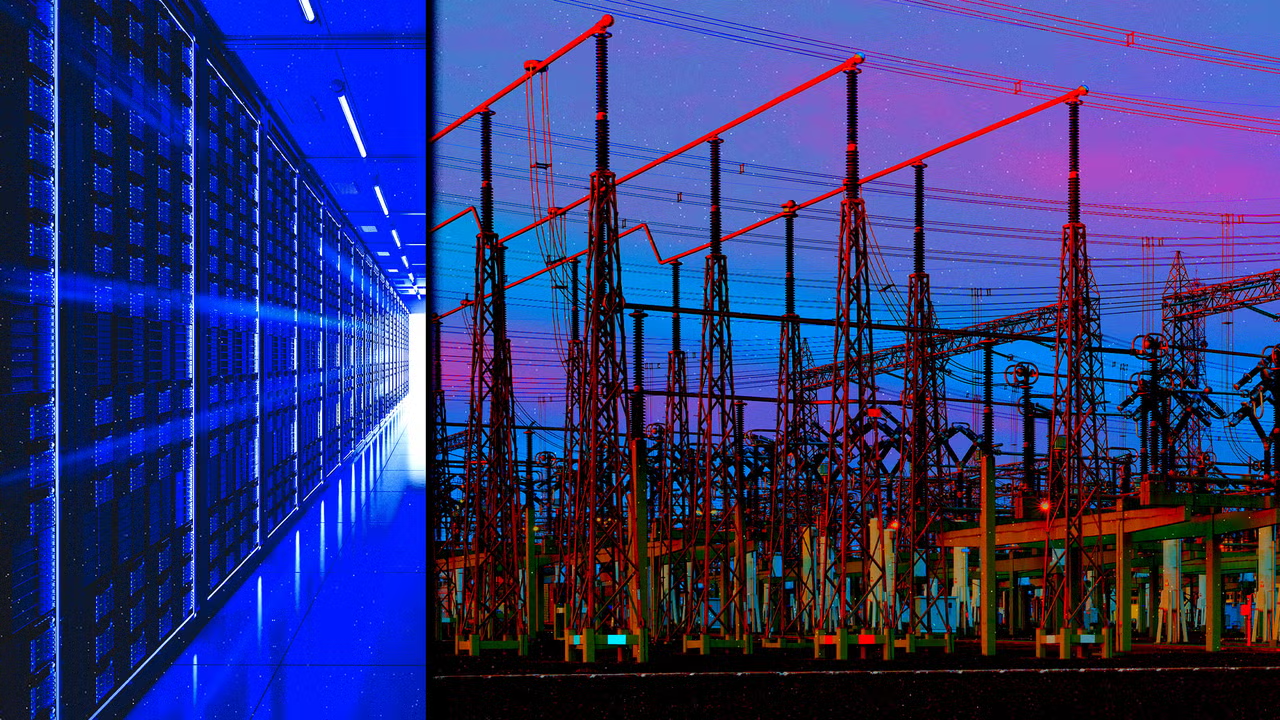
The New Energy Landscape
As we stand on the precipice of a new era in energy consumption, the convergence of artificial intelligence (AI) and our aging power grid presents both a challenge and an opportunity. In recent years, the demand for electricity has shifted dramatically, with a surge in interconnection requests overwhelming a system designed for a much slower-paced world. This unprecedented load growth—previously averaging below 1% annually—has skyrocketed to over 4% in some regions, according to insights from the Lawrence Berkeley National Laboratory.
The implications are profound: as AI data centers are projected to consume a staggering 9% of total U.S. electricity by 2030, the existing infrastructure is unprepared for the onslaught of new demand. Regions like Virginia, Texas, and California are particularly affected, straining local grids that are already under pressure from electric vehicles (EVs) and new manufacturing facilities transitioning away from fossil fuels.
Utility Preparedness: A Struggle for Adaptation
The utilities tasked with managing this energy transformation find themselves in a precarious position. Carlos Elena-Lenz, a leader in digital enablement at Hitachi Energy, notes that many utility companies lag at least a decade behind sectors such as oil and gas in adopting AI technologies. The traditional “break-fix” mentality, where utilities react to failures rather than proactively addressing them, further complicates matters. Many utilities lack the precise data and infrastructure necessary to leverage AI effectively, resulting in a significant disconnect between data generation and actionable insights.
As a result, the industry is faced with a daunting challenge: not only must it embrace new technologies, but it must also completely rethink its operational frameworks and workforce capabilities. The integration of AI workloads into the grid not only demands more power but also intensifies the need for cooling and filtration systems, requiring a rapid modernization that few utilities are equipped to handle.
Regulatory Bottlenecks and the Need for Agility
The regulatory landscape, often cumbersome and lengthy, adds another layer of complexity to the modernization efforts. Bringing proposals to regulatory bodies such as the California Public Utilities Commission can take years, a timeline that starkly contrasts with the rapid pace of technological advancement. Richard Schomberg from the International Electrotechnical Commission highlights that interconnection timelines can extend to seven years, a constraint that can stifle innovation and delay critical projects.
However, there are signs of progress. Utilities are starting to adopt more flexible strategies that accommodate the realities of modern energy demands. PG&E, for instance, has introduced a reform requiring large customers to cover their interconnection costs upfront. This shift not only incentivizes responsible consumption but also alleviates the financial burden on existing ratepayers.
Innovative Solutions: Building a Resilient Future
While some companies are working within the existing regulatory framework, others are forging new paths to circumvent it. Charlotte Meerstadt, CEO of Fram Energy, is pioneering a financial infrastructure for decentralized energy generation, facilitating a shift toward self-sufficient energy production. This model has gained momentum due to rising energy costs and the desire for more stable electricity pricing, which is increasingly appealing to businesses. The market for decentralized energy is projected to reach an astonishing $2 trillion by 2034, illustrating the urgency of this transition.
Fram Energy’s innovative billing solutions automate complex transactions, providing independent power producers with the tools to efficiently manage their operations. By streamlining the billing process, Meerstadt’s company addresses a critical gap in the decentralized energy landscape, enabling producers to concentrate on generation rather than administrative burdens.
Economic Implications and the Cost Dilemma
The intersection of AI and energy consumption is not just a technological challenge; it is an economic one as well. Schomberg emphasizes the need for a cost causation principle, where those driving demand for new infrastructure should bear the associated costs. As energy prices continue to rise—outpacing inflation since 2022—this issue will have tangible effects on families and businesses alike. The ongoing debate about who pays for the transformation of the grid is not just a technical matter; it holds significant political ramifications that are beginning to surface.
As innovations emerge from companies like Hitachi, PG&E, and Fram Energy, the conversation surrounding the future of our energy systems becomes increasingly critical. The grid, as a shared resource, demands a cohesive approach that balances technological advancements with equitable cost distribution. The path forward will require collaborative efforts across sectors, ensuring that as we embrace the future, no one is left behind.
Editorial note: This article was created by A Bit Lavish Miami’s Magazine as an original editorial reinterpretation based on publicly available reporting. Original source: fastcompany.com. Read the original article here: https://www.fastcompany.com/91547161/the-ai-boom-is-colliding-with-americas-aging-power-grid.
Images are used for editorial reference with source credit. If an image requires correction or removal, please contact A Bit Lavish.










Navigating the New Landscape of Home Affordability: A Deep Dive into Market Trends
Explore the evolving dynamics of home affordability in the U.S. housing market...
 2 Mins read

Rethinking Economic Narratives: The End of the K-Shaped Economy?
Treasury Secretary Scott Bessent declares the end of the K-shaped economy, but...
2 Mins read
Fantasy Baseball Trade Deadline Spurs Strategic Shifts in Bullpen Dynamics
The August 2026 trade deadline reshapes bullpen roles, impacting team strategies and...
1 Mins read



Jefry Yan Celebrations Mark a New Era in Major League Baseball
The global sports community recognizes Jefry Yan's achievements, highlighting the evolving landscape...
1 Mins read
