
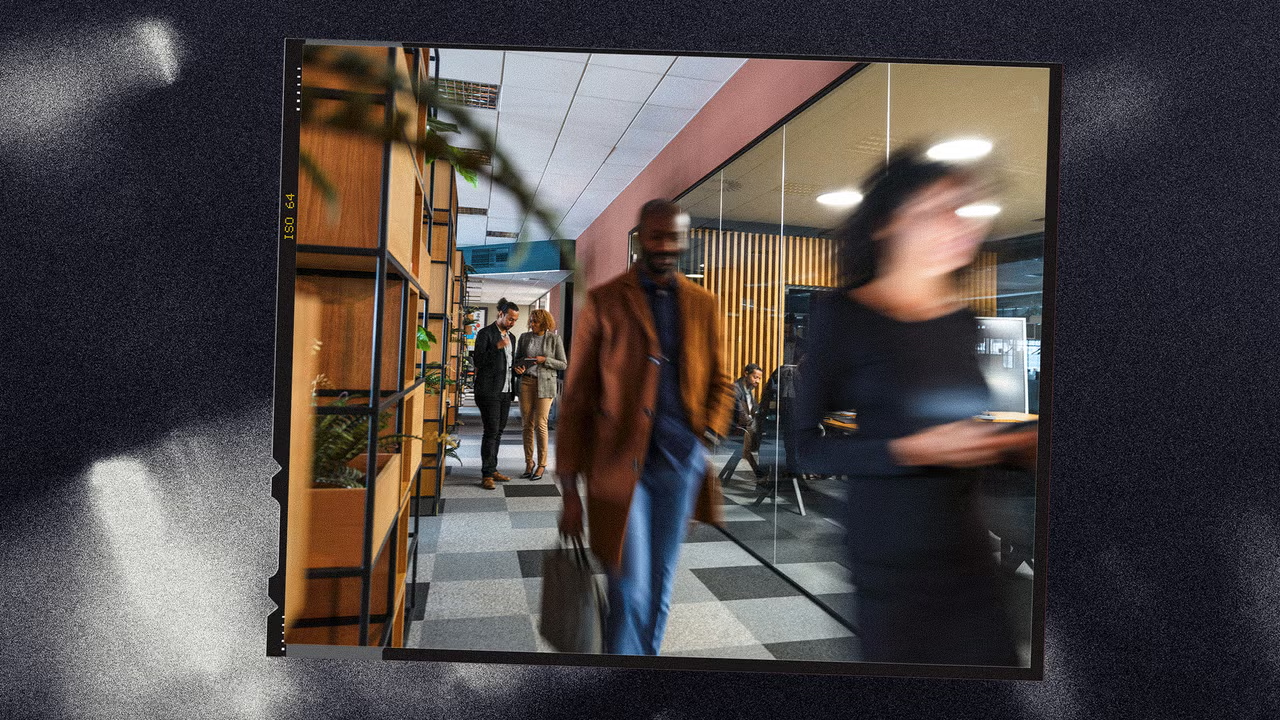
A Paradigm Shift in Workplace Perception
In recent years, the narrative surrounding workplace dynamics has taken a significant turn. What once was an assumption that employees overwhelmingly preferred remote work is now being challenged by a counter-narrative: the office is emerging as a coveted workplace perk. The pandemic catalyzed an unprecedented shift to remote work, compelling organizations to offer flexibility. However, as professionals, especially Gen Z and millennials, reevaluate their work environments, a notable trend has surfaced—the Fear of Missing Out at Work (FOMOW). This phenomenon highlights a growing desire for the benefits that in-person collaboration and connection can offer.
The Return to the Office: A Strategic Decision
A recent survey indicates that a substantial number of companies that initially embraced fully remote work are now reconsidering their policies. By 2025, over 80% of these organizations are expected to return to office settings, with many adopting hybrid models that emphasize a balance between remote and on-site work. This transition reflects a broader understanding that the office is not merely a location, but a strategic element in fostering employee growth and satisfaction.
Transforming Office Culture: From Requirement to Choice
To successfully encourage employees back to the office, leaders are rethinking their approach. The most effective strategies shift the narrative from a mandatory requirement to a value proposition. Companies are discovering that the workplace can be framed as a high-value environment—one that promotes collaboration, creativity, and innovation. By articulating the tangible benefits of in-person work, organizations can foster a culture where employees feel empowered to choose the office as a vital space for their professional development.
The Invisible Infrastructure of Collaboration
Research highlights the challenges posed by remote work when it comes to collaboration. Employees working from home often experience a decline in spontaneous interactions, which are crucial for building trust and fostering innovation. Leaders must recognize that the fluidity of communication is significantly enhanced in a shared space. As Michael Dell, CEO of Dell, aptly noted, “nothing is faster than the speed of human interaction.” Cultivating an environment that encourages face-to-face communication can lead to more efficient problem-solving and idea generation.
Intentional In-Person Engagement
While the importance of collaboration is paramount, it is equally vital to acknowledge the value of focused individual work. Effective leaders differentiate between what in-person time is meant for—whether it’s brainstorming sessions, onboarding new talent, or making high-stakes decisions. Companies like Jotform exemplify this balance by creating designated areas for collaborative efforts, while also providing quiet spaces for those moments of deep focus. This dual approach not only enhances productivity but also ensures that employees feel their diverse needs are being met within the workplace.
Crafting a Future-Ready Workplace
The office is evolving from a default work setting to a carefully curated tool designed to enhance both collective and individual productivity. As the business landscape continues to shift, organizations in Miami and beyond must remain agile, adapting their strategies to align with the evolving preferences of their workforce. In doing so, they not only attract top talent but also foster a culture that prioritizes employee well-being and engagement.
Editorial note: This article was created by A Bit Lavish Miami’s Magazine as an original editorial reinterpretation based on publicly available reporting. Original source: fastcompany.com. Read the original article here: https://www.fastcompany.com/91561284/what-if-the-office-is-actually-a-workplace-perk.
Images are used for editorial reference with source credit. If an image requires correction or removal, please contact A Bit Lavish.









Harnessing Creativity: A New Paradigm for Business Leadership
Exploring how applied creativity can redefine business success and leadership in the...
 2 Mins read

Merlin the Duck: A Feathered Phenomenon in the Heart of Mexico’s World Cup Fervor
Discover how a street vendor's duck became an unofficial mascot for Mexico...
2 Mins read

The Future of Longevity: A New Era of Science and Innovation
Explore the transformative landscape of longevity research, where AI meets biology, and...
3 Mins read



Navigating the Chip Crisis: Apple’s Strategic Price Adjustments and Market Implications
Explore how Apple's price increases are a response to the ongoing memory...
2 Mins read

Leave a comment