
Navigating the Laser Frontier: The U.S. Military’s Strategic Response to Drone Vulnerabilities
The Dawn of Directed Energy Warfare
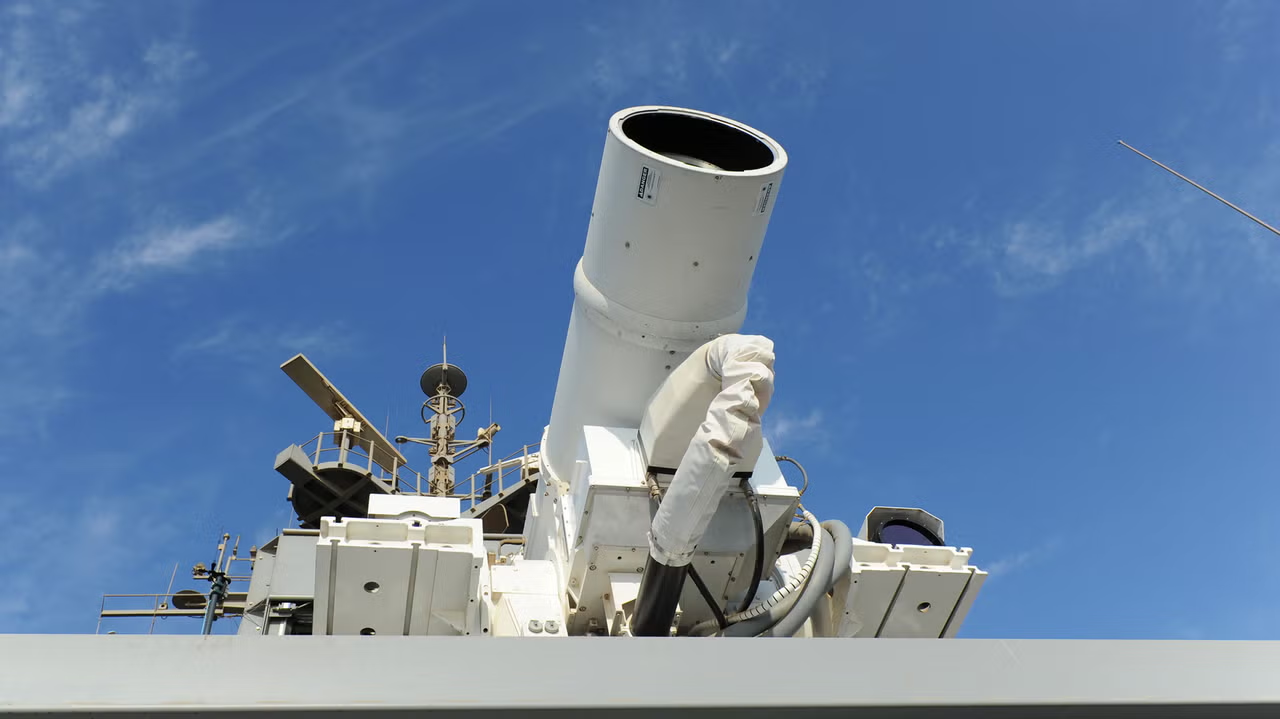
As the world witnesses a radical shift in warfare technology, the U.S. military is at a critical juncture, poised to embrace the reality of directed energy weapons. With adversaries like China and Russia advancing their arsenals of high-energy laser systems, the need to counter such threats has never been more pressing. These lasers, capable of efficiently targeting drones at impressive distances, present a significant vulnerability for U.S. military assets, particularly unmanned aerial vehicles (UAVs), which are increasingly deployed in contested environments.
Understanding the Vulnerability of Drones
The Naval Postgraduate School’s recent research sheds light on the precarious position of naval drones, which, unlike their armored counterparts, lack substantial protection against these advanced laser technologies. Drones are designed for expendability and efficiency, making them attractive for various military operations. However, their lightweight materials and operational characteristics render them particularly susceptible to prolonged laser exposure.
The study evaluated several drone types, revealing that without protective measures, many would succumb to laser attacks within mere seconds. Only specific models, operating at extreme altitudes and distances, demonstrated any significant resilience. The findings underscore a critical need for innovative defensive strategies to safeguard these vital assets.
Counter-Directed Energy Weapons: A Developing Field
The concept of counter-directed energy weapons (CDEW) has emerged as a necessary response to the growing threat of adversarial laser systems. Despite lacking a fully realized CDEW system currently in the field, military researchers are exploring multiple avenues to address this challenge. A comprehensive study from the NPS outlines potential solutions and strategies to mitigate the risk posed by high-energy lasers.
- Utilizing Environmental Factors: Adverse weather conditions can serve as a natural barrier against laser attacks, absorbing and scattering energy from incoming beams.
- Implementing Warning Systems: Integrating advanced sensors into drone payloads could provide early detection of laser threats, enabling timely countermeasures.
- Active Countermeasures: Techniques such as deploying smoke screens or using decoy drones could divert laser targeting away from critical assets.
- Passive Shielding: Innovative materials, such as Bragg mirrors, could be designed to reflect laser energy, offering a substantial layer of protection.
- Evasive Maneuvers: Developing autonomous maneuvering capabilities for drones could significantly enhance their survival rates during a laser engagement.
A Layered Defense Strategy
As the research indicates, a multifaceted approach is essential to effectively counter laser threats. The most reliable CDEW strategy combines various elements, from environmental awareness to advanced shielding technologies. While no single solution offers a comprehensive fix, integrating multiple defensive tactics can create a robust protective framework for military drones.
However, the challenge lies not only in developing these technologies but also in the architectural integration of these systems into existing drone platforms. The military must prioritize CDEW capabilities during the design phase of new UAVs to ensure they are equipped to handle emerging threats.
The Urgency of Innovation
With the proliferation of laser weapons internationally, the urgency for the U.S. military to develop and implement effective CDEW strategies cannot be overstated. The implications extend beyond immediate defense needs, influencing broader military tactics, operational planning, and international security dynamics.
As adversaries continue to innovate, the U.S. military must accelerate its response, ensuring that its strategic playbook is not only reactive but also proactive. This involves a commitment to research, development, and integration of cutting-edge technologies that can safeguard its drone fleet against the evolving landscape of laser warfare.
Conclusion: Preparing for Tomorrow’s Battles
In this rapidly changing theater of warfare, the U.S. military stands at a crossroads. The transition from traditional combat to directed energy warfare demands an astute understanding of vulnerabilities and a decisive commitment to innovation. As the military navigates this complex landscape, the development of counter-directed energy weapons will be vital for maintaining operational superiority and ensuring the safety of its unmanned assets in the face of growing threats.
Editorial note: This article was created by A Bit Lavish Miami’s Magazine as an original editorial reinterpretation based on publicly available reporting. Original source: fastcompany.com. Read the original article here: https://www.fastcompany.com/91562053/how-the-u-s-military-is-preparing-for-laser-attacks-on-drones.
Images are used for editorial reference with source credit. If an image requires correction or removal, please contact A Bit Lavish.









A Surge in Silicon: Micron Technology’s Earnings Set to Illuminate the Memory Chip Market
Anticipating a remarkable surge in revenue and earnings, Micron Technology's upcoming earnings...
 2 Mins read

Revolutionizing Women’s Health: The Rise of Xella Health
Discover how Xella Health is transforming women's healthcare through AI-driven solutions, bridging...
3 Mins read

Beyond the Brand: Embracing Human Complexity in a Simplified World
Exploring the pitfalls of personal branding and advocating for an authentic human...
2 Mins read



Navigating the New Landscape of Scientific Imagery in the Age of AI
Exploring the impact of AI on scientific imagery, trust, and communication within...
3 Mins read

Leave a comment