

Celestial Consequences
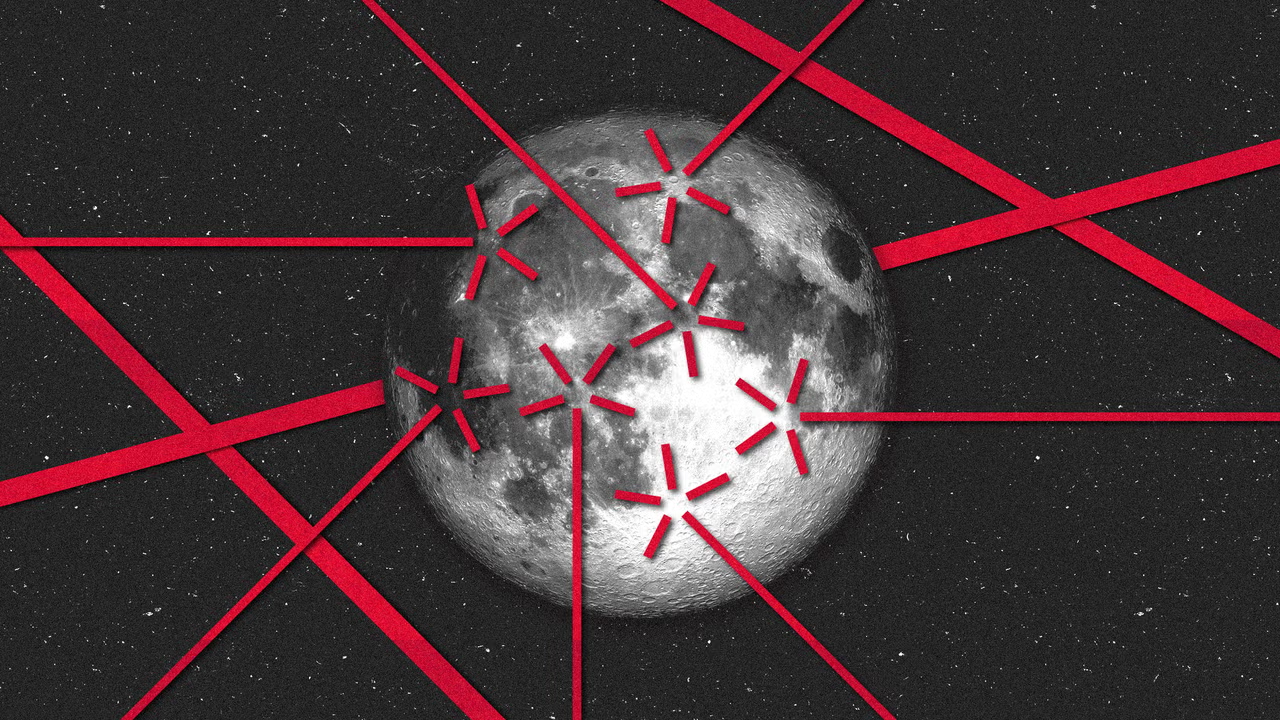
As the Falcon 9 rocket’s upper stage hurtles through the cosmos at a staggering 5,400 mph, it is on a direct collision course with the moon, poised to create a small crater near the Einstein Crater. While this event may seem like a minor footnote in the annals of space exploration, it is indicative of a much larger issue that could pose significant risks to future lunar endeavors.
The Recklessness of Rocket Debris
With the rise of private space ventures like SpaceX and Blue Origin, the landscape of lunar exploration is rapidly evolving. However, the recklessness of leaving spent rocket stages in chaotic orbits raises alarms among experts. Astrophysicist Jonathan McDowell warns that while this specific impact may not present immediate dangers, a future littered with debris poses a profound threat to human safety and infrastructure as we establish permanent bases on the moon.
Designing for the Future
The Falcon 9 upper stage, measuring 45 feet in height and 12 feet in diameter, was never intended to return to Earth after deploying its payloads. This decision to leave it in orbit without a proper disposal plan reflects a broader trend in space missions where economic considerations often overshadow environmental responsibilities. With the burgeoning interest in lunar resources, a significant paradigm shift is necessary—mission architects must prioritize space sustainability and debris management to avert potential future catastrophes.
A Competitive Race to the Lunar Surface
The 21st century has ignited a new space race, particularly between the United States and China, both vying to establish bases and mining operations on the moon. This escalating competition brings forth a myriad of challenges, not least of which is ensuring the safety of both human explorers and the extensive infrastructure required for lunar habitation. The successful collision of the Falcon 9 stage will serve as a striking reminder of the perils of neglecting space debris management.
The Need for Regulatory Frameworks
As private companies increasingly dominate the space arena, there is a pressing need for robust regulatory frameworks that govern their operations. The moon, while a vast expanse, is not devoid of consequences when it comes to space debris. Previous missions, such as those conducted by NASA during the Apollo era or the deliberate impact of the LCROSS spacecraft, were conducted with purpose and intention. In contrast, the impending crash of the Falcon 9 stage raises questions about ownership and responsibility in the shared domain of space.
Balancing Innovation with Responsibility
As we stand on the precipice of a new era in space exploration, the balance between innovation and responsibility has never been more crucial. The implications of neglecting space sustainability extend beyond the immediate damage of a lunar crash. The increasing population of satellites and rocket stages in Earth’s orbit could culminate in a catastrophic chain reaction known as Kessler syndrome, where collisions render entire orbital paths unusable. This scenario, once relegated to the realm of science fiction, is now a pressing reality that must be addressed.
A Call for Collective Stewardship
Ultimately, the cosmos belongs to all of humanity, and with that ownership comes a shared responsibility. It is imperative that organizations profiting from space exploration adopt practices that prioritize the preservation of our celestial environment. As the industry pushes towards ambitious plans for lunar colonies and resource extraction, we must ensure that the legacy we leave behind is not one of neglect, but rather one of stewardship and sustainability.
Editorial note: This article was created by A Bit Lavish Miami’s Magazine as an original editorial reinterpretation based on publicly available reporting. Original source: fastcompany.com. Read the original article here: https://www.fastcompany.com/91584284/spacex-rocket-crash-into-moon.
Images are used for editorial reference with source credit. If an image requires correction or removal, please contact A Bit Lavish.










Navigating the New Landscape of Home Affordability: A Deep Dive into Market Trends
Explore the evolving dynamics of home affordability in the U.S. housing market...
 2 Mins read

Rethinking Economic Narratives: The End of the K-Shaped Economy?
Treasury Secretary Scott Bessent declares the end of the K-shaped economy, but...
2 Mins read
Fantasy Baseball Trade Deadline Spurs Strategic Shifts in Bullpen Dynamics
The August 2026 trade deadline reshapes bullpen roles, impacting team strategies and...
1 Mins read



Jefry Yan Celebrations Mark a New Era in Major League Baseball
The global sports community recognizes Jefry Yan's achievements, highlighting the evolving landscape...
1 Mins read

Leave a comment