
A Grand Celebration or a Hollow Spectacle? The Great American State Fair’s Disappointing Turnout
Reflections on Celebration
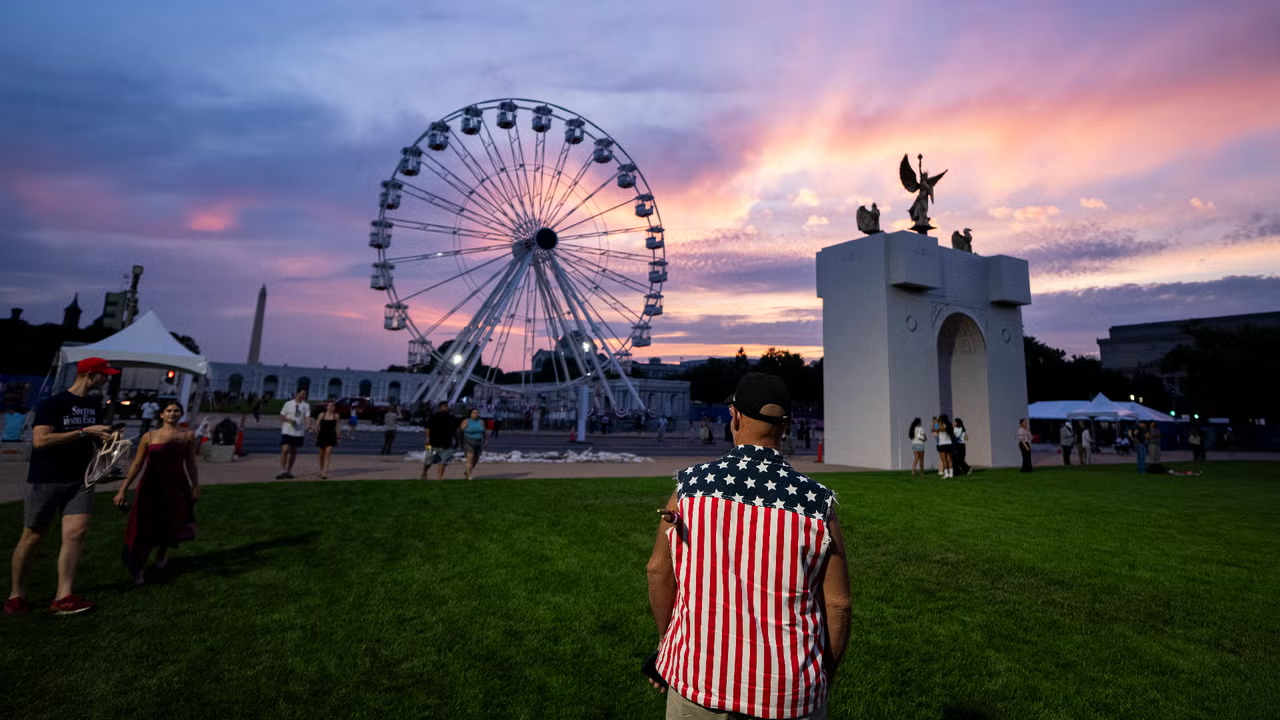
The Great American State Fair was designed as a vibrant showcase, celebrating the 250th anniversary of the United States. However, as it unfolded on the National Mall, the event struggled to resonate with the public. Reports highlighted a significant disconnect between the intended grandeur of the fair and the stark reality of its empty spaces, prompting an analysis of what this means for national festivities and leadership.
A National Stage, Yet an Absent Audience
Despite the fair being positioned as a cornerstone of the nation’s semiquincentennial celebrations, its lack of attendance raises questions about public engagement and interest in such events. Videos circulating on social media depict scenes of desolation, with a backdrop that should have been alive with the spirit of festivity. Instead, many spectators were greeted with sights of sparse crowds, leading to a wave of commentary that ranged from humorous to critical.
The Role of Leadership in Cultural Events
In the lead-up to this event, the administration had engaged in several high-profile initiatives aimed at amplifying national pride, including a public art installation at the Lincoln Memorial Reflecting Pool. However, the disparity between these ambitious projects and the fair’s reality reflects a deeper narrative about leadership and its ability to foster community engagement. The essence of a successful public event lies not only in its planning but also in its ability to connect with the populace it aims to celebrate.
Social Media: The Double-Edged Sword
As the fair played out, social media became a pivotal platform for dialogue. Users swiftly highlighted the juxtaposition of intent versus reality, employing humor and satire to express their observations. The imagery shared online often resembled scenes from a ghost town rather than a bustling fair, leading to viral memes that further encapsulated the event’s shortcomings. Such a phenomenon illuminates how social media serves as both a mirror and a magnifier of public sentiment, amplifying concerns and commentary in real-time.
Miami’s Unique Cultural Landscape
In the context of Miami, a city known for its vibrant celebrations and communal gatherings, the contrast is particularly striking. The Magic City thrives on its ability to attract crowds, whether through Art Basel or the South Beach Wine & Food Festival. The lessons from the Great American State Fair serve as a reminder of the importance of engaging the community authentically. Miami’s cultural events often succeed because they resonate with local values and encourage participation, showcasing how a connection to place can reinvigorate public interest.
Looking Ahead: A Call for Engagement
The Great American State Fair’s experience is a cautionary tale for future celebrations. As we reflect on this event, it becomes paramount for leaders and organizers to prioritize genuine connections with the public. Building excitement around national events should not just be a matter of spectacle but rather a celebration that genuinely invites participation and fosters community spirit. For Miami and beyond, the challenge lies in crafting experiences that are not only large in scale but also rich in relevance, ensuring that every voice is heard and every person feels they belong.
Editorial note: This article was created by A Bit Lavish Miami’s Magazine as an original editorial reinterpretation based on publicly available reporting. Original source: fastcompany.com. Read the original article here: https://www.fastcompany.com/91567032/great-american-state-fair-empty-attendance-dc.
Images are used for editorial reference with source credit. If an image requires correction or removal, please contact A Bit Lavish.










Navigating Decision Fatigue: Strategies for Mental Clarity and Leadership
Explore innovative strategies to combat decision fatigue, preserving mental energy for crucial...
 2 Mins read
The Unexpected Ascendancy of The Cheesecake Factory: A Culinary and Financial Marvel
Explore how The Cheesecake Factory's innovative strategies and robust performance have positioned...
2 Mins read

Navigating the Intersection of Leadership and Motherhood in the Modern Workplace
Karoline Leavitt’s resignation highlights the challenges faced by working mothers amid increasing...
2 Mins read


Revolutionizing School Safety: The Emergence of Smart Evacuation Systems
Explore how innovative evacuation systems like Go To Green are transforming school...
3 Mins read
